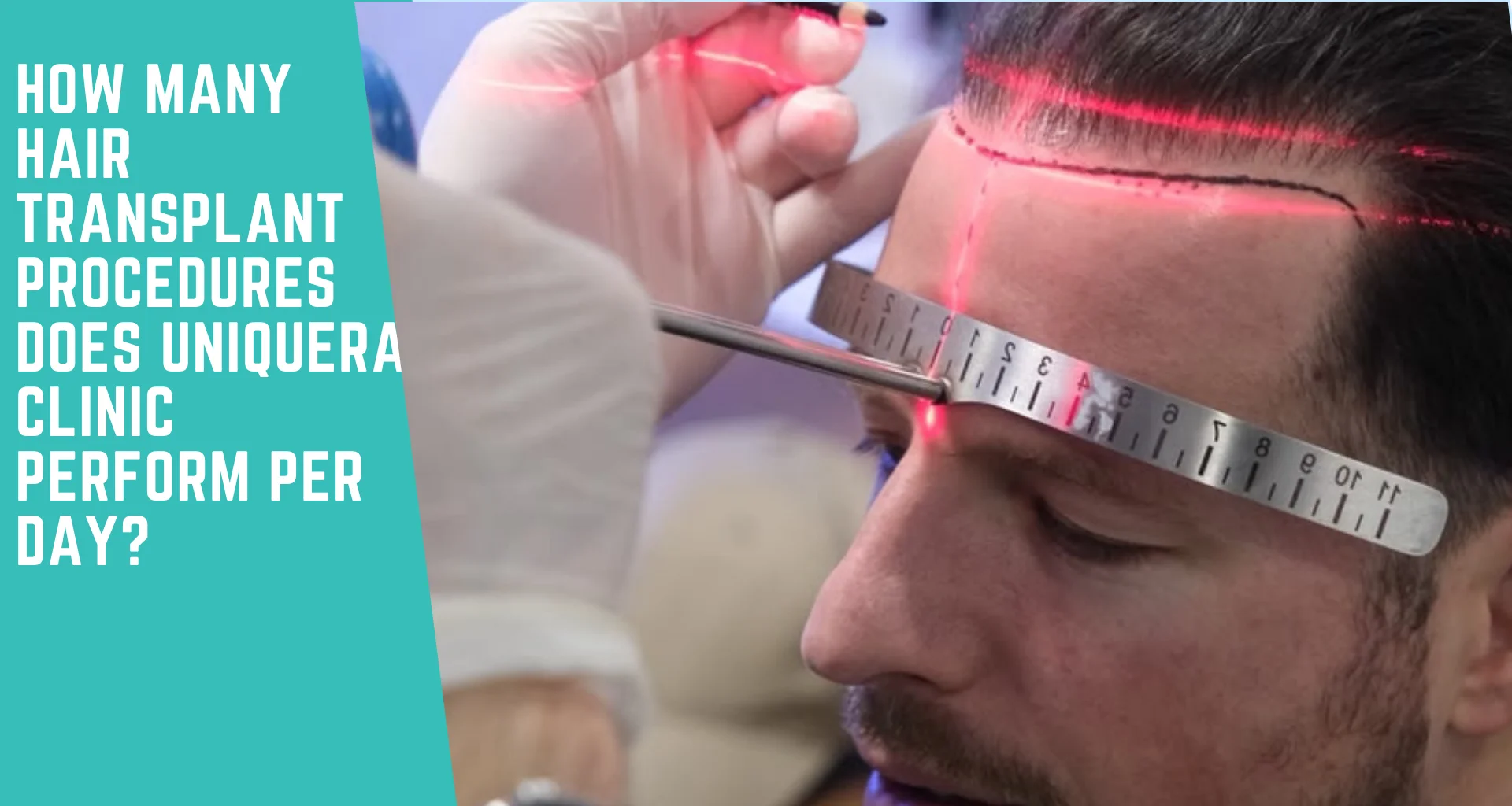

UniquEra performs a maximum of two hair transplant procedures per day.
That limit is intentional. Hair transplantation requires time for consultation, hairline planning, donor assessment, graft extraction, graft preparation, implantation, medical supervision, and post-procedure review. UniquEra hair transplant clinic keeps its daily surgical volume controlled so each case receives enough medical attention throughout the procedure.
For patients comparing clinics in Turkey, the number of procedures per day can tell you a lot about how a clinic operates. But volume alone is not the issue. The bigger question is whether the clinic has enough qualified people, supervision, and time for every patient.
UniquEra hair transplant clinic limits its daily capacity to two procedures so the medical team can give each patient enough time before, during, and after surgery.
Every case requires more than extraction and implantation.
Before surgery, the team needs time for:
During surgery, grafts must be extracted carefully, counted, classified, preserved, and implanted according to the treatment plan.
Keeping the schedule to two procedures per day allows the Medical Team to remain closely involved in the cases being treated that day rather than dividing their attention across a large number of operating rooms.
A lower patient volume does not automatically guarantee better results, but it creates more room for individual attention and quality control.
A clinic treating one or two patients per day can still produce poor work if the people performing the procedure lack experience. At the same time, a larger clinic can perform several procedures safely if it has enough qualified teams.
The real issue is whether patient volume matches staffing.
At UniquEra, the two-procedure limit is part of the clinic’s approach to hair transplant clinic volume vs quality. Rather than increasing the number of surgeries simply because more operating rooms are available, the schedule is kept around the level the senior team can closely oversee. Keeping a low volume ensures a highly controlled surgeon-to-patient ratio, which is critical for safety and aesthetic success.
When looking at a high volume hair transplant clinic in Turkey, you will often find multiple teams operating at the same time , so parallel surgeries can allow many patients to be treated in one day.
That number by itself does not prove that a clinic is unsafe or a hair transplant mill.
The concern begins when the number of patients rises without a matching increase in qualified staff, senior supervision, consultation time, graft-handling staff, and aftercare support.
For example, if a clinic markets one well-known doctor but that person is connected to 15 or 20 operations occurring simultaneously, patients should ask exactly what that doctor’s involvement is.
High volume becomes a warning sign when the clinic cannot clearly explain who is responsible for each stage.
Hair transplantation contains several stages where rushing can affect the quality of the procedure.
A hairline should be planned around the patient’s facial proportions, age, existing hair pattern, donor supply, and expected future hair loss.
It should not become a five-minute step because another patient is waiting.
Extraction requires control over spacing and follicle handling. Removing grafts too quickly or without enough planning can affect donor appearance and the number of usable grafts.
Extracted follicular units need to be counted, classified, and preserved correctly before implantation.
Direction, angle, depth, graft type, and density all affect how natural the transplanted hair may eventually look.
These factors are more meaningful to graft survival rate and final appearance than simply claiming a very high graft number.
UniquEra clinic uses separate medical teams for the procedures while the Medical Team Directors oversee the cases being treated that day.
Atakan Akay and Çagri Çelik are responsible for senior medical oversight, while trained hair restoration specialists and nurses carry out assigned parts of the procedure.
This structure means two patients can be treated in parallel without turning the day into a high-volume production schedule.
The patient journey also continues beyond surgery. UniquEra provides the next-day wash, aftercare guidance, WhatsApp support, and scheduled follow-ups during recovery.
Aftercare capacity matters too. A clinic that increases surgery numbers must also be able to support those patients after they leave the operating room.
No. There is no universal number that makes a clinic good or bad.
A one patient per day hair transplant clinic is not automatically better, and a clinic treating several patients is not automatically worse.
What matters is the relationship between:
| Factor | What patients should check |
| Daily patient volume | How many procedures happen that day? |
| Medical staffing | Does every procedure have its own qualified team? |
| Senior oversight | How many patients is the senior team supervising? |
| Hairline planning | Is enough time given to individual design? |
| Graft handling | Who counts, sorts and preserves the grafts? |
| Aftercare capacity | Can the clinic properly support patients after surgery? |
A factory hair transplant clinic becomes concerning when patients cannot get clear answers about who is treating them.
Warning signs can include:
If you are wondering, “Is my clinic doing too many surgeries a day?”, ask how many procedures your own medical team is handling, not just how many happen in the building. Factory clinics often ignore ISHRS guidance on delegation by having unlicensed technicians perform the bulk of the surgical extractions or incisions.
UniquEra performs a maximum of two hair transplant procedures per day.
The limit is part of its controlled scheduling model. It gives the medical teams time for individual planning, careful extraction and implantation, senior oversight, and post-procedure support.
For patients comparing the best hair transplant clinic in Istanbul, daily patient volume should not be judged alone. What matters is whether the clinic can clearly explain who is responsible for your case and how much attention that team can realistically give you on surgery day.