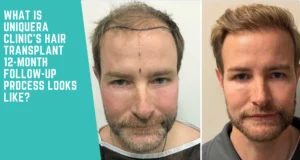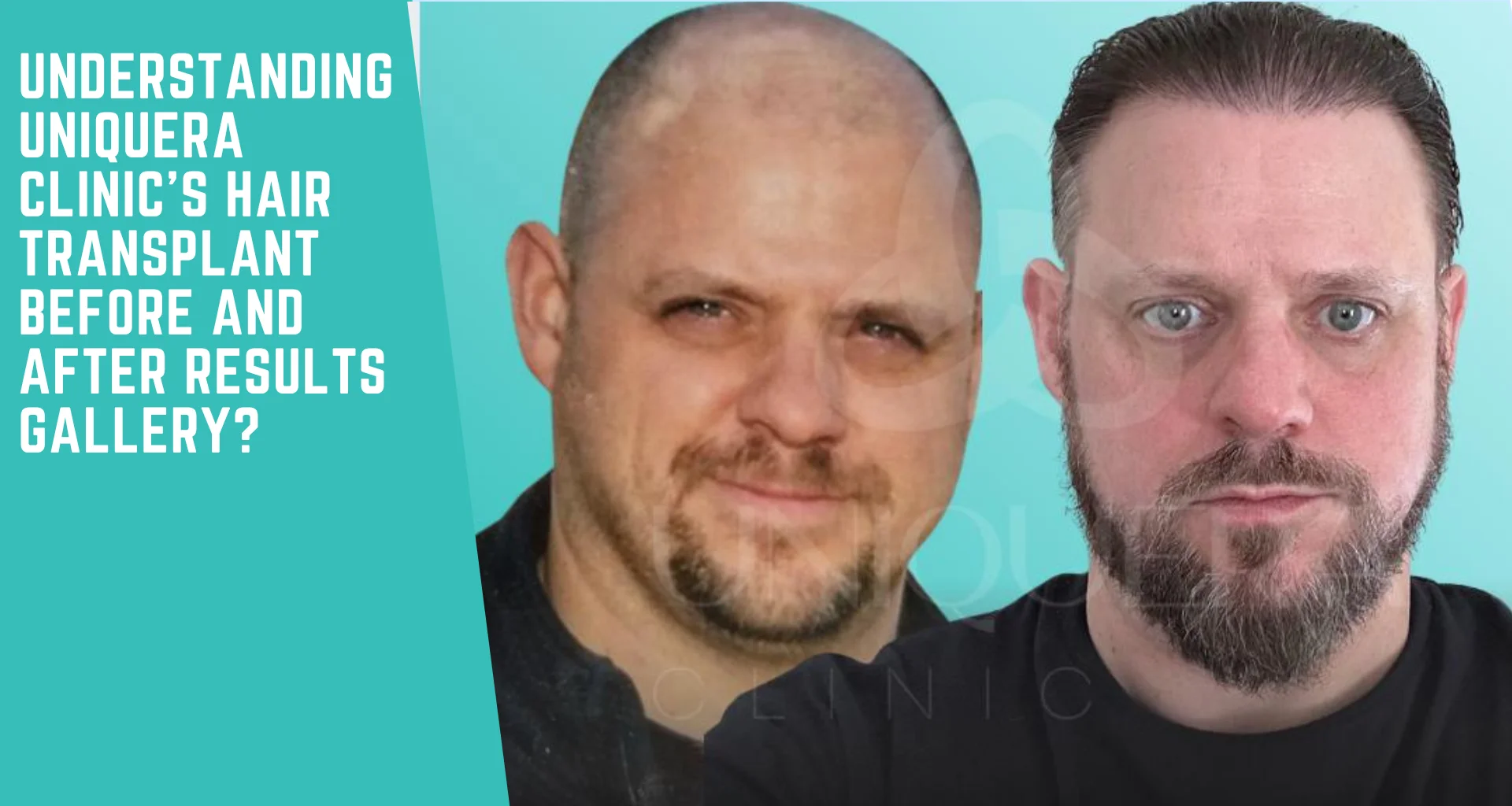

UniquEra Clinic’s hair transplant before and after results gallery shows how real patient cases developed from their starting condition through follow-up, while helping prospective patients find results that are actually comparable to their own hair type, hair-loss pattern and treatment area.
We do not use the gallery simply to collect dramatic final photographs.
A result only becomes useful when you understand what the patient looked like before surgery, which areas were treated, what the treatment plan aimed to achieve, and when the after-photo was taken.
That is why UniquEra Clinic uses its results library as part of the consultation and case-matching process, not only as a marketing gallery.
Documentation starts before surgery so later photographs can be compared with a clear baseline and the original treatment plan.
Before the procedure, the patient’s starting condition is recorded, including:
These records create the baseline used when later hair transplant before and after results are reviewed.
Read How We Document Hair Transplant Results Over 18 Months for the full documentation process.
UniquEra Clinic reviews progress at different stages rather than relying on one final photograph.
The documented follow-up process includes approximately:
| Follow-up stage | What it helps us review |
| Before surgery. | Starting hair loss, donor area and planned treatment zones. |
| 1 month. | Early healing and post-operative progress. |
| 3 months. | Early growth stage. |
| 6 months. | Developing coverage and density. |
| 12 months. | Mature result compared with the original treatment plan. |
This matters because a six-month result should not be compared with a mature result as though they represent the same stage.
The gallery therefore needs context as well as photographs.
Cases are grouped by the type of restoration or starting problem so patients can look at transformations that are relevant to their own case.
The result library can include cases such as:
This makes the comparison more useful.
Someone with crown loss should look at crown cases. A patient with Afro-textured hair should see comparable hair types. Someone who already had an unsuccessful transplant needs repair cases rather than first-procedure transformations.
We try to match patients with cases that resemble their own starting characteristics instead of showing everyone the same transformation photos.
Relevant factors can include:
For example, if you have a receding frontal hairline, a comparable frontal case is more useful than a dramatic crown transformation.
If you have curly or Afro-textured hair, seeing cases with similar hair characteristics gives much more context than comparing yourself with straight-hair results.
The gallery therefore supports the consultation rather than replacing it.
Look at whether the result achieved what was planned for that specific patient, not simply whether there appears to be more hair in the after-photo.
Useful comparison points include:
A result should also be judged according to the problem being treated.
A frontal hairline, crown restoration and repair case do not have identical success criteria.
Read What Makes a Hair Transplant Result Successful? Our Measurable Criteria for how UniquEra Clinic evaluates the complete outcome.
A DHI case can show how one patient’s DHI treatment developed, but it does not mean every patient receiving DHI should expect the same result.
When reviewing DHI hair transplant before and after results, look first at:
UniquEra Clinic uses DHI with Choi Pen when it suits the individual treatment plan.
The useful comparison is therefore not simply “DHI versus DHI.” It is whether the patient shown had similar starting characteristics and treatment goals to you.
Beard and eyebrow results need to be assessed differently from scalp hair because facial-hair shape, direction and symmetry play a much larger role.
When reviewing beard transplant Turkey before and after cases, look at:
A beard result should look like an extension of the patient’s natural facial-hair pattern rather than a separate transplanted area.
For eyebrow transplant Turkey before and after cases, compare:
The direction of transplanted hairs is especially important because eyebrow hair lies much flatter than scalp hair.
Because the recipient area is only one part of the final hair transplant result.
A patient can gain impressive frontal coverage and still have an unacceptable overall result if the donor area has been visibly depleted.
Where enough documentation is available, we consider:
This is why UniquEra Clinic does not judge results only by how much new hair appears at the front.
Read How We Prevent Overharvesting During Hair Transplant Surgery for how donor extraction is planned.
Start with the patient’s condition before surgery rather than jumping straight to the final photograph.
Ask:
This matters when patients search for the best hair transplant in Turkey or compare top hair transplant clinics in Turkey.
The most dramatic result in a gallery is not automatically the most relevant result for your own case.
A patient who started with different hair characteristics, donor capacity or hair-loss severity may require a completely different treatment plan.
The gallery is used to add context after the team reviews the patient’s own photos and hair-loss pattern.
The process is broadly:
Patient photos → initial consultation → medical case review → donor and hair-loss assessment → relevant case comparison → preliminary treatment discussion → physical confirmation in Istanbul.
The before-and-after library helps illustrate what has happened in similar cases.
It does not determine what is medically appropriate for a new patient.
Long-term progression also matters when comparing cases. Read How UniquEra Clinic Assesses Long-Term Hair Loss Before Surgery for how future thinning is considered before treatment.
No. Public use of patient photographs and videos depends on patient permission.
Some patients agree to allow their transformation to be used publicly, while others keep their treatment private.
This means the public gallery does not represent every patient treated by UniquEra Clinic.
It represents the cases for which the clinic has appropriate permission to share patient media.
Looking through hundreds of before-and-after photos can still leave you unsure which results are relevant to your own case.
Send UniquEra Clinic clear photos of your front, top, crown, sides and donor area. We can review your hair-loss pattern, donor condition and treatment area, then show you before-and-after cases that are closer to your own hair type and starting point.
That gives you a more useful comparison than choosing a clinic based on its most dramatic transformation.
The goal is not to find the best-looking photo in the gallery. It is to understand which results are realistic for you.
Yes. Relevant cases can be selected based on factors such as hair type, age, ethnicity, hair-loss pattern and treatment area.
Yes. DHI is one of the techniques used by UniquEra Clinic, and relevant DHI cases can be shown where available.
Yes. Beard restoration cases form part of the clinic’s result categories where patient consent allows the material to be shown.
Yes. Eyebrow restoration cases can also be included in the result library when public-use permission is available.
No. They show what happened in another patient’s case. Your donor area, hair characteristics, hair-loss pattern and treatment plan determine what is realistic for you.
Differences in hair type, donor capacity, treatment area, native hair, hair-loss severity and treatment plan can all produce different outcomes.