
Head Medical Consultant & Patient Care at UniquEra Clinic
Getting a hair transplant is just the first step toward achieving a fuller, natural-looking head of hair. Proper post-transplant care plays a vital role in ensuring successful graft survival and a faster recovery. Hair transplant aftercare is what determines whether your grafts survive and grow. The surgery places the follicles. The weeks and months after are what build the result.
You can have a technically perfect procedure and still end up with a thin result if the recovery phase is handled poorly. Hair transplant aftercare is important for healing and recuperation, which can have a huge impact on the final result of your hair transplant procedure. With good aftercare, your hair transplant result can last you a lifetime. This guide walks you through exactly what to do and what to avoid, starting from the moment you leave the clinic.
To see what your personalised recovery plan would include and want a medical opinion before committing, you can book a free consultation with the medical team at UniquEra Clinic.
Right after a hair transplant, your grafts are sitting in new channels without an established blood supply. For the first 72 hours, they are kept alive by fluid from surrounding tissue. New vascular connections begin forming around day 3 and are significantly established by day 10 to 14.
During this window, the grafts are fragile. Pressure, friction, sweat, or contamination can displace them before they have anchored. What you do in the first two weeks directly determines how many grafts survive.
The surgery takes 6 to 10 hours. Aftercare runs for 9 to 12 months. Graft survival rates in well-performed procedures typically run between 90 and 98 percent. The difference between those numbers comes almost entirely from what the patient does in the first two weeks.
The clinic can do everything right on the table. If you sweat, drink alcohol, or go back to the gym too early, grafts that were placed correctly will not survive the recovery phase. That is why experienced clinics invest as much in aftercare planning as they do in the procedure itself.
The first seven days are the most active phase of recovery. Here is what is happening and what to do.
Days 1 and 2
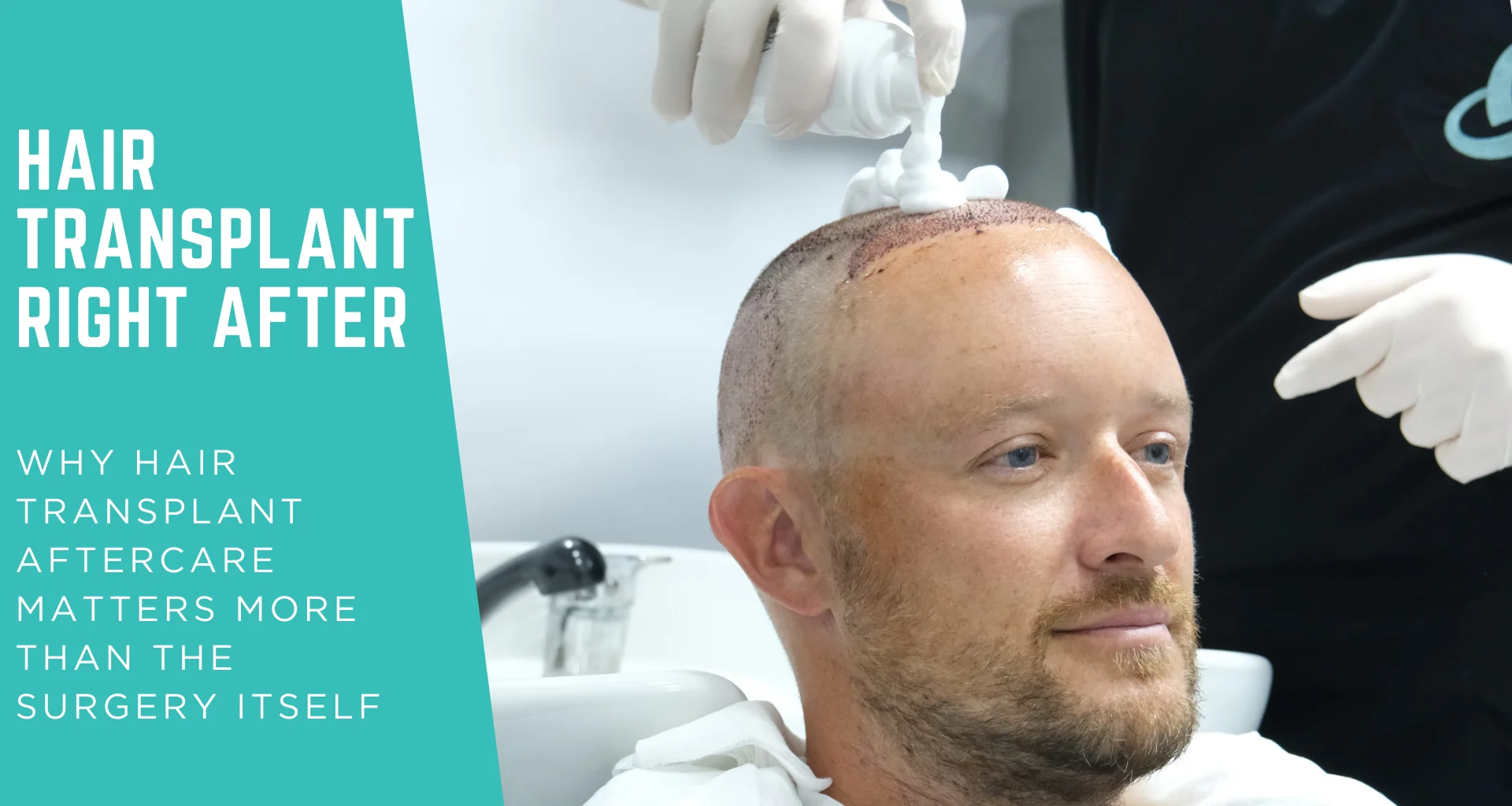
Mild swelling and redness around the recipient area is normal. Sleep with your head elevated at 45 degrees and do not touch the scalp. Apply saline spray as instructed. Return to the clinic the next day for your first post-procedure wash, which the clinical team performs for you.
Gentle home washing usually begins now using the technique the team showed you. Use only the prescribed shampoo and pat dry. Do not rub. Donor zone discomfort may peak around day 3 then ease.
Scabs form around each transplanted follicle. This is normal healing. The scalp feels itchy. Do not scratch and do not pick at scabs. Continue gentle washing to help them loosen naturally.
Most scabs clear by day 7. The scalp looks slightly pink. Some transplanted hair begins to shed. This is expected. The follicle stays intact under the scalp and new permanent hair grows from the same follicle over the following months.
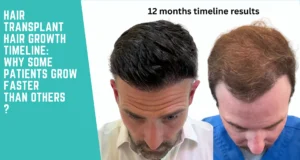
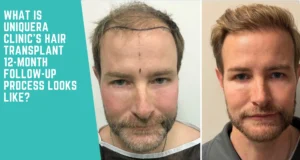
Full hair transplant recovery takes 9 to 12 months. Most visible healing happens in the first two weeks, but the follicles continue developing long after.
Weeks 1 to 2: Grafts anchor, scabs form and shed, the donor zone heals. This is the critical window. Follow aftercare instructions closely.
Weeks 2 to 6: Shock loss occurs. Transplanted hair shafts shed temporarily. The follicles stay intact underground. This is completely normal and does not affect the final result.
Months 1 to 3: The dormant phase. Follicles rest before producing new hair. The scalp looks thin. Nothing visible is happening yet, but growth is building beneath the surface.
Months 3 to 6: New fine hair begins emerging. Growth is uneven at first. This is the phase where early progress becomes visible.
Months 6 to 9: Hair thickens and darkens. Density becomes clearly measurable. Results at this stage look very different from month 3.
Months 9 to 12: Full results are visible. The transplanted hair has reached its permanent texture and density.
The core aftercare rules are the same across all three techniques. The recovery feel differs slightly.
Technique | Recovery feel | What to know |
Faster initial healing, less post-op redness. No pre-made channel incision reduces recipient area trauma. | Slightly lower graft displacement risk in days 1 to 3. | |
Clean healing. Sapphire blade incisions are precise and heal well. | Thorough washing is useful in the first few days to clear scabs. | |
Shorter overall recovery due to smaller procedure area (under 1,500 grafts typically). | Same protocols apply. Donor zone is smaller but equally important to protect. |
Want to understand which technique fits your case? The medical team at UniquEra Clinic provides technique-specific aftercare plans, not generic handouts. Book a free consultation to learn more.
What should you avoid after a hair transplant?
These are the most common aftercare mistakes. Each one has a specific reason.
A proper aftercare kit covers three phases of recovery, not just the first two weeks. At UniquEra Clinic, every patient receives a 9-month kit structured around these phases.
Goal: protect healing tissue and support graft anchoring. Includes medical-grade shampoo, saline spray, anti-inflammatory lotion, soft sleep pillow, and written washing instructions.
Goal: nourish growing follicles. Includes a scalp serum and nutritional support as follicles become active and begin producing new hair shafts.
Goal: protect the result and sustain scalp health. Includes maintenance shampoo and a conditioning treatment, with a review at month 9.
UniquEra runs one patient per team per day. That means the clinical team gives the full handoff to one person, not split across multiple cases.
Recovery support runs across five touchpoints: a next-day wash at the clinic, then follow-up reviews at months 1, 3, 6, and 12. Medical Directors with over a decade of hands-on hair transplant experience review progress at each check and adjust guidance if needed.
Between visits, patients have direct WhatsApp access to the team. For international patients, all follow-up from month 1 onward is remote. The 9-month kit ships to the patient’s home country.
The procedure gives you the follicles. Hair transplant aftercare grows them. A good clinic gets you to day one in the best possible condition. What you do from there determines the result.
The first two weeks protect the grafts. The following nine months build the density. Both phases matter, and knowing what to do at each stage makes the whole recovery straightforward.
UniquEra Clinic includes a 3-month, 6-month , 9-month aftercare kit, five follow-up touchpoints, and direct WhatsApp support in every procedure package. Talk to the medical team at UniquEra Clinic to understand the full process before you commit. A free consultation covers everything, not just the surgery day. Book yours here.
Do not touch the scalp. Sleep with your head elevated at 45 degrees, apply saline spray as instructed, and return to the clinic the next day for your first wash. Avoid alcohol, strenuous activity, and direct sun on surgery day.
The first wash is done at the clinic 24 hours after surgery. Home washing starts on day 3 or 4 using the technique the team demonstrated. Use the prescribed shampoo, no pressure, pat dry only.
Shock loss is the temporary shedding of transplanted hair shafts that happens in weeks 2 to 6. It is completely normal. The follicles stay intact beneath the scalp. New permanent hair grows from them starting around month 3.
Light walking is fine from day 3. Gym, running, and sport should be avoided for at least 2 weeks. Sweating and raised blood pressure can loosen unsettled grafts and increase infection risk around healing incisions.
Sleep elevated for the first 5 nights to reduce swelling and protect the grafts. Most patients return to a normal sleeping position between days 10 and 14 once scabbing has cleared.
The core protocols are the same. DHI typically produces faster initial healing with less redness. Sapphire FUE may benefit from slightly more thorough washing in the first few days to clear scabs. Your clinic will advise on any variation specific to your case.
Foods high in protein, iron, zinc, biotin, and vitamin E support follicle health after surgery. Eggs, leafy greens, nuts, fish, and lean meat are all good choices. Staying well hydrated matters equally throughout the recovery period.
New growth typically begins around month 3. Results become clearly visible at month 6. Full density and texture reach their final state between months 9 and 12.
Poor aftercare reduces graft survival, increases infection risk, and lowers final density. The first two weeks are the most critical. Following the prescribed protocol during this window is the single most important thing a patient can do to protect the result.
Structured follow-up at months 1, 3, 6, and 12 gives the clinical team the information needed to track healing and catch any concerns early. Between visits, direct contact should be available for questions.
Yes. Shock loss affects 80 to 90 percent of transplanted hairs. The follicles stay anchored. New hair grows from them over the following months. It is normal, not a sign of failure.
Avoid touching the recipient area for the first week. No heavy exercise for 2 to 3 weeks. No sun exposure for the first month. No alcohol or smoking for at least 2 weeks. No harsh shampoos or chemicals during recovery.
A working plan includes scheduled check-ins where growth is tracked. By month 3, you should see early growth. By month 6, density should be building. If your clinic is not checking in with you, the plan is not working because there is no plan.
Yes. DHI tends to have slightly faster surface healing due to smaller implant sites. Sapphire FUE patients often experience less swelling. Manual FUE recovery is typically fastest because fewer grafts are involved. Aftercare instructions should be specific to the technique used.