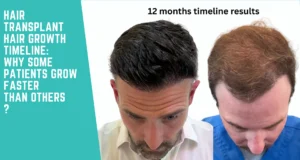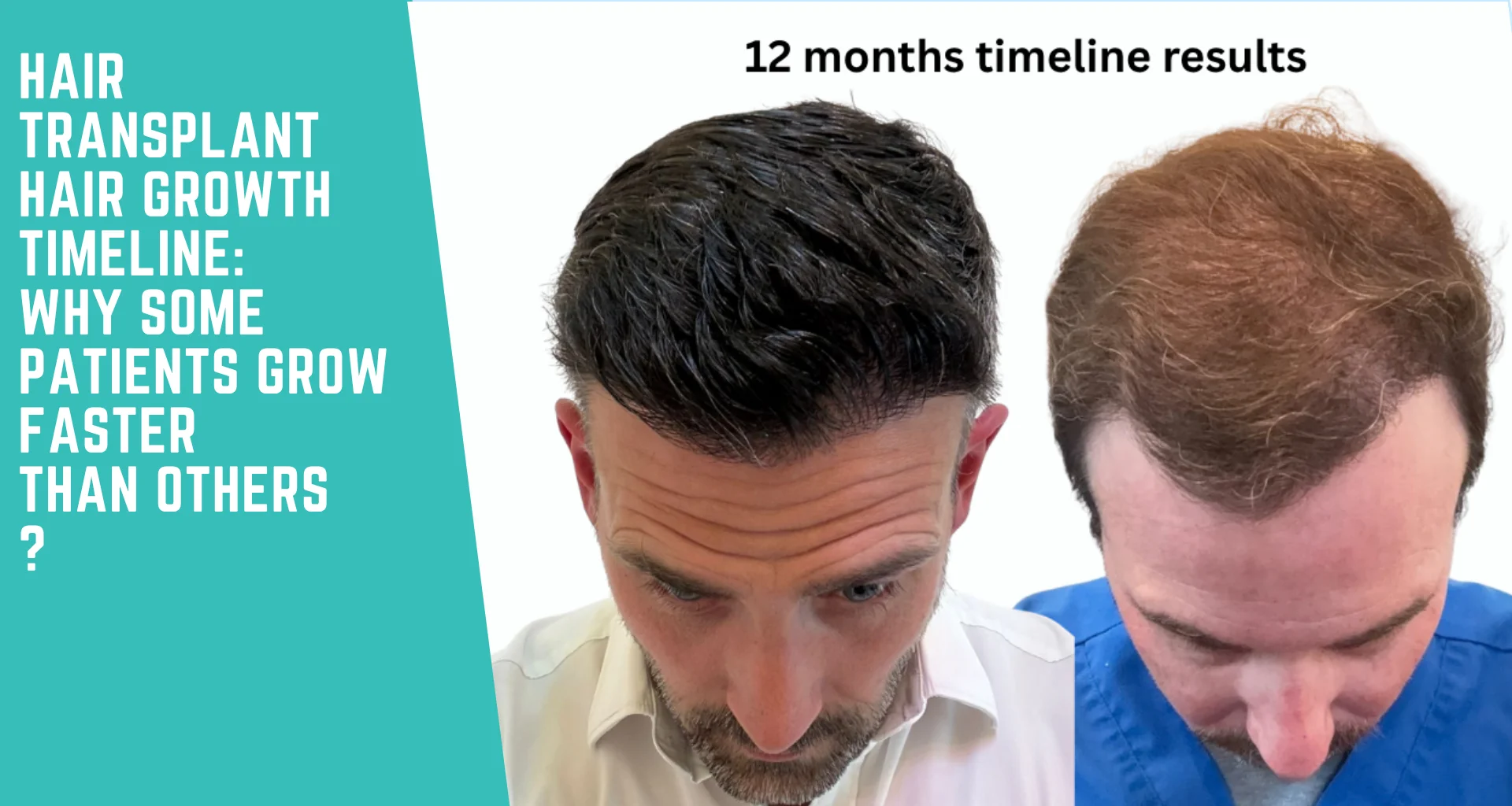

Most transplanted hair begins showing visible new growth around months 3 to 4, becomes noticeably fuller through months 6 to 12, and can continue maturing for up to 12 to 18 months.
But two patients who had surgery on the same day may look very different six months later.
That does not automatically mean one transplant worked and the other did not.
At UniquEra Clinic, progress is assessed against the patient’s own starting point, treatment area, hair characteristics and previous follow-up photographs rather than expecting everyone to follow exactly the same timeline.
Hair transplant growth usually moves through four stages: healing and shedding, early new growth, visible coverage, and later maturation.
| Time after surgery | What commonly happens |
| First few weeks. | The scalp heals and transplanted hairs may shed. |
| Months 2 to 3. | Visible growth may still be limited while follicles enter their next growth cycle. |
| Months 3 to 4. | New transplanted hairs may begin appearing. |
| Around month 6. | Coverage usually becomes more noticeable. |
| Months 9 to 12. | Hair continues gaining length, thickness and visual density. |
| Months 12 to 18. | Later maturation may continue before the result is fully assessed. |
These are general stages rather than fixed deadlines.
The visible hair shaft can fall out after surgery while the transplanted follicle remains in the scalp.
This early shedding does not mean the graft has been lost.
The follicle needs time before producing a new visible hair, which is why the scalp can temporarily look similar to its pre-transplant appearance during the first few months.
That early stage should not be judged as the final result.
Because transplanted follicles do not all restart visible growth at exactly the same time, and several patient-specific factors affect how quickly coverage becomes noticeable.
The main differences include:
It is also important to separate actual follicle growth from visual coverage.
Someone with thicker or curlier hair may appear fuller earlier even if the follicles are progressing at a similar biological stage to someone with finer hair.
Hair type can change how quickly a transplant appears fuller, but it does not create a completely different biological growth cycle.
This matters when comparing before-and-after cases.
Not necessarily.
Patients researching an Afro hair transplant Turkey procedure may see strong-looking early coverage because curly hair can occupy more visual space.
That does not prove the follicles themselves grew faster.
The important considerations in Afro-textured cases are the curved follicle structure, careful extraction and natural placement.
The basic transplanted-hair cycle is similar.
However, patients researching a female hair transplant Turkey procedure often still have native hair throughout the treatment area.
Existing hair can make new transplanted growth less obvious at first, while continued native thinning can also change how overall density appears.
This is why female results should be compared against the patient’s original pattern rather than a standard month-by-month photograph.
Yes. Different treatment areas can appear to develop differently because the size of the area, existing native hair and required coverage are not the same.
A smaller frontal restoration may begin looking noticeably different sooner than a large multi-zone procedure.
The visual result also depends on:
This is why comparing your month-six result with another patient’s month-six photo is often misleading.
Read What Makes a Hair Transplant Result Successful? Our Measurable Criteria for how UniquEra Clinic assesses coverage rather than graft count alone.
No technique should be presented as a guarantee of faster biological hair growth.
DHI, Sapphire FUE and other approaches affect how different stages of the procedure are performed.
They do not give every patient an identical growth speed afterward.
When comparing hair transplant surgery in Turkey, patients should look beyond claims such as “this technique grows faster” and ask how the clinic handles:
Technique selection should follow the patient’s treatment requirements.
A stem-cell treatment should not be treated as a guarantee that transplanted grafts will grow faster or that the normal hair-growth timeline can be skipped.
Patients searching stem cell hair transplant Turkey may find different regenerative treatments described using similar terminology.
These treatments should be discussed separately from the transplant itself.
The transplanted follicle still needs to progress through its normal biological growth cycle.
Any additional therapy should therefore be evaluated on its own evidence rather than used to promise faster transplant results.
Limited growth in the first few months does not automatically mean something has gone wrong.
The better approach is to track progression over several checkpoints.
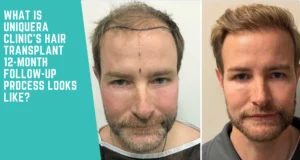
At UniquEra Clinic, documented follow-up can include approximately:
Photographs taken at consistent stages make it easier to see whether coverage is developing over time.
Read How We Document Hair Transplant Results Over 18 Months for how result progression is recorded.
Six months is usually too early to judge the final result. Growth, thickness and maturation can continue through 12 months and sometimes beyond.
At the later stages, the assessment should consider:
A patient who appeared to be growing slowly at month four may still develop a strong mature result later.
Compare your progress with your own previous photographs first, not with another patient’s timeline.
Another patient may have different hair thickness, curl pattern, recipient-area size, native density or treatment plan.
If you are comparing options for an expert hair transplant Turkey provider, ask:
“How will you monitor whether my growth is progressing normally for my own case?”
A useful answer should include documented follow-up, realistic growth ranges and comparison with your original treatment plan, not a guaranteed month when everyone is expected to look the same.
At month 3, 6, 9 or 12 and unsure whether your hair transplant growth is on track? Send UniquEra Clinic your current photos together with your surgery date. The team can compare your progress with your treatment stage, transplanted area and hair characteristics and advise whether what you are seeing appears consistent with the expected timeline or needs further review.
Visible new growth commonly begins around months 3 to 4, although timing varies between patients.
Yes, it can be. Three months is still early in the overall growth process.
Not necessarily. Six months is generally a developing stage rather than the final result.
Yes. Hair can continue thickening and maturing beyond 12 months in some patients.
No. Early growth speed alone does not determine the quality of the mature result.