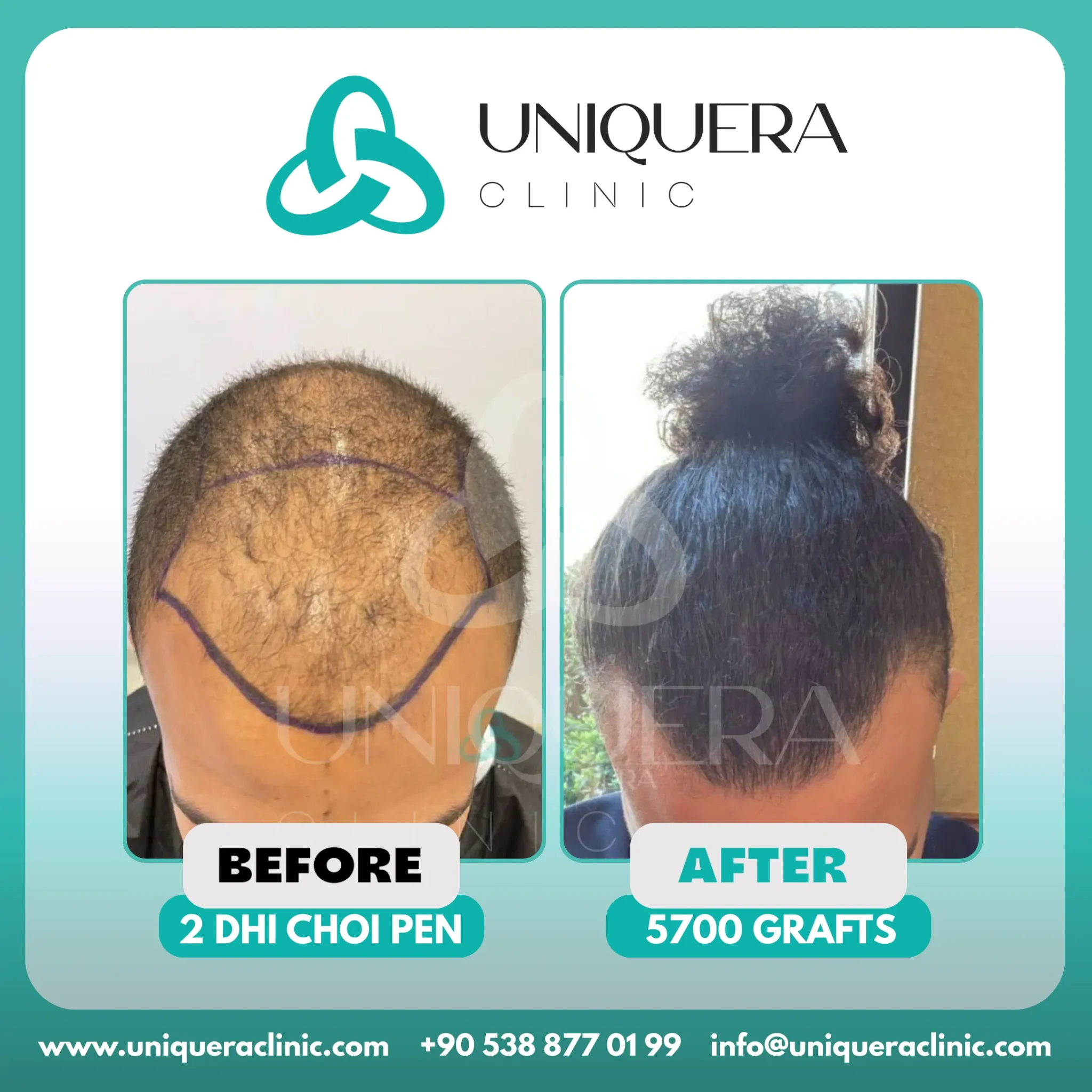
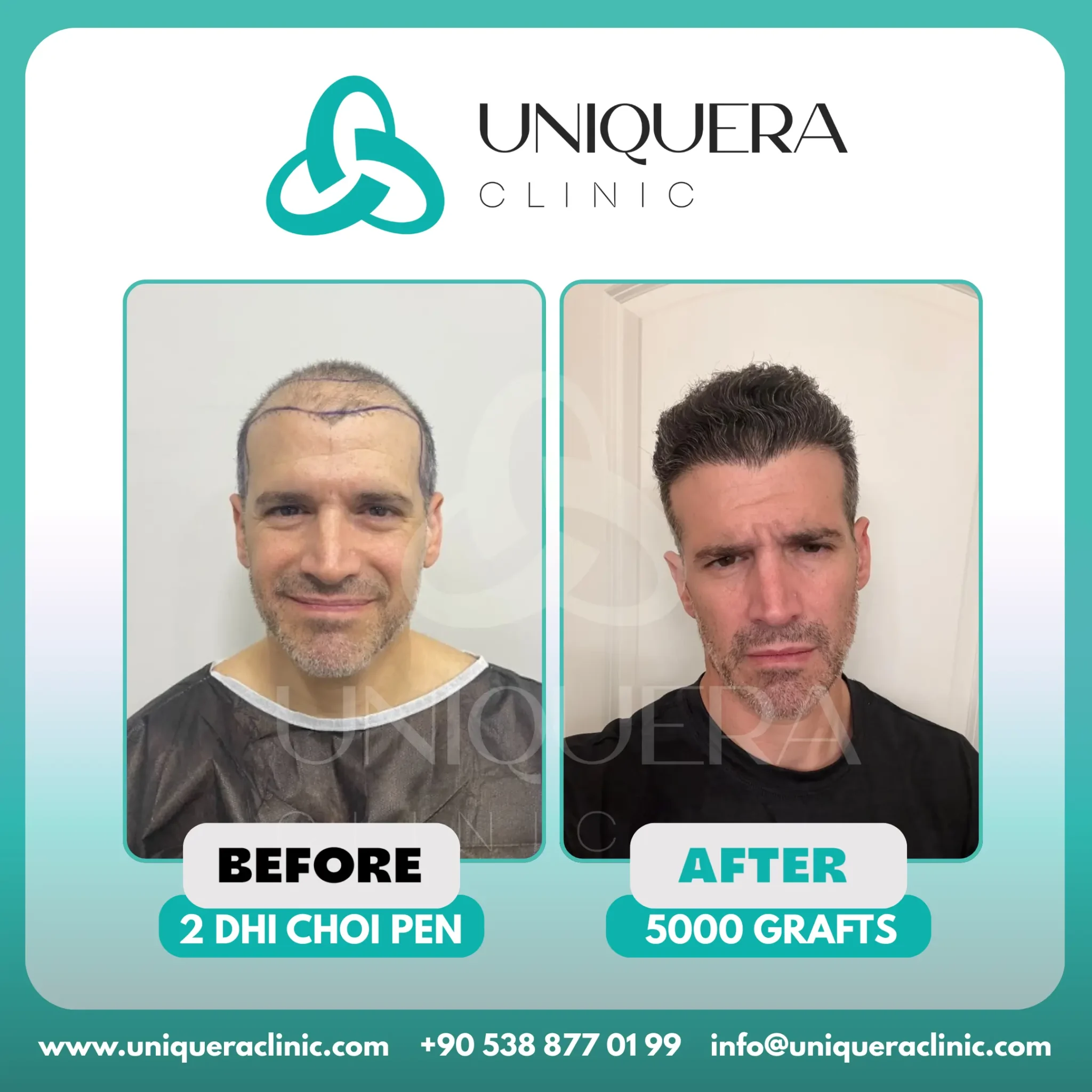
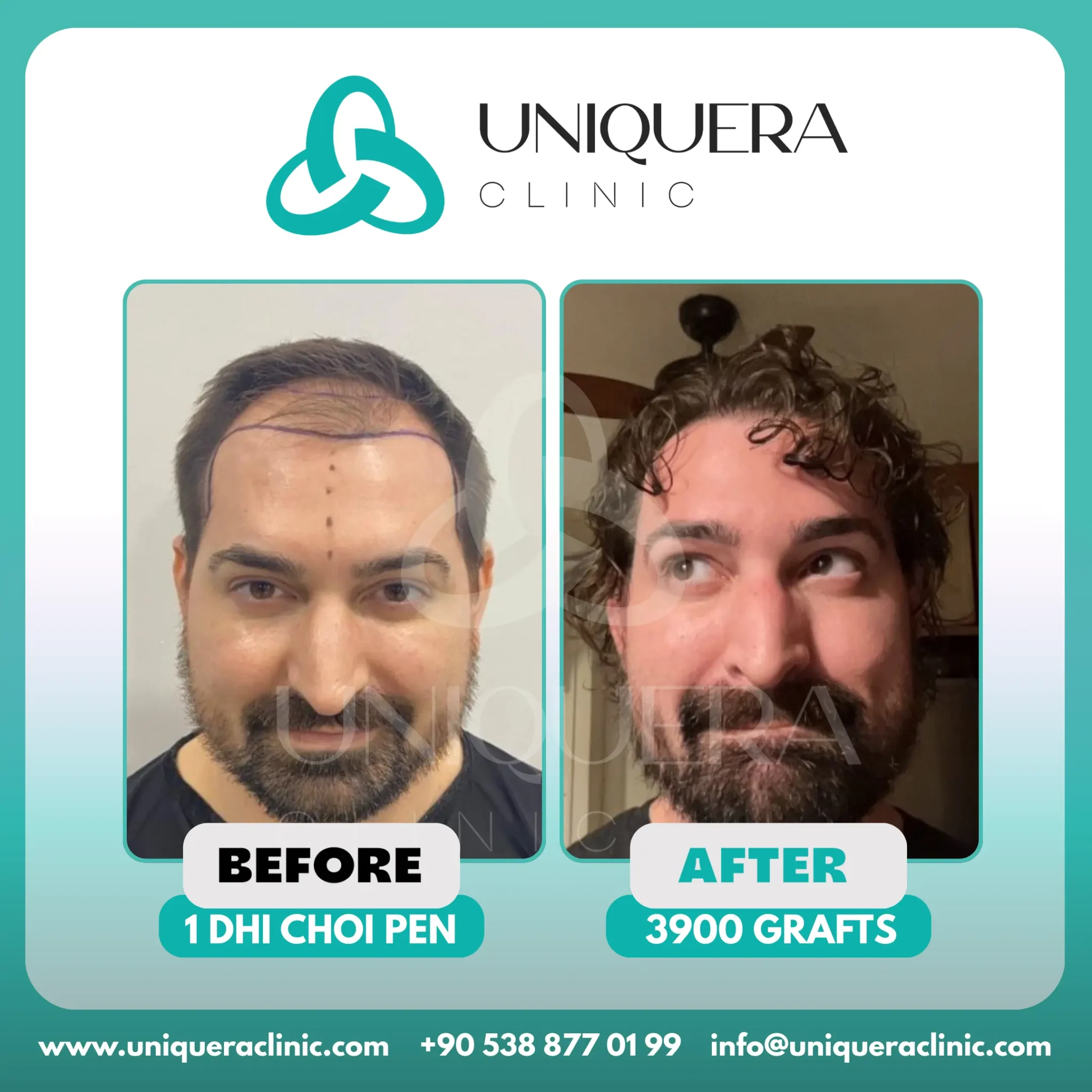
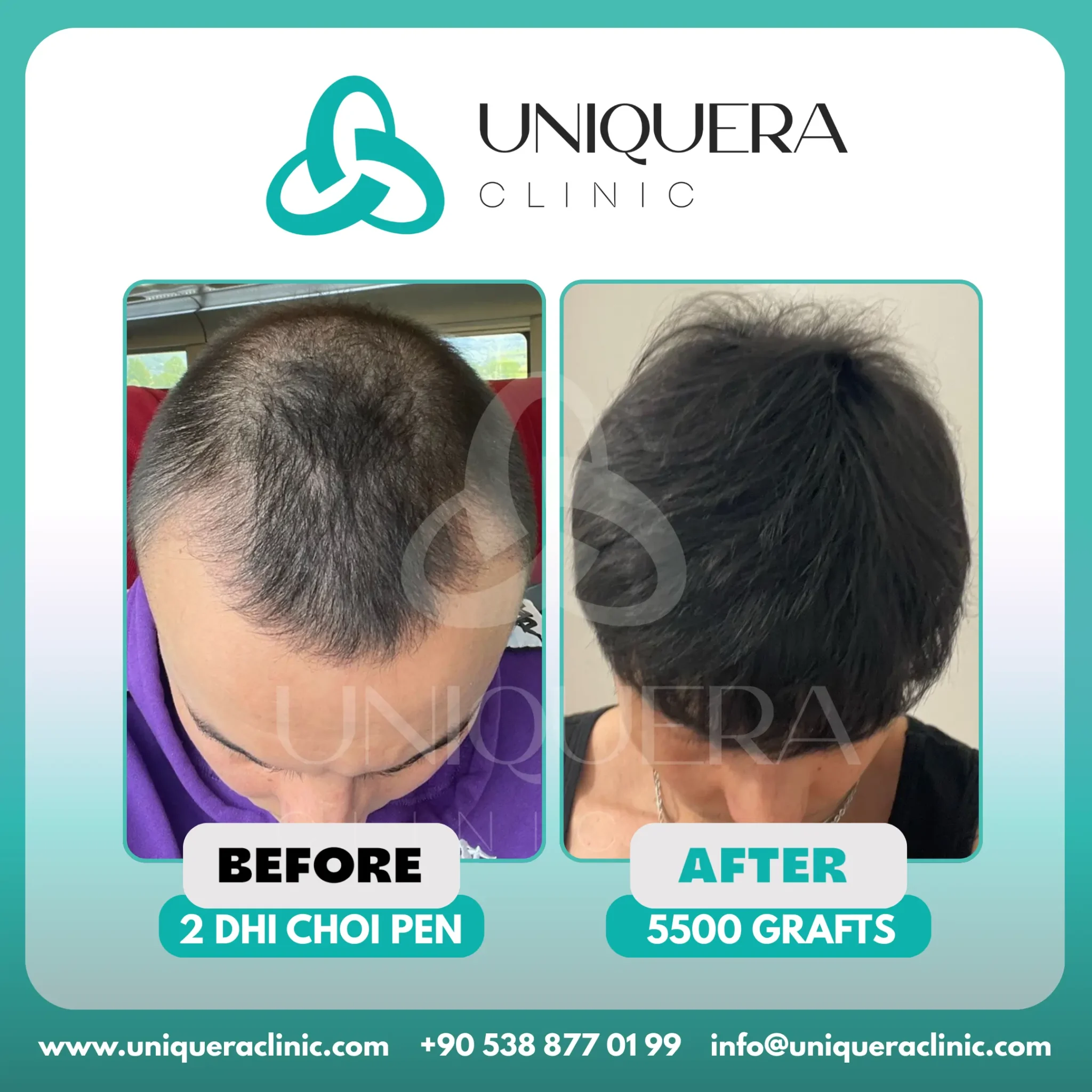
Natural Swirl Reconstruction for a Thinning or Balding Crown — High-Density Grafting, Lasting Results in Istanbul.
A crown hair transplant restores thinning or balding areas at the crown, also known as the vertex, by moving healthy follicles from the donor area and implanting them according to the crown’s natural growth pattern.
Because crown hair grows in a distinctive spiral or swirl, careful graft direction and distribution are important for creating balanced, natural-looking coverage.
At UniquEra, our crown restoration process focuses on:
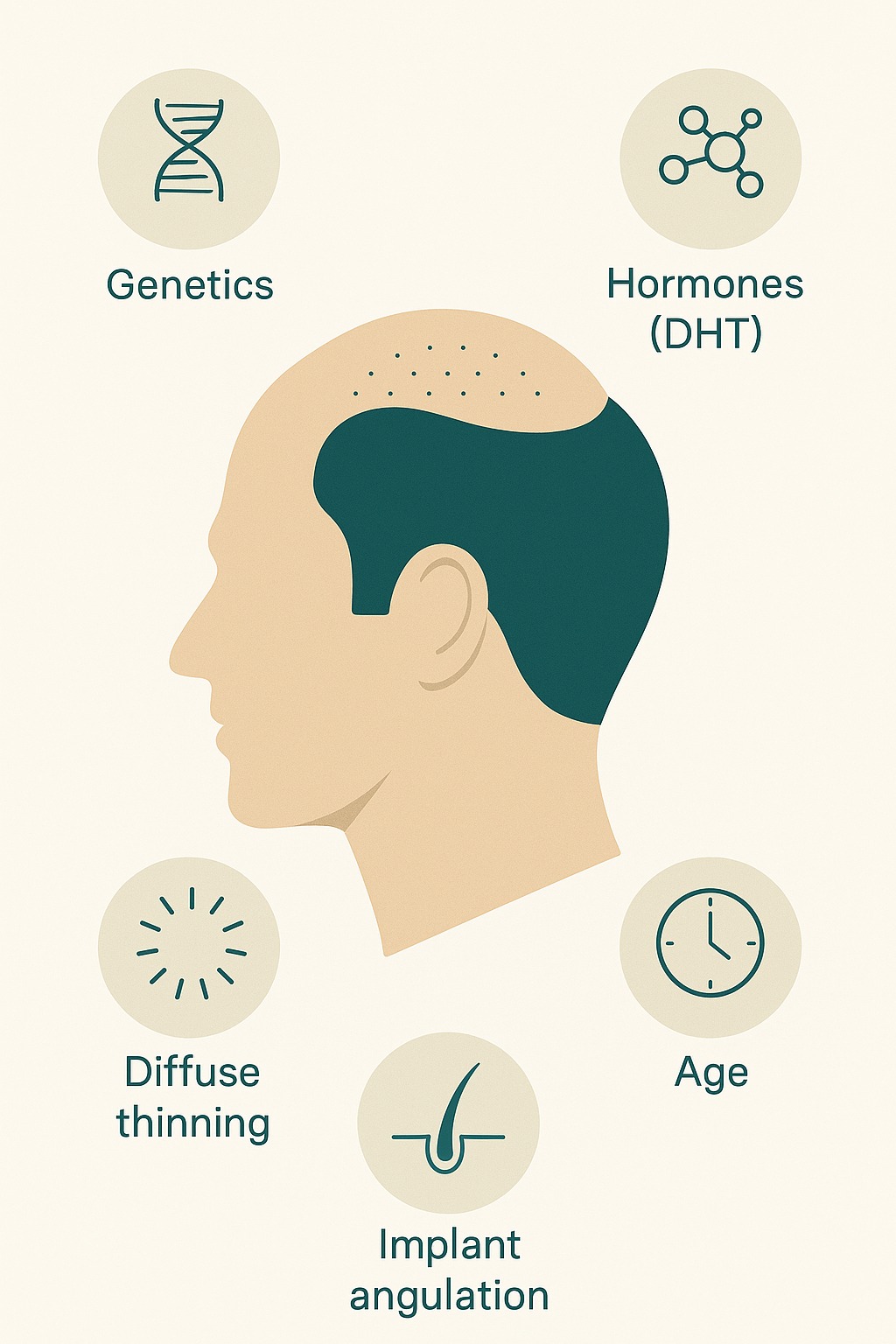




Most patients see initial shedding of transplanted hair within 2–4 weeks – this is normal and expected.
New growth typically begins around month 3–4, with visible density by month 6–9.
Full, mature results appear at 12–18 months, once the spiral pattern fully fills in.
The crown is different from the hairline because its natural swirl pattern requires grafts to be placed in multiple directions for natural-looking coverage.
| Feature | Hairline Transplant | Crown Transplant |
|---|---|---|
| Growth Pattern | Primarily forward-facing | Natural spiral or swirl |
| Graft Angling | More predictable | Precise, multi-directional |
| Graft Requirements | Depends on hairline design and recession | Can require significant grafts depending on the thinning area |
| Blood Circulation | Higher, faster healing | Naturally lower, slower growth |
| Difficulty Level | Standard | Higher – needs swirl-pattern expertise |
Crown restoration requires careful planning because using too many grafts in the crown can limit donor options if hair loss progresses elsewhere.
Find out what level of crown coverage is realistic for your donor area.
Crown restoration requires more than filling a thinning area. The swirl pattern, available donor supply, existing density, and future hair loss all need to be considered before deciding how many grafts should be used. Patients consistently rate UniquEra among the top clinics for crown hair transplant in Turkey.
Turkey offers high-quality hair restoration at a fraction of the price in many other countries. At UniquEra, crown hair transplant pricing is all-inclusive and determined by your level of hair loss.
Crown hair transplant is a minimally invasive, medically supervised procedure.
Mild swelling, redness, or scalp tightness in the first few days is normal — and temporary.
Serious complications are rare when strict hygiene protocols are followed, which is why every UniquEra procedure meets internationally recognised safety standards.
Manual FUE is a minimally invasive, medically supervised procedure.
Mild swelling, redness, or scalp tightness in the first few days is normal – and temporary. Serious complications are rare when strict hygiene protocols are followed, which is why every UniquEra procedure meets internationally recognised safety standards.
Our clinical team explains the procedure, recovery, and aftercare before treatment, so you know what to expect at every stage.
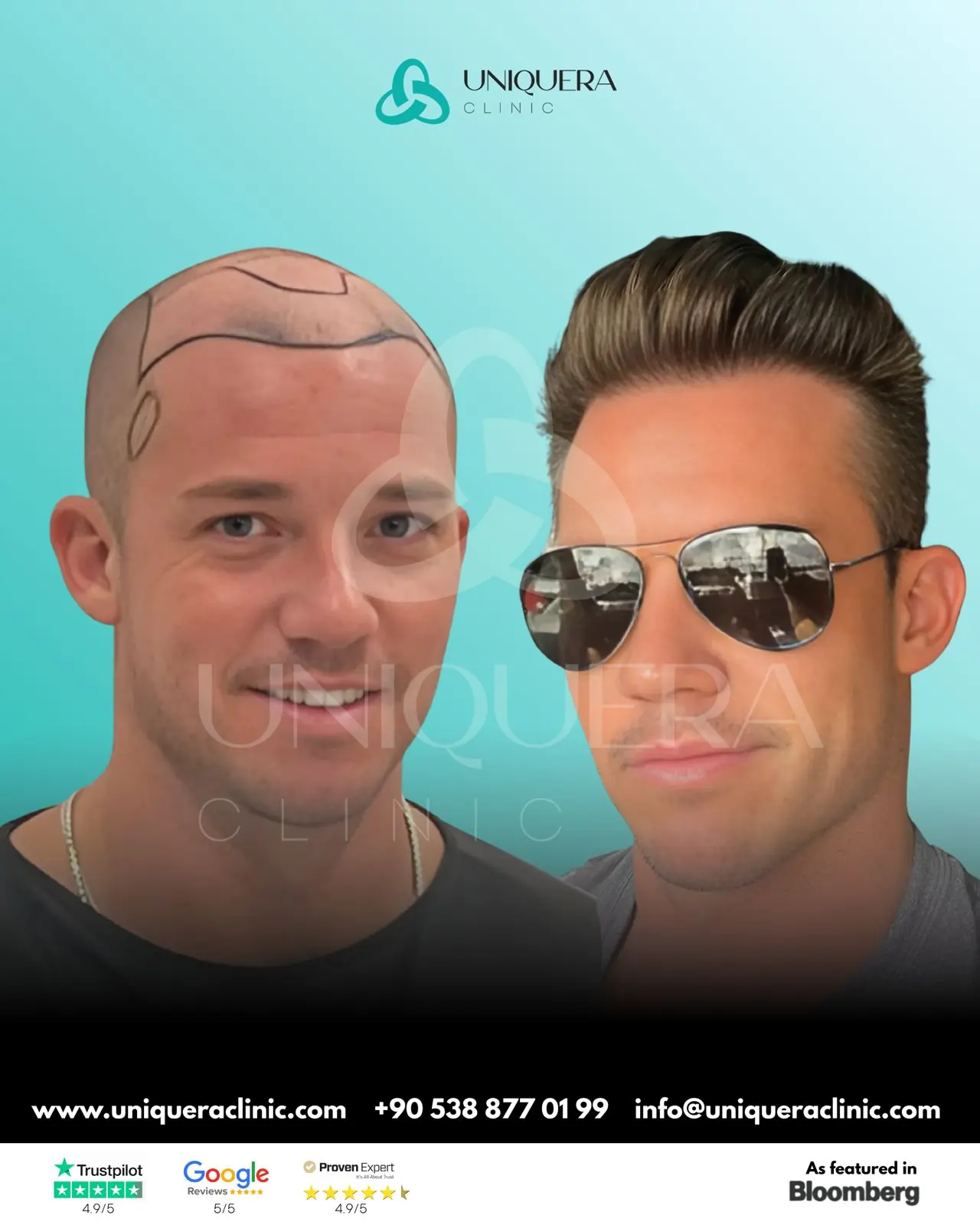
Schedule a free consultation for a graft assessment based on your hair loss, donor area, and long-term goals. Clear answers before you make any decision.
Yes. The spiral pattern and larger surface area require more precision and planning than a straight hairline.
Yes, when performed with technique matched to the crown's natural spiral pattern. Results depend on donor hair quality and correct graft placement.
Most crown cases need 2,500–4,500 grafts, depending on the size of the thinning area. Your medical director confirms your exact graft count after evaluating your scalp.
Blood circulation is naturally slower at the crown than at the hairline, so transplanted follicles can take a little longer to establish and show visible density.
Yes. Transplanted follicles are resistant to the hormone that causes hair loss, so they continue growing naturally for life once established.
Yes. Crown thinning affects many women, and the same precision techniques apply, with your medical director adjusting the plan for female pattern hair loss.
Yes, when the spiral growth direction is replicated correctly — exactly why crown restoration needs a medical director experienced in swirl-pattern design.
No. UniquEra uses local anaesthesia, so the procedure itself is virtually painless. Mild discomfort during recovery is normal and temporary.
In some cases, yes. If scalp donor hair is limited, beard hair can supplement grafts. Your medical director confirms this during your consultation.
Crown hair transplants typically achieve a high graft survival rate when performed by experienced specialists under sterile, medically supervised conditions.
Yes, for most cases. Your medical director confirms suitability based on your donor area, degree of hair loss, and long-term goals.
Most patients return to daily activities within 5–7 days. Your medical director gives specific guidance based on your case.
Most patients stay 2–3 nights for the procedure and initial check-up. Your medical director confirms the exact timeline for your case.
Use the “Book Your Free Consultation” button anywhere on this page, or message us directly on WhatsApp for a same-day response.