
If you have started researching hair transplants, you have probably seen FUE everywhere. One clinic calls it FUE. Another calls it Sapphire FUE. Another tells you DHI is completely different.
That can make a fairly simple idea sound much more confusing than it needs to be.
A FUE hair transplant starts with removing individual follicular units from a donor area, usually the back and sides of the scalp. What happens after those grafts are removed can differ depending on how the recipient area is prepared and how the grafts are implanted.
So the useful question is not simply, “Is FUE good?”
It is: How does an FUE hair transplant work, is your donor area suitable for it, and which implantation approach makes sense for your hair loss?
If you are already comparing FUE, Sapphire or DHI based on clinic packages, get your donor area assessed first. Book a free consultation with UniquEra Clinic and get a recommendation based on your own hair loss rather than a technique name.
FUE stands for Follicular Unit Excision, although you will still often see the older term “Follicular Unit Extraction.”
During FUE, individual follicular units are removed from the donor area one at a time using a small circular punch. Each follicular unit may contain one or several hairs.
This is different from older strip-based harvesting, where a section of scalp is removed and later divided into individual grafts.
The important part is that FUE technically describes how the grafts are harvested.
It does not, by itself, explain how those grafts will later be implanted.
That distinction matters because terms such as Sapphire FUE and DHI are often presented as completely separate hair transplant procedures when much of the difference actually comes after extraction.
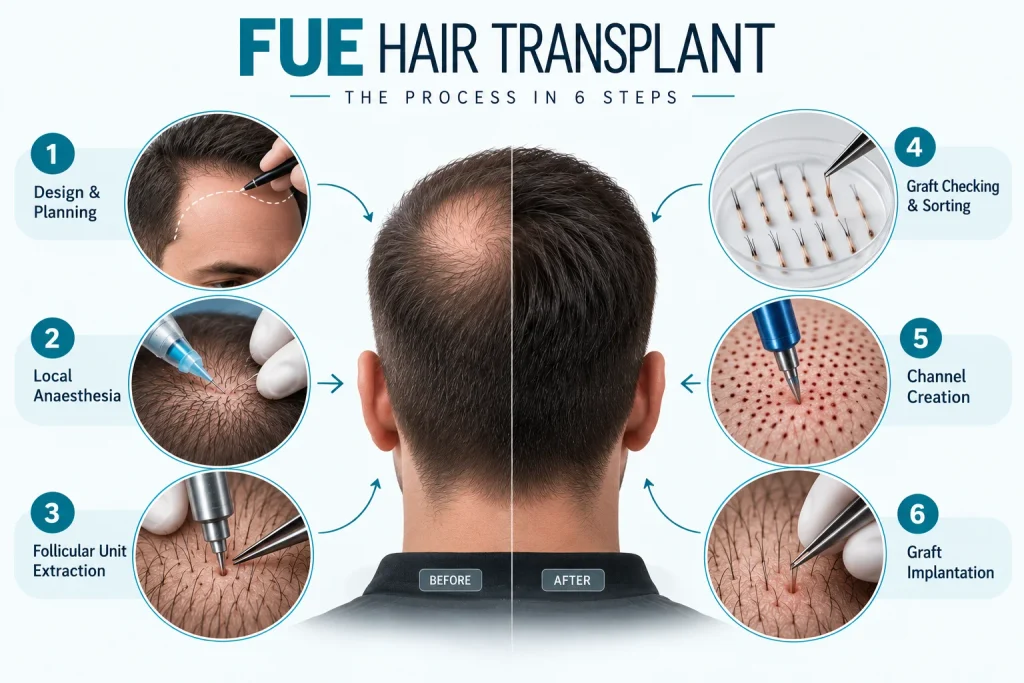
A complete FUE hair transplant procedure involves much more than simply taking follicles from the back and moving them to the front.
Before deciding how many grafts can be transplanted, the medical team needs to examine the donor area.
They look at factors such as donor density, hair calibre, follicle distribution, previous extraction, the size of the area that needs coverage and how your hair loss may progress.
This matters because the donor area contains a limited number of usable follicles. Taking more grafts is not automatically better.
At UniquEra Clinic, photographs can be used for the initial remote assessment, but the final graft plan is confirmed after a physical donor and recipient-area examination in Istanbul.
The treatment plan needs to answer several questions before extraction begins.
Where should the hairline sit? How much coverage is realistic? Which areas need the most density? How much donor hair should remain available if hair loss continues later?
This is why two people with similar bald areas may receive very different graft recommendations.
This is the actual FUE stage.
A small punch is positioned around individual follicular units so they can be removed from the scalp. Punches can be operated manually or with a motorized handpiece depending on the technique and case.
Because follicles are removed individually, FUE does not create the single linear donor scar associated with strip harvesting.
It can still leave tiny circular marks across the donor area. FUE should therefore never be sold as completely “scar-free.”
Extracted follicular units need to be handled carefully and kept in an appropriate holding solution before implantation.
They are also sorted according to the number of hairs they contain.
Single-hair grafts are generally useful around the frontal hairline, where a softer transition is needed. Grafts containing more hairs can be placed farther behind the hairline to help create visual density.
This is where the terminology starts to change.
With Sapphire FUE, recipient channels are created before graft placement, using sapphire-bladed instruments.
With DHI, grafts are loaded into an implanter pen and placed using that implantation system.
In both cases, the donor grafts may still have been harvested using FUE.
That is why understanding FUE hair transplant how it works requires separating extraction from implantation.
For a deeper comparison, read FUE vs DHI Hair Transplant: Which Is Better for Your Hair Loss?.
There is no single age, hairline shape or baldness stage that automatically makes someone suitable.
The biggest question is whether enough healthy donor hair exists to create a worthwhile result without damaging the donor area.
A person may be a good candidate for FUE when there is enough usable donor hair, the cause and pattern of hair loss have been properly assessed, the recipient area can realistically be covered with the available graft supply, scalp health allows surgery, and expectations match what the donor area can provide.
A person with extensive baldness but a weak donor area may actually be a poorer candidate than someone with less hair loss and a strong donor supply.
Age matters too, but mainly because the medical team needs to think about future hair loss. A very low or dense hairline created today can consume grafts that may be needed later if native hair continues thinning.
So if you are asking who is suitable for FUE hair transplant or who is a good candidate for FUE, the answer starts with donor capacity and long-term planning, not the number of grafts advertised in a package.
There is no responsible graft number that applies to everybody.
Your FUE hair transplant grafts should be calculated from what can be safely removed and what the recipient area actually needs.
A larger bald area may require more grafts, but the donor area still sets the upper limit.
This is one of the places patients should be careful with “maximum graft” or “unlimited graft” offers. Removing too many follicles can leave visible thinning across the donor area and reduce the options available if another transplant is needed later.
At UniquEra Clinic, donor preservation is considered before the final graft number is confirmed. The aim is not to extract the largest possible number simply because it can be marketed as a bigger session.
Wondering whether you need 2,000, 3,000 or more grafts? That number cannot be answered properly from a package chart. Send your photos for a free assessment and get a graft recommendation based on your donor area and coverage needs.
The FUE hair transplant advantages are mainly related to donor harvesting.
There is no long linear donor scar because follicles are removed individually. This can make shorter hairstyles easier for some patients. FUE can also allow grafts to be selected and distributed according to the treatment plan, and it is now widely used as the donor-harvesting method alongside different implantation systems.
But FUE itself does not create a natural hairline.
Natural-looking FUE hair transplant results still depend on decisions such as donor management, hairline design, graft selection, direction, angle, recipient density and how carefully the grafts are handled.
A good tool in inexperienced hands does not automatically produce a good result.
FUE is still a surgical procedure.
Possible FUE hair transplant risks include bleeding, infection, temporary numbness, discomfort, swelling, visible scarring, poor graft growth and an unnatural appearance if planning or placement is poor.
There is also a risk that is especially important in FUE: overharvesting.
Because thousands of tiny extraction points can be spread across the donor area, poor extraction planning can leave the back and sides looking thin or uneven.
Another limitation is simple biology. FUE moves existing follicles. It does not create an unlimited new supply of hair.
If your donor area cannot support the density or coverage you want, changing from FUE to another implantation method does not magically create more grafts.
When comparing an FUE hair transplant clinic in Turkey, ask how the clinic decides the safe graft number, not simply how many grafts it says it can extract.
You can also read Hair Transplant Risks Explained: How to Safely Choose a Hair Transplant Clinic in Turkey before making a decision.
FUE hair transplant recovery has two different timelines: scalp healing and hair growth.
The scalp usually settles much sooner than the transplanted hair produces its final result.
During the early period, redness, scabbing, swelling and some discomfort can occur. Patients are given specific instructions on washing, sleeping, touching the transplanted area and returning to normal activity.
Transplanted hair commonly sheds during the first several weeks. This is expected and does not automatically mean the follicles have been lost.
New growth usually becomes noticeable over the following months.
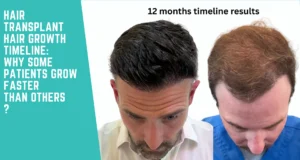
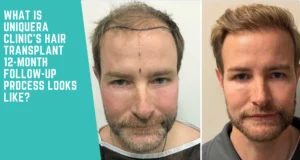
Most patients see meaningful change between six and nine months, while the result may continue developing for around 12 months or longer depending on the individual case.
So judging an FUE transplant from photographs taken a few weeks after surgery tells you almost nothing about the final outcome.
The word “FUE” tells you very little about how good the final result will be.
A natural result depends on the entire treatment plan.
The donor area must be harvested evenly. The hairline needs to fit the patient’s face and expected future hair loss. Single and multi-hair grafts need to be distributed appropriately. Direction and angle need to match surrounding native hair. The number of grafts needs to be realistic for the available donor supply.
Aftercare matters as well because recovery continues long after the patient leaves the clinic.
This is why comparing clinics using only technique names can be misleading.
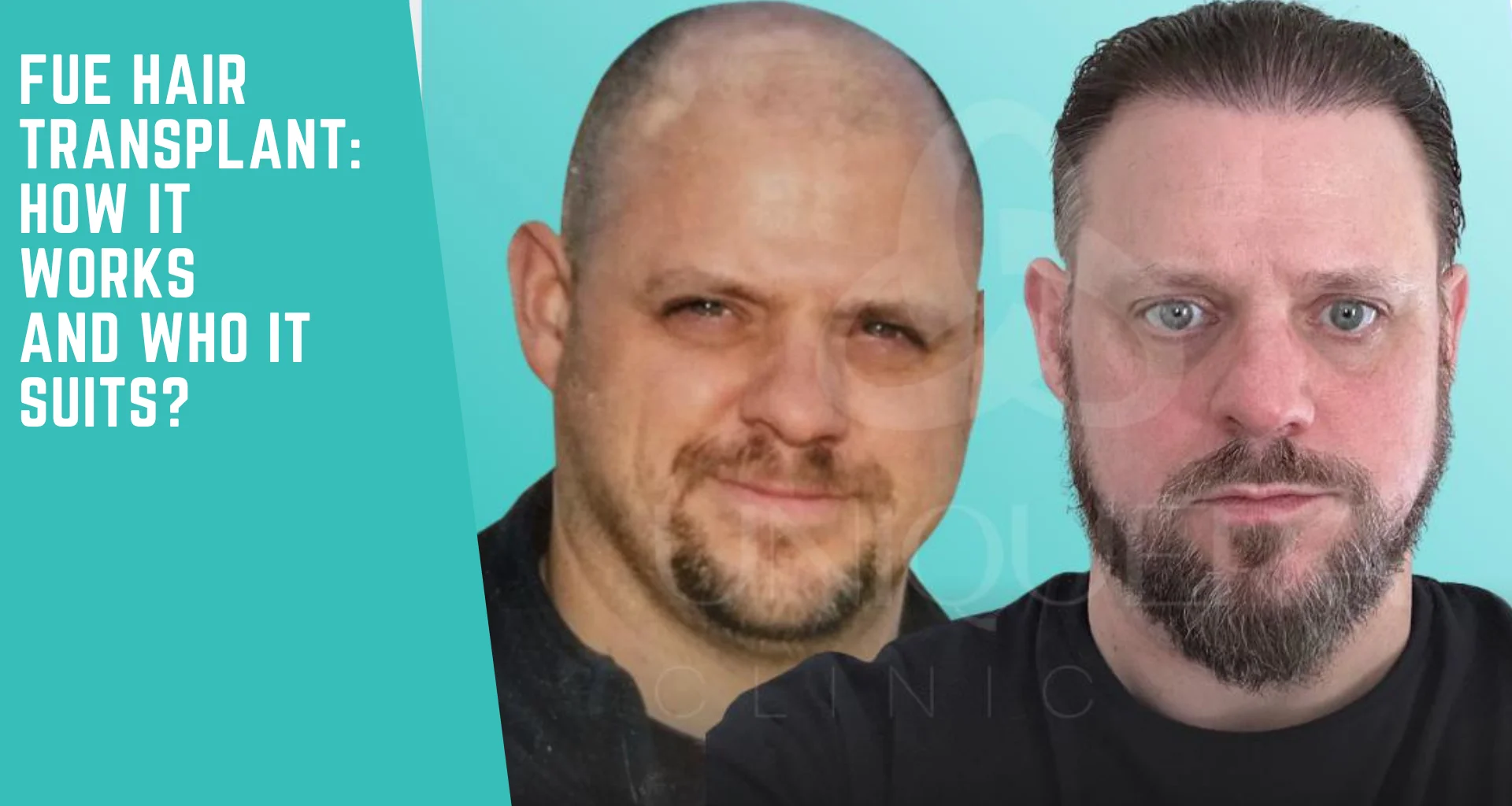
Before-and-after photographs are more useful when they show patients with similar hair loss, hair characteristics and starting conditions, with enough time between the before and final result.
The most useful answer is: neither is automatically better.
| FUE / Sapphire approach | DHI | |
| Donor harvesting | Individual follicular units removed using FUE | Individual follicular units usually removed using FUE |
| Recipient stage | Channels are created before graft placement | Grafts are placed using an implanter pen |
| Often considered for | Broader areas and larger coverage plans | More focused placement and selected areas with existing hair |
| Main deciding factors | Donor area, treatment area, graft needs and planned distribution | Donor area, treatment area, graft needs and planned distribution |
The phrase FUE vs DHI hair transplant can therefore be slightly misleading because they are not always competing descriptions of the same step.
At UniquEra Clinic, patients are not expected to choose a technique before the consultation. The recommendation is made after looking at the donor area, existing hair, treatment area and required graft distribution.
In some cases, more than one approach can even be used within the same treatment plan.
Turkey, and Istanbul in particular, has become a major destination for international hair transplant patients.
But choosing an FUE hair transplant in Turkey should still come down to the individual clinic rather than the country alone.
Look beyond package price and ask what the quote actually includes, how your graft count was calculated, who is responsible for treatment planning, how many procedures are handled each day, what happens if your physical examination changes the original plan, and what follow-up you receive after going home.
If cost is part of your comparison, read FUE Hair Transplant Cost in Turkey: What Is Included? rather than comparing headline prices alone.
FUE is a proven way to harvest individual donor grafts, but the acronym alone cannot tell you whether a transplant is suitable or whether the eventual result will look natural.
The answer depends on your donor area, hair loss pattern, future hair loss, required coverage and how the extracted grafts will eventually be implanted.
That is also why the best consultation should not begin with, “Which package do you want?”
It should begin with, “What does your hair loss and donor area allow us to do safely?”
If you want an answer based on your own scalp rather than another clinic’s package description, book your free consultation with UniquEra Clinic. Your case can be reviewed first, then the team can explain whether FUE, Sapphire FUE, DHI or another plan makes sense for you.
Yes. FUE normally leaves many very small circular marks in the donor area rather than one long linear scar. How visible they are depends on extraction, healing, hair length and individual scarring.
Not automatically. FUE describes donor harvesting, while DHI mainly refers to an implantation approach. Which plan is appropriate depends on your donor area, hair loss and recipient-zone needs.
The donor harvesting principle remains FUE. “Sapphire” refers to the sapphire-bladed instruments used to create recipient channels before graft placement.
Early shedding is common after surgery. New growth usually starts becoming visible over the following months, with clearer results around six to nine months and further development up to around 12 months or longer.
No. You need enough suitable donor hair and a hair-loss pattern that can realistically be treated with transplantation. Some patients may be advised to wait, use medical treatment first or avoid transplantation.
No. Your donor area has a finite supply. Safe graft planning should consider both the current transplant and the hair you may need later.