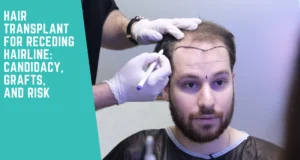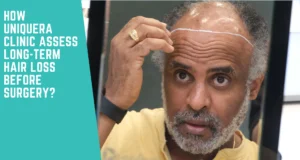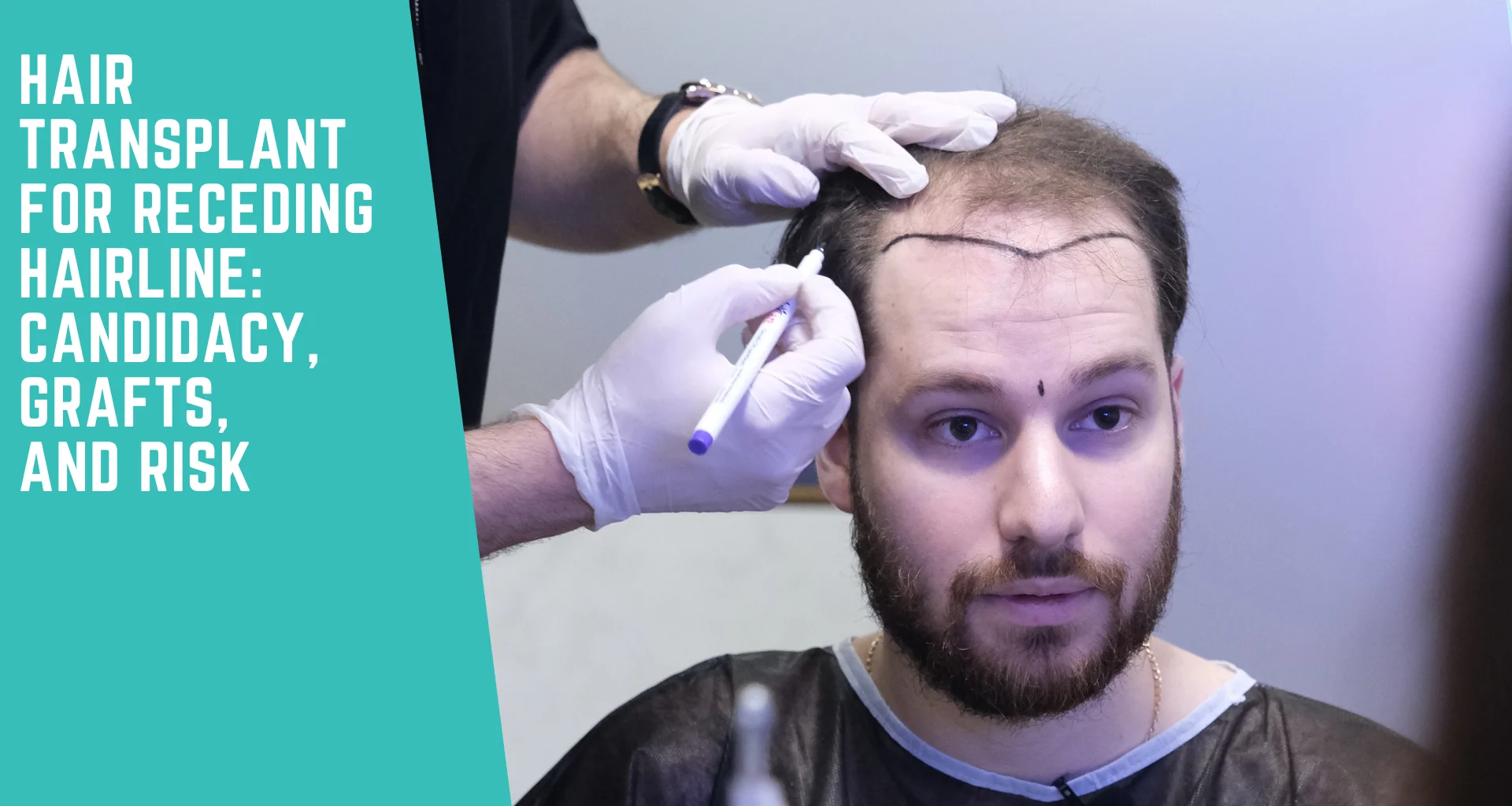

A hair transplant for a receding hairline can rebuild your hairline. Doctors move healthy hair follicles from the back of your head to the front, where hair has been lost for good.
But the graft count is only part of the decision.
A hairline that looks good today also needs to work if your hair keeps thinning behind it. That’s why your age, your donor hair, how far back your hairline has moved, future hair loss, and where the new hairline sits all matter. These decide how many grafts you need.
For the right patient, a receding hairline transplant can bring back a natural frame for the face. It does not try to copy the hairline you had as a teenager. A hair transplant can look natural when you have enough healthy donor hair and the area that needs it is a good fit.
Has your hairline been moving back? Not sure if it’s ready for surgery? Send us clear photos of your front, temples, top, crown, sides, and donor area. We’ll look at your hair loss and donor hair first, before we talk about graft numbers.
Yes. A receding hairline can often be transplanted, if the pattern of hair loss is clear and there is enough stable donor hair.
Grafts are usually taken from the back and sides of the scalp and moved to areas such as:
A transplant does not stop the cause of your hair loss. It only replaces hair in spots where follicles are already gone.
This matters because your natural hair behind the new hairline can keep thinning.
The most common cause of a slowly receding hairline in men is androgenetic alopecia. This is also called male pattern hair loss.
Hair loss that runs in the family often starts at the forehead or temples. It usually gets worse slowly, over many years. Hair loss can also come from other causes. If your hairline moves back suddenly, in patches, with redness, or in an unusual way, see a doctor before you think about surgery.
Common causes of a receding hairline:
| Possible cause | What it may look like |
| Androgenetic alopecia | Slow recession at the temples and front |
| Age-related hair changes | A slow change in thickness or hairline shape |
| Traction | Hair loss where hair is pulled a lot |
| Scarring alopecia | Hair loss with redness or scarring |
| Other medical causes | Sudden, patchy, or unusual hair loss |
The key step is finding out why your hairline is receding, before you assume a transplant is the right fix.
Being a good candidate depends more on your hair loss pattern and donor area than on how big your forehead is.
You’re more likely to be a good fit when:
| Stronger sign for surgery | Reason |
| Your hair loss follows a clear pattern | Easier to plan for the future |
| Donor hair is thick and stable | There is enough hair to move |
| Hair loss is fairly stable | Less risk of losing more hair right behind the new line |
| The area getting the graft is healthy | Heals well and holds the graft |
| Your expectations are realistic | You only have a limited amount of donor hair |
| You’ve thought about future hair loss | The plan looks past year one |
A good check-up also looks at your scalp health and checks if another condition is causing your hair loss. You need enough healthy donor hair, and the area getting new hair must be able to support it.
For more on this, see UniquEra Clinic’s hair transplant candidacy guide.
Your hair loss does not need to stop forever. But the pattern should be clear enough to plan around.
This matters most for younger patients.
Picture a low, thick hairline built at age 24. If the person’s own hair keeps receding behind it over the next five years, the new hairline can end up cut off on its own.
That may mean you need:
So “stable hair loss” does not mean you must wait until hair loss stops completely. It means knowing your pattern well enough to avoid using too much donor hair too soon.
People in their 20s are sometimes told to wait, or to try medical treatment first, until their pattern becomes clear.
There is no single answer. The area you need to cover can be as small as two corners, or as large as most of the front third of your scalp.
A hairline-only transplant often uses around 1,000 to 1,500 grafts. You may need more if your temples or a wider front area also need work. The exact number depends on the size of the area, your head size, your hair type, your donor supply, and where the hairline sits. UniquEra Clinic’s guide to how hair transplant grafts are calculated explains this in more detail.
The main things that matter:
This is why your graft number should come from measuring your scalp and checking your donor hair, not from a fixed price list.
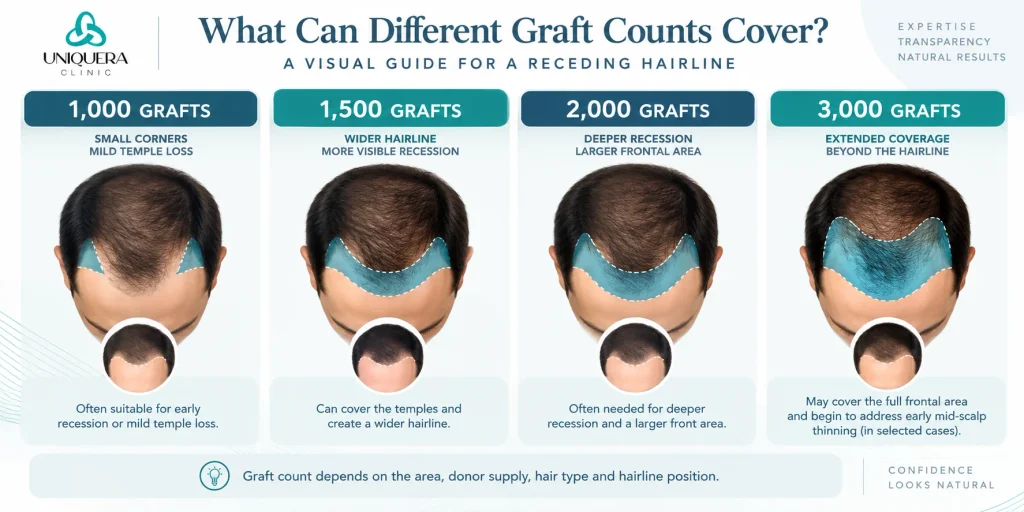
These numbers are examples to show what each graft count can cover. They are not a fixed rule for every patient.
| Graft number | What it may suit |
| Around 1,000 grafts | Small frontal corners or mild temple loss |
| Around 1,500 grafts | A wider hairline, or hair loss that shows more at the front |
| Around 2,000 grafts | Deeper hair loss or a larger front area |
| Around 3,000 grafts | Usually covers more than just the hairline, depending on your scalp and hair loss |
A smaller head with thick, wavy hair may need a very different graft plan than a larger area with fine, straight hair. The area you’re treating, your donor hair, your hair type, and future hair loss all shape the final number.
Already got a quote for 1,500, 2,000, or 3,000 grafts? Send us the plan, along with photos of your donor area and hairline. We’ll check what that number should cover, and whether it leaves you enough donor hair for later.
A conservative hairline is not just a higher one. It’s a hairline that fits your face, your donor hair, your age, and your likely future hair loss.
Lowering the hairline even a small amount increases the area that must be filled.
That means more grafts.
Every graft used at the front is one you can’t use later for the mid-scalp or crown.
Good hairline design should think about:
A hairline set too low can use up donor hair you may need later.
So the goal of any receding hairline treatment should be a natural-looking improvement, not the lowest line possible.
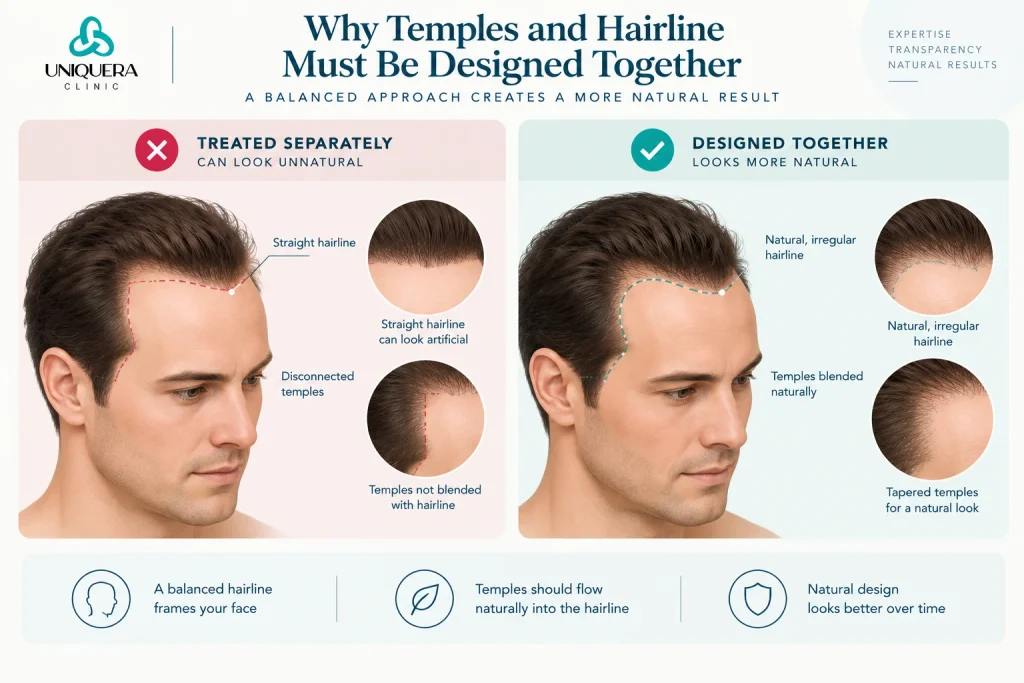
Temple hair loss should blend with the front hairline. It should not be treated as two separate bald spots.
The temples help shape the face.
Restoring them usually needs care with:
A straight front line with temples that don’t blend in can make a transplant look obvious, even if the grafts grow well.
This is why temple hair loss is as much about design as it is about graft numbers.
A receding hairline transplant carries the usual risks of minor surgery, and these are well managed with good planning and aftercare.
Most patients recover without problems. Still, it helps to know what to expect:
| Risk | What to know |
| Swelling, bleeding, or infection | Common with any minor surgery, usually mild and settles within days. |
| Temporary shedding | Normal in early healing; hair typically grows back once follicles settle. |
| Poor graft growth | Most grafts survive when the donor area and technique are well matched. |
| Visible donor thinning | Careful extraction planning keeps the donor area looking full. |
| Unnatural hairline | Avoidable with good hairline design and graft placement. |
| Continued natural hair loss | Can be managed with future planning and, if needed, ongoing treatment. |
| Needing another procedure | Some patients choose a second session later on; this is normal long-term planning, not a sign anything went wrong. |
Hair transplant surgery can involve some bleeding, bruising, swelling, or infection, similar to other minor procedures, and most of this settles within days to weeks. Hair loss that runs in the family can continue after surgery, which is exactly why a good plan accounts for the future from the start rather than treating the procedure as the end of the story.
For a front hairline, the main thing worth planning for isn’t whether the grafts grow. Most do. It’s making sure the hairline still looks right years from now, as the hair around it changes. That’s what good planning is for.
d
It can, but this is one of the most preventable outcomes in a hair transplant, and careful planning avoids it.
An unnatural look usually comes down to a few avoidable design choices:
None of these just happen on their own. They come from decisions made before the procedure, which is why a natural look depends as much on design and planning as it does on the grafts growing well.
A natural hairline gets thicker gradually behind the front row, rather than looking like one solid block of hair. UniquEra’s hairline-design guidance explains how a well-planned line avoids looking too straight, too thick, or placed at the wrong angle.
The transplanted follicles may stay in place while the natural hair behind them keeps thinning.
That can leave a visible gap between the transplant and the rest of your hair.
This is why future hair loss has to be part of the first treatment plan.
Depending on your case, this may mean:.
Your doctor may suggest medication after surgery, since your own hair can keep thinning even after a transplant.
Donor hair is also limited. Once it’s removed, it does not grow back in that spot. This is why careful donor planning matters, especially if you might need more coverage later.
A good result should look like your own hairline has come back, not like a new line was drawn on your forehead.
When you check results, look at more than just thickness.
Check:
When you look at results, a case with hair like yours, similar hair loss, similar age, and similar donor hair tells you more than picking the thickest photo in a gallery.
The cost depends on your treatment plan, not just on the fact that your hair loss is at the front.
Factors include:
At UniquEra Clinic, we confirm your price after we check your scalp. We do not just charge a flat rate per graft. UniquEra’s guide on why hair transplant costs vary so much between clinics explains why a clear price built from your own check-up tells you more than a per-graft rate.
So if two clinics both quote 2,000 grafts, that does not mean they’re offering the same procedure.
It can be worth considering. Istanbul has a large hair-restoration industry. But the quality of the plan matters more than where you have it done.
For a front hairline, ask how the clinic decides:
A good clinic in Istanbul should explain these choices clearly, before you pick it just for the price or package.
UniquEra Clinic starts with your hair loss pattern and donor area before confirming a graft number or hairline.
The process:
| Stage | What happens |
| Initial consultation | Photos, your hair loss history, your goals, first assessment |
| Graft estimate | An early graft number, based on visible hair loss |
| In-person assessment | Your donor and treatment areas are checked in Istanbul |
| Hairline design | We plan the position, shape, temples, and thickness |
| Final graft allocation | Grafts are placed according to the agreed design |
| Procedure and follow-up | Extraction, implantation, aftercare, and checking growth |
The Medical Directors at UniquEra Clinic have over a decade of hands-on hair transplant experience. They personally check the donor area and hairline design before anything is confirmed. UniquEra Clinic’s consultation process makes sure the graft plan, technique, and hairline are checked in person, not just decided from photos.
Ask questions that show how the clinic built the plan, not just what it costs.
The useful answer is not simply “you need 2,000 grafts.”
The useful answer is why you need them, where they will go, and what’s left for later.
A transplant may be a good option if your hair loss is permanent, the pattern can be planned around, and your donor area can safely support the new hairline.
It may be smarter to wait or look closer if:
| More suitable for transplantation | May need more checking first |
| Clear, established hair loss at the front | A hairline that’s still changing fast |
| A strong donor area | Weak or spread-out donor thinning |
| A clear pattern of hair loss | Hair loss that’s unexplained or patchy |
| A realistic hairline goal | Wanting a very low, teenage-style hairline |
| Future hair loss has been planned for | No plan for more hair loss |
| A healthy scalp | An active scalp condition |
The decision is not just about filling the empty corners.
It’s whether the new hairline will still look natural as you get older, and whether you’ll have enough donor hair left if you lose more.
Want to know what this could look like for you? Send us clear photos of your hairline, both temples, top, crown, sides, and donor area. We’ll look at your hair loss pattern, your donor hair, and how many grafts you may need. Then we’ll explain what’s realistic, before you decide whether to travel to Istanbul. Book your consultation with UniquEra Clinic today.
Not always. It depends on the method used, how many grafts you need, your donor area, and how the grafts are placed.
Many people go back to desk jobs within a few days. But you may still have redness, swelling, or scabs during early healing.
New growth often starts to show after a few months. Most people see results between six and nine months. Some take up to a year.
Transplanted hairs often fall out in the first few weeks. This is normal. It does not mean the grafts are lost. New growth comes later.
Doctors numb your scalp before the procedure, so you should not feel pain during it. You may feel some soreness once the numbing wears off.
Yes, some women can have this done. First, a doctor should find out why the hairline is receding, since women’s hair loss can follow different patterns and sometimes needs medical treatment.
Yes, if you still have enough donor hair left. This is why your first transplant should save some donor hair, not use it all at the front.
Hair moved from a stable donor area is meant to grow for the long term. But your own hair around it can still thin. This is why your first plan needs to think about future hair loss too.