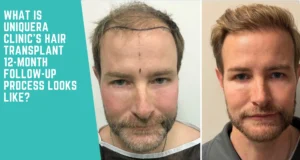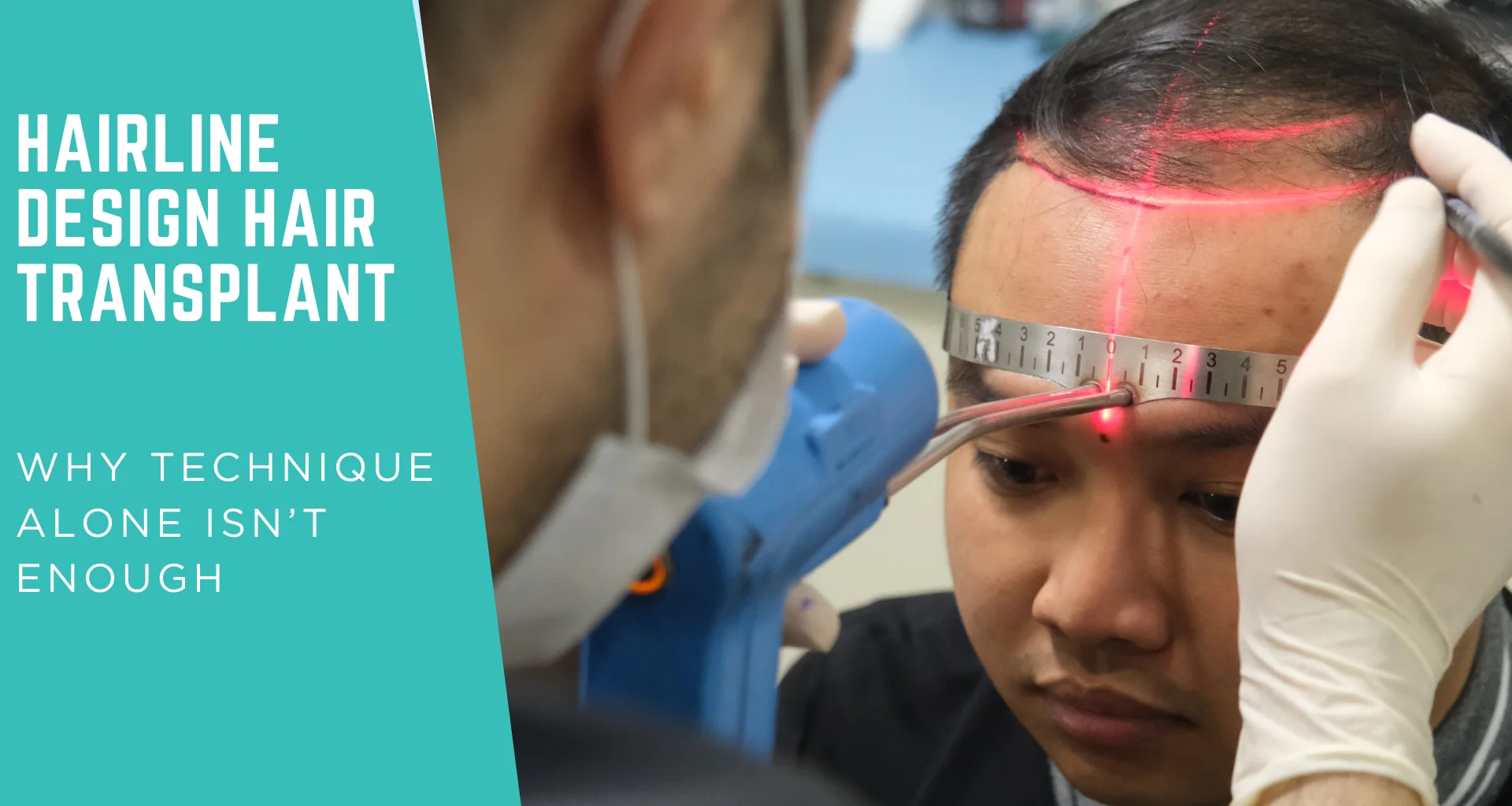

You can have good graft growth and still feel something is off. The hairline looks too sharp. The temples do not blend. The front looks artificial even though the hair grew.
Most patients are not really asking which technique is best. They are asking: will this look natural on my face?
That answer does not come from FUE, DHI, or Sapphire alone. The technique moves the grafts. Hairline design decides whether the result looks like you were born with it.
This guide explains what makes a hair transplant hairline look natural, why a well-grown transplant can still look fake, and how hairline planning should work before any technique is selected.
Want to know what hairline your face and donor area can actually support? Book a free consultation at UniquEra Clinic and get an honest assessment before any technique is recommended. Book a free consultation
The hairline changes the face. It frames the forehead, affects the side profile, and determines how the temples sit. A transplant can be technically successful and still look wrong if the line is badly planned.
A PubMed-indexed study on hairline restoration explains that natural results depend on choosing correct borders of the hairline and recreating the visual traits of a natural frontal hairline. Getting this wrong is visible in every conversation the patient has.
Source: PubMed – Natural Hairline Restoration Principles | pubmed.ncbi.nlm.nih.gov
The best hairline for a hair transplant is not always the lowest one, particularly for patients considering a hairline hair transplant with long-term planning in mind. It is the one that fits the patient’s face, age, donor area, and future hair loss pattern.
| What patients usually want | What the clinic has to check |
| Make it lower | Will it still look natural in 10 years? |
| Fill the front | Can the donor area safely support this? |
| Make it dense | Will the front look too heavy or wall-like? |
| Fix the temples | Will the side profile actually blend? |
Real hairlines are not straight, especially in cases of receding hairline hair loss where natural temple recession changes the shape over time. A natural hairline has small breaks, a softer front edge, and density that builds gradually behind it. Temples do not form sharp corners.
A straight line looks clean on paper. Once the hair grows, it can look drawn on. The problem is not the growth. It is the design.
| Fake-looking transplant line | Natural-looking hairline |
| Too straight. | Soft, irregular edge. |
| Too low for the age. | Age-appropriate height. |
| Same density everywhere. | Gradual density from front to back. |
| Sharp temple corners. | Blended temples that flow naturally. |
| Thick grafts in the first row. | Single-hair grafts at the front edge. |
This is where many poor results begin. The hair grows but the line gives it away.
A natural hairline is built from several clinical decisions, not one. Here is what each one does.
The height
The hairline should not sit too low for the patient’s age or donor capacity. A very low line may feel exciting on surgery day but uses more grafts and may not age well, especially in advanced Norwood scale hair loss cases.
The shape
The curve should suit the face. Some patients need a mature hairline. Some need more temple support. Some need a softer frontal shape. Copying a celebrity hairline rarely produces a natural result because no two faces are the same.
The front edge
The first row should not look like a wall. Small natural breaks and a gradual density build help the line look like it belongs there. A front edge that starts too dense immediately signals a transplant.
Direction and angle
Hair grows at different angles in different zones of the scalp. The ISHRS states that graft placement requires correct depth, angle, size, and direction so hair grows naturally from the scalp. A graft can survive and still look wrong if the angle is off.
Source: ISHRS – Hair Graft Placement: The Final Step in Hair Transplantation | ishrs.org/hair-graft-placement-the-final-step-in-hair-transplantation/
Why can’t technique alone create a natural hairline?
FUE extracts grafts. DHI places them. Sapphire FUE creates channels. But none of these tools decides where the hairline should sit, how the temples should connect, or how the result should look in ten years.
| What matters | Does technique handle it? | Does design handle it? |
| Graft extraction | Yes | No |
| Hairline height | No | Yes |
| Temple connection | No | Yes |
| Front softness | No | Yes |
| Density flow front to back | Partly | Yes |
| Long-term facial balance | No | Yes |
The ISHRS notes that regardless of technique used, experience and precision in graft placement strongly affect the final result. The plan comes before the tool.
Source: ISHRS Patient Education | ishrs.org
If you are searching for FUE hair transplant Turkey, do not only ask which technique the clinic offers. Ask how the hairline is designed and why it suits your specific case.
A good hairline is not chosen from a photo. It is decided after a full clinical evaluation.
The evaluation needs to cover how much hair has been lost, how strong the donor area is, whether the temples are stable, whether the crown also needs grafts, how thick or fine the hair is, and how the loss may continue.
ISHRS FUE guidelines state that the evaluation should include hair direction, colour, angle, calibre, and curl in both donor and recipient areas because these directly affect planning.
This is why a patient’s teenage hairline may not be the right goal. A line that looked good at 18 may not be the safest line at 35 or 45. A good clinic may tell you the hairline cannot go as low as you want. That is not a limitation of skill. It is protection of the long-term result.
At UniquEra, the hairline is not finalized from photos alone. Photos show the front, temples, and crown but they do not show the full scalp condition.
Before the hairline design is confirmed, the team checks donor strength, hair thickness, weak existing hair, scalp condition, temple connection, crown involvement, and the safe graft range.
A fixed plan can sound convincing: 1,000 grafts in the front, 2,000 in the crown. But before seeing the actual scalp, those numbers can be inaccurate. One area may need more density. Another may have weak existing hair that should be preserved. The donor area may allow more or less than expected.
The patient receives a realistic graft range first. The final placement is confirmed after the in-person assessment when the team can see exactly where grafts are needed. This keeps the plan flexible and more accurate.
The front hairline frames the face. It is visible in all face-to-face interactions. . The crown needs coverage and swirl planning, but the crown can hide small imperfections. The front cannot.
| Area | Main planning goal |
| Front hairline | Frame the face with a soft, age-appropriate edge |
| Temples | Blend the side profile naturally |
| Mid-scalp | Build density gradually |
| Crown | Follow the natural swirl and add coverage |
The front hairline allows very little room for error, as any overly dense, straight, or low design is immediately noticeable in everyday face-to-face interactions. The crown is more demanding in terms of graft usage and planning, but it can be more forgiving visually, as it is less defined in direct facial framing
Why do single-hair grafts matter in the front hairline?
Not all grafts are the same. A follicular unit can contain one, two, three, or more hairs. Where each type is placed determines how natural the result looks.
| Graft type | Best placement | Why |
| Single-hair grafts | Front edge and first row | Creates a soft, natural-looking hairline |
| Double-hair grafts | Behind the first row | Builds density gradually without looking heavy |
| Triple or quad grafts | Mid-scalp and crown | Provides volume where it is less visible |
Placing triple grafts in the front row is one of the most common causes of results that look obviously transplanted. The grafts grow successfully. But the front looks pluggy because the planning was wrong. This is a design failure, not a technique failure.
Hair grows at different angles in different zones. At the front it grows flatter. At the temples it changes direction. At the crown it follows a circular swirl.
If grafts are placed at the wrong angle, the hair grows upward or outward, becomes hard to style, and catches light in a way that signals a transplant rather than natural hair.
StatPearls notes that clinicians should design a conservative, natural hairline for a realistic long-term result, and that hair characteristics together with donor-recipient planning directly affect how the transplanted hair sits on the scalp.
The graft can survive perfectly and the result can still look wrong. Naturalness is not just about growth. It is about how the hair sits, falls, and moves.
Most fake-looking results come from planning mistakes, not from poor graft survival. The hair grew. The design gave it away.
| Planning mistake | What it produces |
| Hairline too low | Does not suit the patient’s age or future loss pattern |
| Too straight | Looks drawn on. No natural variation. |
| Too dense at the front | Looks like a wall rather than a hairline |
| Thick grafts in the first row | Pluggy, obvious edge |
| Wrong graft angle | Hair sticks up or lies flat unnaturally |
| Poor temple design | Front looks disconnected from the sides |
| No future planning | Result ages badly as surrounding hair continues to thin |
A bad hairline often tries too hard. Too low, too sharp, too dense, too perfect. A natural hairline has restraint. It does not announce itself.
A low hairline may look balanced initially, but over time it can lose harmony as native hair thinns, leaving the transplanted zone more defined and visually isolated.
Before agreeing on a hairline height, it is important to consider the following:
A clinic that refuses to lower the hairline as much as the patient wants is not showing a lack of skill. It is protecting the long-term result.
The technique is the last decision, not the first. Once the hairline position, density plan, graft requirements, and donor assessment are confirmed, the technique follows naturally.
This is technique-agnostic philosophy. The method follows the diagnosis. A clinic that recommends a technique before understanding your case is making a commercial decision, not a clinical one.
Most people wait too long. If your hairline has changed in the last year, a proper assessment now gives you more to work with. Book your scalp analysis at UniquEra Clinic.Book your consultation.
You do not need medical language. Ask the way a patient naturally would.
1. Will this hairline suit my face from the front and the side?
2. Is this height safe for my age and how my hair might change?
3. Will my temples blend with the new hairline?
4. What if I lose more hair behind this line over the next ten years?
5. Are we protecting enough donor area for future sessions?
6. How does this plan account for future hair loss progression?
7. Why are you recommending this specific technique for my case?
8. How will single, double, and triple grafts be distributed across the zones?
9. Can you show me results from patients with similar hair loss to mine?
10. Is my donor area strong enough to support the result you are suggesting?
A good consultation should leave you understanding why the hairline fits your face, not just how many grafts you are receiving. If the clinic cannot answer these questions clearly, that tells you something important.
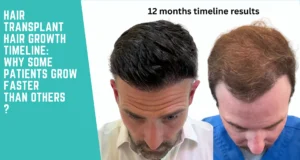
The hairline does not look final right away. Growth is gradual and the early stages can feel alarming if not expected.
| Time after surgery | What usually happens |
| First 10 days | Scabs around grafts. Mild swelling. Follow washing protocol exactly. |
| Weeks 2 to 6 | Shedding phase. Transplanted hairs fall out. Follicles stay. This is normal. |
| Months 3 to 5 | Early regrowth begins. Hairs are thin and fine. |
| Months 6 to 9 | Hairline becomes fuller and more defined. |
| Month 12 | Result is close to final. Density and direction visible. |
| Up to 18 months | Some patients continue to improve beyond 12 months. |
Early uneven growth is normal. The hairline matures slowly. Patients who understand this timeline stay calm through the process. Patients who were not warned often panic during the shedding phase.
No. The best hair transplant clinic in Turkey is not the one with the newest tool. It is the clinic that can explain the full plan before you agree to anything.
A strong clinic should explain your hairline design and why it suits your face, your donor limit and what it means for coverage, your graft range and how it was calculated, your temple plan and how it connects to the hairline, your technique choice and why it fits your case specifically, your recovery timeline and what is normal at each stage, and your future hair loss risk and how the plan accounts for it.
For patients considering FUE hair transplant Turkey or DHI hair transplant Turkey, this process matters more than choosing a technique from a website menu. Technique matters. But design decides whether people notice your hair or your transplant.
| Confirm this before booking | Why it protects you |
| Hairline height is explained with reasoning. | Prevents a line that suits surgery day but not ten years later. |
| Shape suits your face shape. | Produces a balanced, natural-looking result. |
| Temples are included in the plan. | Prevents the front looking disconnected from the sides. |
| Front edge is planned with single grafts. | Avoids a pluggy or wall-like front row |
| Density builds gradually behind the front. | Creates a natural front-to-back transition. |
| Direction and angle are planned per zone. | Makes hair sit and move naturally. |
| Future hair loss is factored in. | Protects the result as native hair continues to change. |
| Donor area protection is confirmed. | Keeps options open for future sessions if needed. |
| In-person assessment is part of the process. | Photo-only planning cannot confirm scalp condition accurately. |
A natural hairline does not come from technique alone. FUE, DHI, and Sapphire FUE can all support strong results. But hairline design is what makes the result look believable.
The right design considers your face, age, donor area, temples, crown, and future hair loss. It does not chase the lowest line. It does not copy another patient. It does not use grafts carelessly to make the front look dramatic on surgery day.
If you want a clear answer on what hairline would suit your face and donor area, book a free consultation at UniquEra Clinic. No fixed template, no predetermined technique. Just an honest assessment of what your case can actually support. Book a free consultation.
Hairline design is the planning of the height, shape, density, angle, direction, and front edge of the transplanted hairline. It determines whether the result looks natural or artificial, regardless of how well the grafts grow.
Technique moves grafts from donor to recipient area. Design decides where the hairline sits, how soft the front edge is, how the temples connect, and whether the result ages well. Good technique with poor design still looks unnatural.
The best hairline is the one that fits your face shape, age, donor area capacity, and future hair loss pattern. There is no universal best. A hairline that suits one patient may look wrong on another.
FUE moves grafts. Naturalness depends on design, graft type selection, angle, direction, and density planning. FUE can support a natural hairline when these elements are planned correctly.
A front hairline transplant rebuilds the first visible edge of the hairline. It requires careful design because it frames the face and is visible in every conversation. It has less room for error than crown or mid-scalp work.
Ask the clinic about graft type placement, front edge softness, angle planning, temple blending, and how future hair loss is factored into the design. A clinic that explains all of these clearly is planning your result properly.
Most patients see early growth between three and five months. A natural hairline appearance develops between nine and twelve months. Some patients continue to improve up to eighteen months after surgery.
Yes, when the clinic focuses on diagnosis, donor planning, natural design, and aftercare rather than technique or graft count alone. The quality of the planning process matters more than the location.
A mature hairline is a natural upward shift of the juvenile hairline, which is different from progressive male pattern baldness. It is not baldness. A receding hairline continues to move back progressively due to androgenetic alopecia. Distinguishing between the two is important in hairline planning because designing to a juvenile position in an adult may not be safe or sustainable.