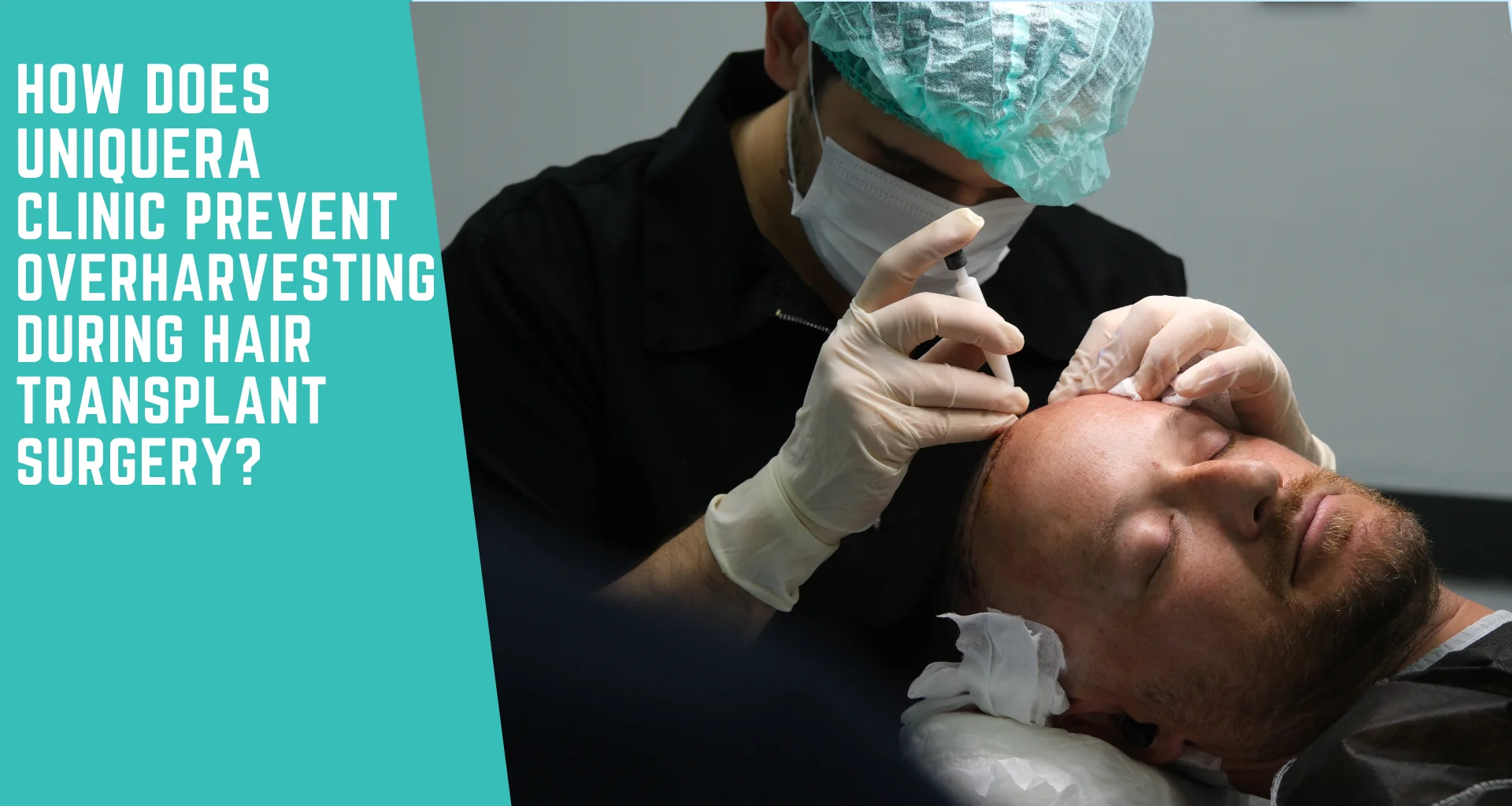

The process starts before the first graft is extracted. Donor density is assessed, the graft number is limited by what the donor area can support, extraction is planned across the donor region, and future hair loss is considered before the procedure begins.
This matters because extracted follicles do not grow back in their original donor location.
Overharvesting can therefore create two problems at once: visible thinning at the back or sides of the scalp and fewer grafts available if another transplant is needed later.
Hair transplant overharvesting happens when too many grafts are removed from the donor area, or when extraction is concentrated too heavily in particular zones.
The result can be visible thinning, patchiness or an uneven donor appearance.
It is not determined by one universal graft number.
Two patients can undergo the same number of extractions but have very different donor outcomes because their:
That is why UniquEra does not use one fixed percentage or graft limit for every patient.
UniquEra uses several planning controls before and during extraction rather than relying on the graft count alone.
| Overharvesting control | What it means |
| Donor density assessed before surgery. | The available donor supply is reviewed before the final graft number is set. |
| Graft count based on donor capacity. | The patient’s donor area limits extraction, not a preset package number. |
| Extraction areas planned across the donor region. | Grafts are not unnecessarily concentrated in one small area. |
| Future hair loss considered. | Donor supply may need to remain available for later treatment. |
| Medical Director supervision. | Donor management and extraction strategy are medically supervised. |
| Higher numbers can be refused. | Extra grafts are not removed simply to reach a larger advertised figure. |
Preventing overharvesting is not only about how many grafts are taken. It is also about where they are taken from.
Removing too many neighboring follicles can make one part of the donor area visibly thinner even when other donor zones remain relatively untouched.
Planned extraction therefore spreads suitable extraction points across the donor region rather than treating the donor area as one unlimited pool.
This is the difference between:
| Planned donor extraction | Poor extraction distribution |
| Grafts spread across suitable zones. | Heavy extraction from a concentrated zone. |
| Existing density considered. | Extraction follows a target number regardless of appearance. |
| Remaining hair helps maintain visual coverage. | Patchy or visibly depleted areas may remain. |
| Future donor use considered. | Current session consumes most available options. |
For a deeper explanation of donor assessment, see How Clinics Assess the Donor Area Before Hair Transplant Surgery?.
No. UniquEra does not use one fixed extraction percentage for every patient.
The safe graft number varies according to the individual’s donor density, hair characteristics, scalp condition, previous procedures and future needs.
A percentage that may be acceptable for one donor area could create visible thinning in another.
This is why the limit should be determined during assessment rather than after extraction has already started.
Yes. If the physical donor assessment shows that the planned number is unnecessary or could compromise the donor area, the graft plan can be reduced before surgery.
The remote graft estimate is preliminary.
After the patient arrives in Istanbul, the donor and recipient areas are physically examined before the final plan is confirmed.
If the donor cannot support the original number while maintaining the planned donor appearance and future options, the number can change.
Read Why UniquEra Does Not Promise Unlimited Hair Transplant Grafts for why a higher number is not automatically considered better.
Yes. Donor planning considers what the patient may need later, not only the bald area being treated today.
A patient restoring the frontal area may later experience further thinning through the mid-scalp or crown.
Removing unnecessary donor follicles during the first procedure can reduce the options available for that future loss.
This is why UniquEra aims to preserve donor reserves for possible later procedures where the individual case allows.
The graft number can be reduced, the treatment plan can change, or surgery may be postponed or declined.
This may happen when:
UniquEra’s current treatment guidance specifically allows the Medical Director to recommend fewer grafts when the requested count could compromise donor preservation.
For more on when surgery may not be advised, read Why We Sometimes Reject Hair Transplant Patients.
Before agreeing to a graft number, ask:
A graft figure without a donor-management explanation is only a number.
Want to know what your donor area can realistically support? Send UniquEra your photos for an initial assessment, followed by physical donor confirmation in Istanbul before the final extraction plan is approved.
Book Free consultation today!
Yes. Extracted follicles do not regenerate in their original location, so excessive extraction can permanently reduce donor density.
No. Poor extraction distribution can also create visible thinning when too many follicles are removed from concentrated areas.
No. The safe graft number is determined individually from the donor area rather than one fixed percentage.
Yes. The final number can be reduced after physical assessment if the original estimate could compromise donor preservation.
Medical Directors supervise donor management and the extraction strategy as part of the surgical plan.
For a deeper explanation of donor assessment, see How Clinics Assess the Donor Area Before Hair Transplant Surgery.