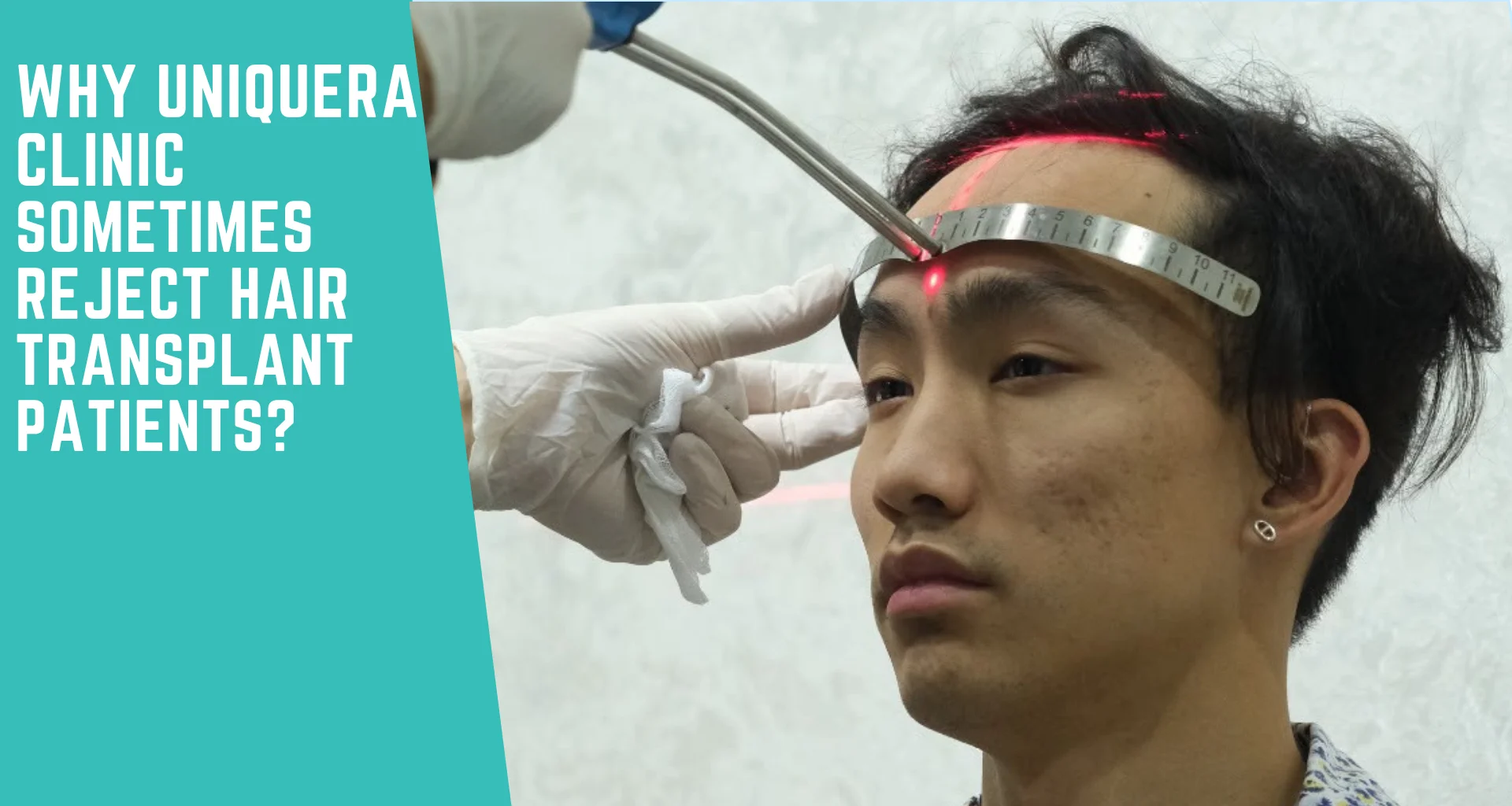

Not every UniquEra clinic consultation ends with a surgery date. Sometimes we recommend waiting, further medical assessment, or no transplant at all.
The reason is simple: wanting a hair transplant does not automatically mean your donor area, hair loss pattern, health, and expectations make surgery the right decision today.
Our hair transplant candidacy assessment looks at what can realistically be achieved without damaging the donor area or creating a result that becomes difficult to maintain as hair loss progresses.
The main reasons are an insufficient or unstable donor area, rapidly progressive hair loss, a hair-loss condition that needs further assessment, medical concerns, or expectations that the available donor supply cannot support.
During patient screening, the team reviews your medical history, hair-loss history, previous treatment or surgery, expectations, and photographs of the front, top, sides, and donor area. The case is then medically assessed before a treatment recommendation is made.
A rejection is therefore not based simply on how bald someone looks.
Your donor area is a limited supply. If it cannot safely provide enough stable follicles, performing surgery can create two problems: poor coverage on top and visible thinning at the back.
The assessment looks at factors including:
| Donor factor | Why it matters |
| Donor area density | Determines how much usable hair is available |
| Hair thickness | Affects the visual coverage each graft can provide |
| Follicle stability | Unstable follicles may continue thinning after transplantation |
| Scalp laxity | Forms part of the physical donor assessment |
| Previous extraction | Reduces the remaining supply for future procedures |
An insufficient donor hair transplant case may therefore be declined or reduced to a more conservative treatment plan.
Extracted follicles do not grow back in the donor area. Taking more than the scalp can safely provide creates an overharvesting risk and can permanently reduce future options.
Diffuse thinning does not automatically disqualify someone. The condition of the donor area decides the answer.
With diffuse patterned alopecia, or DPA, thinning can affect the top while the donor area remains stable. Surgery may still be possible.
With diffuse unpatterned alopecia, or DUPA, thinning extends into the donor zone itself. In that situation, the follicles being considered for transplantation may already be miniaturizing. Most patients with an actively compromised DUPA donor area are not suitable for surgery at that time.
Some can be reassessed after meaningful stabilization.
This is why androgenetic alopecia, ordinary diffuse thinning, and DUPA cannot all be treated as the same diagnosis.
UniquEra clinic does not use age alone as the deciding factor.
However, patients under approximately 25 require more careful age-related candidacy assessment because their future hair-loss pattern may still be developing.
A very low, youthful hairline created at 22 can become difficult to maintain if significant loss continues through the 30s. That can also consume donor grafts that may be needed later.
So, can you be too young for a hair transplant? In some cases, yes for the current stage of hair loss. The decision depends more on stability and future loss projection than a birthday alone.
They can require additional medical assessment, but an autoimmune condition should not be presented as an automatic rejection without evaluating the individual case.
Diffuse hair loss can have several causes, including autoimmune or chronic health conditions. Alopecia areata, thyroid-related loss, nutritional deficiencies, stress-related shedding, and genetic hair loss do not behave in the same way.
The cause needs to be understood before surgery is recommended.
UniquEra clinic also performs medical screening and blood testing before treatment. If a health condition requires additional evaluation, the treatment pathway is decided according to patient safety requirements.
Yes. Hair transplant unrealistic expectations can make surgery inappropriate even when the patient technically has usable donor hair.
For example, a patient may want very dense coverage across the hairline, mid-scalp, and crown while having limited donor supply. Another may request a very low hairline that would consume too many grafts and leave fewer options if future loss continues.
At UniquEra clinic, the requested result has to match the patient’s anatomy, donor capacity, existing loss pattern, and long-term plan.
Sometimes saying no to the requested plan is how the donor area is protected.
“Not now” does not always mean “never.”
Patients with unstable loss or a compromised donor zone may be advised to manage the underlying condition and return for reassessment. Some DUPA patients, for example, may become candidates for a limited procedure if their donor area stabilizes sufficiently over time.
Others may receive a non-surgical management plan instead.
The purpose of UniquEra clinic hair transplant consultation criteria is therefore not to find a way to operate on everyone. It is to decide whether surgery makes sense for that individual patient.
Under Hazem Altal’s approach to candidacy assessment, what is promised during consultation should be something the medical team can realistically deliver in the clinic.
If you are wondering why you were rejected for a hair transplant, the most useful next step is understanding exactly which part of your candidacy failed: donor supply, donor stability, timing, medical suitability, or expectations.
When comparing the best hair transplant clinic in Istanbul for your case, a clinic willing to turn down an unsuitable procedure can tell you as much about its standards as the procedures it agrees to perform.
Yes. UniquEra sometimes recommends waiting, further medical assessment, or no transplant at all if a patient’s donor area, hair loss pattern, health, or expectations don’t support a safe, maintainable result.
The main reasons are an insufficient or unstable donor area, rapidly progressive hair loss, a hair-loss condition needing further assessment, medical concerns, or expectations that exceed the available donor supply.
Not automatically. Eligibility depends on the donor area’s condition. With diffuse patterned alopecia (DPA), the donor zone stays stable and surgery may proceed. With diffuse unpatterned alopecia (DUPA), thinning extends into the donor zone itself, and most patients with an actively compromised DUPA donor area are not candidates at that time.
DPA (diffuse patterned alopecia) affects the top of the scalp while the donor area remains stable, so surgery may still be possible. DUPA (diffuse unpatterned alopecia) affects the donor zone itself, meaning the follicles intended for transplant may already be miniaturizing.
There’s no fixed minimum age, but patients under approximately 25 need more careful candidacy assessment because their hair-loss pattern may still be developing, and a very low hairline placed too early can be difficult to maintain as loss progresses.
Not automatically. Autoimmune conditions require additional medical assessment rather than an automatic rejection, since diffuse hair loss can stem from autoimmune disease, thyroid issues, nutritional deficiencies, stress, or genetics, each requiring a different evaluation.
Yes. If a patient’s requested result — such as dense coverage across the hairline, mid-scalp, and crown — exceeds their available donor supply, the clinic may decline or revise the plan to protect the donor area.
“Not now” doesn’t mean “never.” Patients with unstable hair loss or a compromised donor area may be advised to manage the underlying condition and return for reassessment once the donor area stabilizes.
Five factors: donor area density, hair thickness, follicle stability, scalp laxity, and any previous extraction history, since prior procedures reduce the remaining donor supply for future surgery.
Candidacy is assessed under the medical team’s review process, evaluating medical history, hair-loss history, prior treatment, expectations, and photographs before a treatment recommendation is made – not based on how bald someone looks.