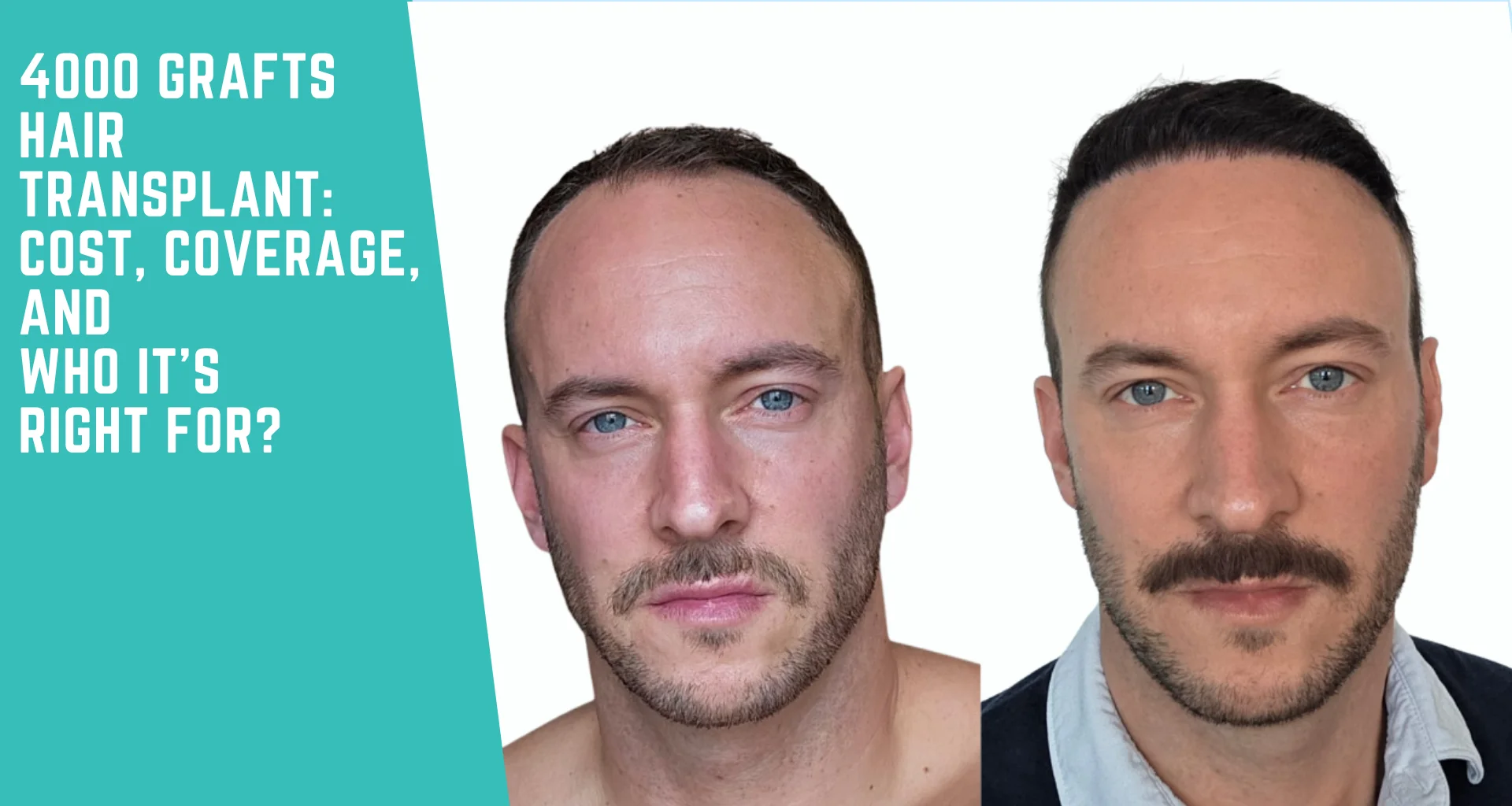

A 4000 grafts hair transplant can give broad coverage across the hairline and mid-scalp in suitable patients with moderate to advanced hair loss. Whether it’s the right number for you depends on your donor area, and so does the final price.
A 4000 grafts hair transplant is a number many people get quoted once their hair loss moves past the temples. Sometimes it comes back within an hour of sending a few photos. Sometimes it’s just sitting there on a package price list.
Either way, the questions that follow are usually the same. Is 4,000 enough? Is it too many? And why did one clinic say 3,000 while another said 5,000?
Here’s the honest answer. 4,000 grafts isn’t a package to buy. It’s a number that may or may not fit the hair you have at the back of your head. This guide walks through what it covers, who it suits, what it costs, and how to check whether it’s right for you.
If you already have a quote for 4,000 grafts, it’s worth knowing what it was based on. Send us photos of your hairline and donor area, and we’ll tell you plainly whether that number looks reasonable for your case.
It means 4,000 follicular units are moved from your donor area to the thinning areas. It doesn’t mean 4,000 hairs.
A graft is a small, natural cluster of hair follicles. Each one holds between one and four hairs. Grafts come from the back and sides of the head, where hair tends to be relatively resistant to pattern hair loss. That zone is called the donor area.
No. Since every graft holds a different number of hairs, 4,000 grafts usually contain a lot more than 4,000 hairs. How many more depends on you.
Some people have plenty of two- and three-hair grafts. Others have mostly single-hair ones. That’s why the hair counts you see online for the same graft number are all over the place.
Clinics also don’t all describe graft counts the same way. So when you compare quotes for 4000 hair grafts, ask each clinic how it defines a graft. Our guide on how clinics calculate grafts explains what a proper count involves.
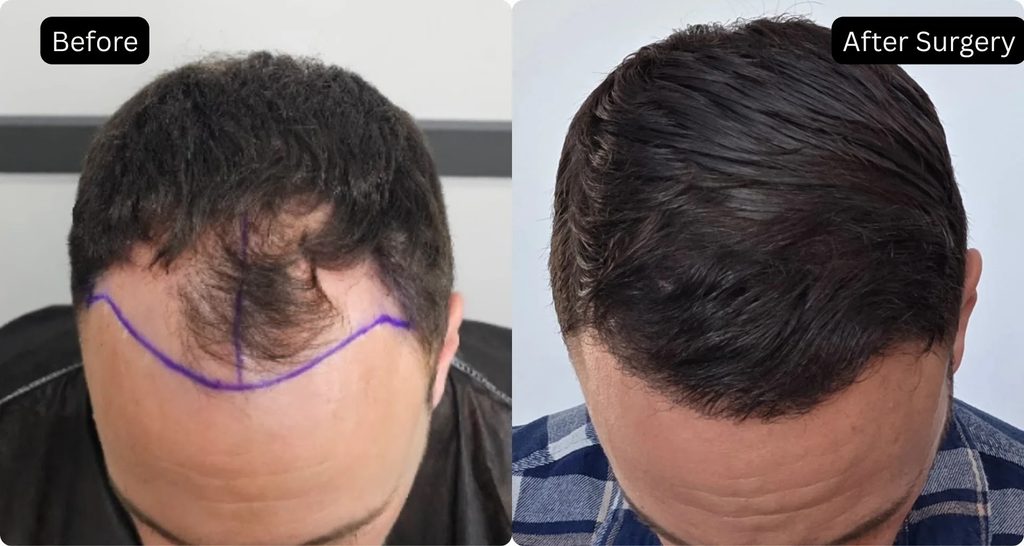
For many suitable patients, 4,000 grafts can give strong coverage across the front and mid-scalp. They can also be split between the front and the crown, but the more areas you spread them across, the less density each one gets.
There’s no fixed area that 4,000 grafts always covers. Your hair thickness, how much native hair you still have, your head size, your crown size and your donor supply all change the plan.
Hair texture plays a bigger role than most people expect. Thick, wavy or curly hair covers more scalp per graft. Fine, straight hair, especially dark hair against light skin, may give less visual coverage from the same number of grafts.
In many cases, yes. This is the most common way a 4,000 graft plan gets used.
The front of your head frames your face, so it makes the biggest visual difference. Most plans put the highest density at the hairline and let it ease off a little through the mid-scalp. That gentle drop-off is part of what makes the result look natural.
Sometimes. A crown hair transplant can take a large number of grafts because of the crown’s size and its natural whorl, the spiral the hair grows in. You need grafts facing several directions just to hide the scalp.
Split 4,000 grafts between the front and the crown and both areas get less density. For some people that trade is worth it. For others, putting everything into the front now and treating the crown later looks better.
Here’s how a 4,000 graft plan might be focused. These are examples, not a prescription. Your own plan can only be set once your scalp and donor area are assessed.
| Plan | Where the grafts go |
| Front only | Most or all grafts go into the hairline and front third. |
| Front and mid-scalp | The front gets priority, with the rest carried back into the mid-scalp. |
| Front and crown | Most go to the front, with a lighter layer in the crown. |
| Front, mid-scalp and crown | Spread across all three, with lower density in each. |
4,000 grafts is often discussed for Norwood 4 and 5 patterns, but your Norwood stage alone can’t tell you your graft count.
The Norwood scale is a 1 to 7 chart doctors use to describe male pattern hair loss. Norwood 1 shows little or no visible recession. Each stage after that describes more loss.
At Norwood 4, the hairline has moved back and the crown is thinning, with a band of hair still separating them. At Norwood 5, that band gets thinner and the two areas start to meet. Both usually leave a big enough area to make 4,000 grafts a fair conversation.
Two men at the same stage can still need very different plans, though. One might have a large head, a wide crown and fine hair. The other might have a smaller bald area and thick donor hair. The second person may be comfortable at 4,000 grafts. The first may need a more careful, staged plan.
At Norwood 6 or 7, 4,000 grafts usually can’t cover the whole top of the head with good density. In those cases, the front tends to come first.
A good candidate has donor hair to spare, hair loss that has slowed down, and realistic expectations about density.
Most people who suit this number have:
• A donor area with good density, meaning plenty of healthy grafts packed into each small patch at the back of the head.
• Hair loss that’s fairly stable, not changing month to month.
• A clear sense of which area matters most to them, usually the front.
• Good general health, with no active scalp infection or uncontrolled medical condition
Donor density is the part most people don’t know about themselves. It’s the number of grafts sitting in one square centimeter of the donor area. It’s one part of estimating how many grafts your donor area can safely give. The size of the donor zone, your hair thickness and any earlier procedures matter too. You can read more about how clinics assess the donor area before surgery.
Some people are better off with a smaller plan, or with waiting. That includes:
• Patients with fast-moving hair loss, especially younger patients whose final pattern isn’t clear yet.
• People with a thin or small donor area.
• Anyone expecting full, dense coverage across a completely bald scalp from one session.
Age on its own isn’t the issue. Timing is. Our guide to age limits for hair transplants goes into this in more detail.
Sometimes the right answer from a clinic is “not yet.” That isn’t a rejection. It’s a way of protecting hair you might need later.
Not automatically. Overharvesting means taking more than your donor area can safely give, and that limit is different for everyone.
For one patient, 4,000 grafts is a comfortable extraction. For another, it’s too much. The number doesn’t decide it. Your donor density, the size of your safe donor zone, any previous transplants and your hair thickness do.
Overharvesting shows up as thin, patchy or see-through areas at the back and sides of the head. Those follicles have been permanently moved, so visible overharvesting can be hard to correct. It also leaves less hair for anything you might need later.
That matters more than people think. Hair loss often keeps going after a transplant, and some patients may need another procedure later if it does. A few people also develop retrograde alopecia, where the donor area itself thins over time. Both are good reasons to be careful with donor hair from the start. Here’s how we protect your donor area for future hair loss.
It’s also why a quote for 4,000 or 5,000 grafts based only on a photo of your hairline shouldn’t be treated as final. No one can judge a donor area from the front.
Yes. 4,000 grafts is a large session. Here’s how it compares with the numbers on either side.
| 3,000 grafts | 4,000 grafts | 5,000 grafts | |
| Possible planning focus | Front and some mid-scalp | Broader front and mid-scalp coverage, sometimes crown. | Larger treatment area in selected cases. |
| Donor demand | Significant | High | Very high |
| Main planning question | Where will the grafts make the most difference? | Can the donor area safely support this number? | Is this amount justified and sustainable long term? |
These are planning examples, not graft prescriptions. Two people with similar hair loss can have very different safe graft counts, because their donor areas are different. If you’re weighing the smaller or larger option, our 3,000 graft guide and 5,000 graft guide cover each one in detail.
If you want to know whether 4,000 grafts looks realistic for your donor area, send us clear photos of the back, sides, front and top of your head. We’ll give you an initial assessment and explain what still needs checking. Your final graft plan is confirmed once your donor area is assessed in person in Istanbul.
Look at the hairline, the density and the back of the head, not just the front view.
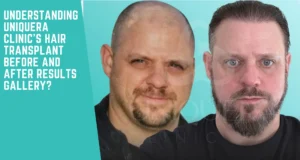
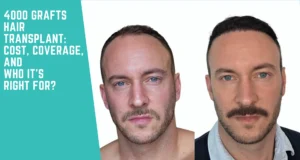
Before and after photos are the easiest way to judge a clinic. They’re also the easiest to misread. Good lighting and wet hair can make almost any result look fuller or thinner than it really is.
When you look through a gallery, check that:
• The before and after shots use the same lighting and angle.
• The hair is dry and styled normally, not wet or combed flat.
• There’s a photo of the donor area after the procedure, not just the front.
• The result is at least 12 months after the procedure.
• The graft count and treated area are clearly stated.
A clinic that’s willing to show you the back of the head is telling you it’s comfortable with how it manages donor areas. For a real example, see Remi Belin’s 4,000 graft DHI case. For a fuller checklist, read how to verify hair transplant results before choosing a clinic.
There’s no standard 4000 grafts hair transplant cost. The price depends on the country, the clinic, the technique and what the package includes.
So how much is 4000 hair grafts in practice? A lot of it comes down to how the clinic prices it:
• Some clinics charge per graft. That’s easy to compare, but it can quietly reward a higher graft count.
• Others use package pricing, with one price for a set plan. That’s easier to budget for, as long as you check what the package includes.
If you’re comparing clinics at home and abroad, our US vs Turkey cost comparison breaks down where the differences come from.
Prices vary widely between clinics in Turkey, and many use package pricing rather than charging per graft.
A low quote doesn’t help much if half the costs sit outside it. Before comparing, check whether each price covers:
• Consultation and donor assessment.
• Blood tests.
• Hotel stay, plus airport and clinic transfers.
• Medication and washing products after the procedure.
• The first wash at the clinic and written aftercare instructions.
• Follow-up once you’re home.
• Extras like PRP, and whether they cost more.
Our guide on why prices vary so much between clinics covers what patients often miss.
At UniquEra, the quote follows your assessment and treatment plan. We don’t treat 4,000 grafts as a product with one fixed price.
Either can be. The choice should come from your case, not from whatever package is on offer.
It helps to know what each term means, because clinics often blur them together.
• FUE (follicular unit extraction) is how grafts are removed. They’re taken out one at a time from the donor area.
• Sapphire refers to how the receiving area is prepared. Tiny channels are opened in the scalp with a sapphire-tipped blade before any grafts go in.
• DHI (direct hair implantation) is a way of placing grafts. A pen-shaped tool called a Choi implanter places each graft without channels being opened first.
Sapphire FUE hair transplant Turkey procedures are often used for larger bald areas, which is why they turn up in so many 4,000 graft plans.
DHI hair transplant Turkey procedures are often picked for detailed hairline work or for adding density between existing hairs. Some plans use both, each where it fits best.
At UniquEra, every case runs under the supervision of our Medical Directors. In Sapphire FUE, the Medical Directors open the implantation channels by hand, because the angle, direction and depth of each channel decide how the new hair will sit. Extraction and graft placement into the already-opened channels are handled by trained members of the medical team, following the treatment plan.
Grafts are sorted before placement, too. Single-hair grafts go along the hairline to keep it soft. Two-hair grafts sit just behind it. Three-hair grafts go mainly into the mid-scalp and crown, where volume matters more than softness.
Often, yes, if your donor area can safely support it.
On the day of your Turkey hair transplant surgery, the process fills most of the day. The donor area is numbed with local anesthetic first. Extraction comes next, and the grafts are kept in a preservation solution while the receiving area is prepared. Placement follows.
Whether 4,000 grafts are done in one treatment day depends on your donor area, the technique and your procedure plan. Some larger cases need a different schedule, which is confirmed during planning.
One long session isn’t automatically better. If your donor area is limited, a smaller first session that leaves room for a second one later may be the safer plan.
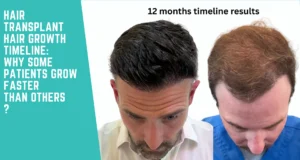
The result builds slowly. Most of it shows by around 12 months, and it can keep settling up to 18 months.
A 4000 grafts hair transplant result depends on your hair thickness, the color contrast between your hair and scalp, how well the grafts survive, how closely you follow aftercare, and whether your native hair keeps thinning.
| Time after the procedure | What usually happens |
| First 10 to 14 days | Redness, small crusts and some swelling, which settle. |
| Weeks 2 to 8 | Transplanted hairs shed. This is normal. |
| Months 3 to 4 | New growth starts, often fine and thin. |
| Months 5 to 6 | Growth becomes easier to see. |
| Months 8 to 12 | Hair thickens and density improves. |
| Months 12 to 18 | The result settles. The crown often takes longer. |
The shedding phase catches a lot of people off guard. It’s expected. The early shedding mostly involves the transplanted hair shafts, and new growth then starts slowly from the transplanted follicles. It isn’t the same as shock loss, which affects existing hair around the treated area, although that’s usually temporary too.
Ask how they reached the number, not just what it costs.
Most people searching for the best hair transplant in Turkey compare price and graft count first. Those are the easiest things to compare. On their own, they’re also the least useful.
What matters more is who plans your case, how your donor area is judged, and what happens once you fly home. The usual mistakes are choosing the highest graft count for the money, trusting front-view photos only, and never asking who does which step.
Before you decide, ask:
• How do you count a graft?
• Is the quoted number grafts extracted or grafts placed?
• Who opens the channels in the receiving area?
• How many grafts can my donor area give over my lifetime, not just today?
• What’s the plan if I need more hair later?
• Who follows up with me after I go home?
A clinic that answers these clearly is usually one that plans carefully. Our consultation checklist has more questions worth raising.
We start with your donor area, not with a number.
At UniquEra Clinic, every plan comes out of an assessment. It usually goes like this:
1. You have an online consultation and send clear photos of your hairline, top, crown, and the back and sides of your head.
2. We send a written report with an initial diagnosis and plan, including whether 4,000 grafts looks realistic.
3. In Istanbul, you have a blood test and an in-person consultation, where your donor area is assessed properly.
4. We agree the hairline and graft plan with you in writing before the procedure. The hairline is planned with future hair loss in mind, and we recommend Sapphire FUE, DHI or both.
5. After you fly home, we check in at 1, 3, 6 and 12 months, and you can reach us on WhatsApp in between.
Each case is planned by our Medical Directors with over a decade of hands-on hair transplant experience, supervising each case.
Sometimes the honest answer is that you don’t need 4,000 grafts yet, or that a smaller first session makes more sense. We’d rather say that than use donor hair you might need later. You can read more about how we design each treatment plan.
A 4000 grafts hair transplant can make a real difference for the right person, often someone at Norwood 4 or 5 with a strong donor area. But the number only means something once it’s checked against the hair you actually have to give.
If you want a clear answer for your own case, we can review your photos, explain what your donor area may be able to support, and talk you through what a realistic result looks like. Book your consultation with UniquEra Clinic today.
It depends on the country, the clinic, the technique and what’s included. There’s no standard price, so compare what each quote actually covers.
Yes, it’s a large session. It’s usually suggested for moderate to advanced hair loss, and only when the donor area can support it.
Usually not with strong density. At Norwood 6 or 7, the grafts often go to the front first, with the crown treated lightly or later.
It’s a very large extraction and only suits a donor area that can support it. At UniquEra, 5,000 graft cases are uncommon and depend on a particularly strong donor area.
It’s a very high graft count and shouldn’t be assumed safe from the number alone. Donor capacity, any earlier extraction and long-term plans all need assessing first.
Several hours, often most of the treatment day. The exact time depends on the technique, your donor area and your plan.
3 nights and 4 days stay. The stay covers the blood test and in-person consultation, the procedure, and the first wash and check at the clinic before you fly home.
Usually not. Hair transplants for pattern hair loss are generally treated as cosmetic, but coverage varies, so check with your insurer.