
The donor hair used in your first transplant is the same limited supply you may need five or ten years later.
That is why UniquEra clinic does not automatically use the highest graft number a donor area can provide today. If fewer grafts can achieve the planned result while leaving more donor hair available for future loss, the treatment plan can be adjusted.
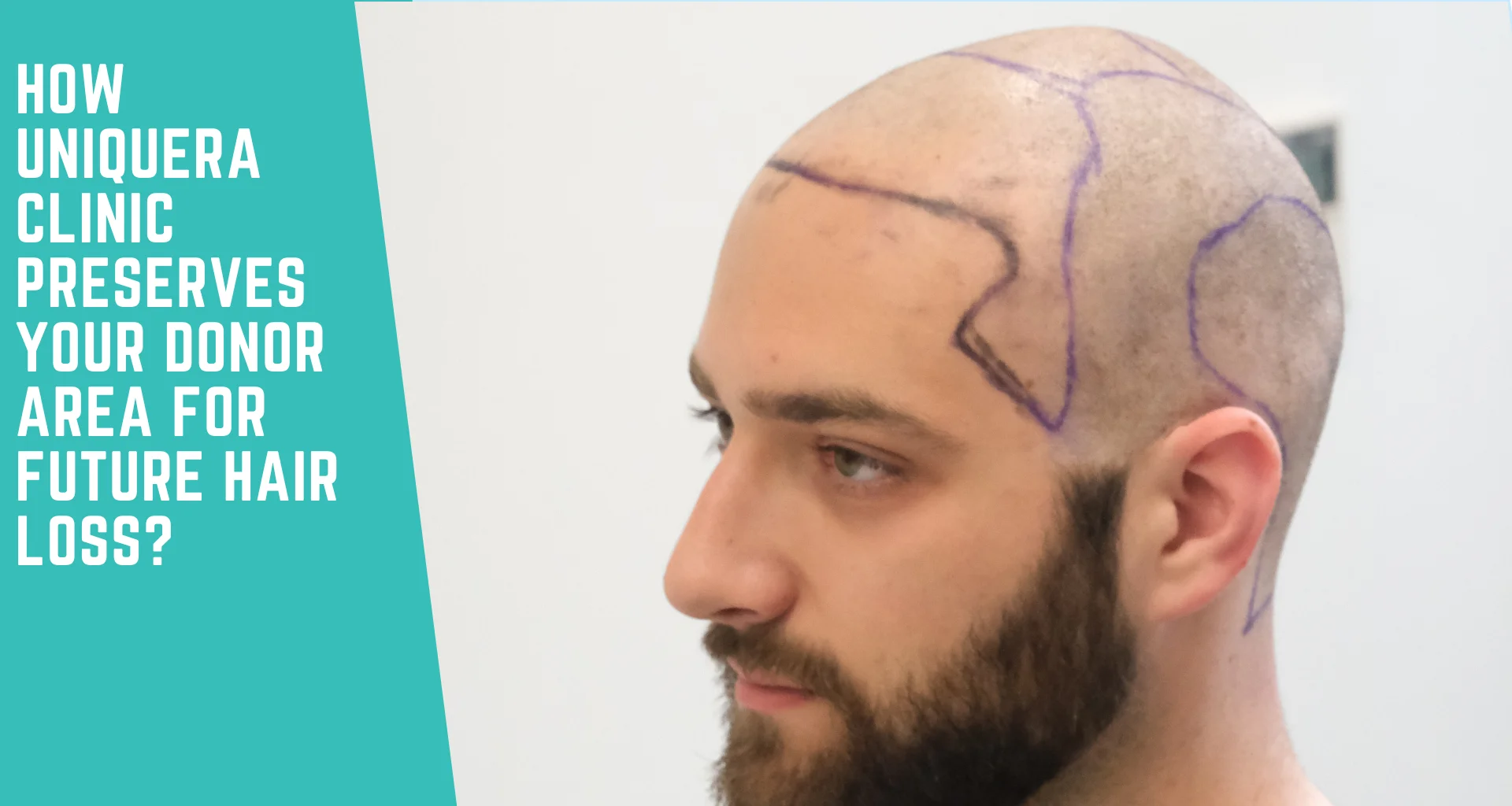
Donor area preservation in a hair transplant starts before extraction. It means deciding how many grafts should be used now, where they should be taken from, and what may need to remain available later.
| Donor preservation question | UniquEra approach |
| Is the maximum possible graft number always used? | No. |
| Is donor capacity assessed before the final graft number? | Yes. |
| Can the online graft estimate change in Istanbul? | Yes. |
| Is future hair loss considered? | Yes. |
| Is extraction distributed across suitable donor zones? | Yes. |
| Does UniquEra promote unlimited-graft procedures? | No. |
| Can donor hair be preserved for future treatment? | Yes, where the donor area and treatment plan allow. |
Extracted follicles do not regenerate in their original donor location.
Your hair transplant donor reserve is therefore finite, while native hair around the transplanted area may continue thinning.
A patient who restores the frontal area today may later require grafts for the mid-scalp or crown. Using too much donor hair during the first procedure can reduce those future options.
This is why planning considers both:
The size of the bald area does not decide the graft number by itself.
The plan also considers:
A remote consultation can provide an initial estimate. The donor area is then assessed physically in Istanbul before the final plan is confirmed.
If fewer grafts are more appropriate after that assessment, the number can be reduced.
For more on how graft numbers, treatment zones and techniques are planned together, read How UniquEra Designs a Personalized Hair Transplant Plan.
Yes. More grafts do not automatically mean a better transplant.
A patient may request a particular number after comparing packages online, but the available donor supply and long-term plan still have to support it.
UniquEra may recommend fewer grafts when extracting more could unnecessarily reduce the donor reserve.
This is also why UniquEra does not promote unlimited-graft hair transplants. Every patient has a different donor capacity.
Safe donor extraction depends on both the number of grafts removed and where they are removed from.
| Planned extraction | Poor donor management |
| Grafts distributed across suitable donor zones. | Too many grafts concentrated in one area. |
| Existing density considered before extraction. | A fixed graft target followed regardless of density. |
| Visual coverage of the donor area protected. | Visible thinning or patchiness may develop. |
| Future donor requirements considered. | Most usable supply may be consumed at once. |
Extraction spacing in a hair transplant matters because removing too many neighboring follicles can leave visible gaps even if the overall graft number does not appear excessive.
For a deeper explanation of density, miniaturization and donor examination, read How Clinics Assess the Donor Area Before Hair Transplant Surgery.
Where the donor area and current treatment needs allow, yes.
The plan can preserve donor hair for a future transplant when native hair is likely to continue thinning.
That may mean:
The purpose is not to leave usable grafts untouched without reason. It is to avoid spending a limited resource where it provides less value today but may be needed later.
The patient may have fewer grafts available if another part of the scalp thins later.
Excessive or poorly distributed extraction can also create overharvesting of the donor area, making the back or sides appear visibly depleted.
So the important question is not:
“How many grafts can be extracted?”
It is:
“How many grafts should be used at this stage of my hair loss?”
Yes. Some treatment plans can preserve grafts for a second hair transplant if another area may require treatment later.
Dan Caverly’s treatment history shows why future options can matter. His first UniquEra procedure treated the frontal hairline and temples. He later returned, and 3,500 DHI grafts were used for the crown.
His case does not prove that the first procedure was deliberately staged for donor preservation. It shows that the same donor area may be needed again when another part of the scalp requires treatment later.
Read Can You Have a Second Hair Transplant for More Density? for more on later procedures.
Sometimes donor preservation means using fewer grafts. Sometimes it means waiting. In other cases, surgery may not be suitable.
Weak donor density, instability, diffuse thinning in the donor zone or previous overharvesting can all affect candidacy.
Read Why We Sometimes Reject Hair Transplant Patients for the full screening criteria.
Before surgery, you should understand:
UniquEra donor area preservation is therefore based on three decisions: how many grafts to use, where to extract them from, and how much donor supply may be needed later.
Book your consultation with UniquEra to find out what your donor area can realistically support now while keeping future treatment options in mind.
No. A transplanted follicle does not regenerate in its original donor location.
No. Graft numbers depend on donor capacity, current treatment needs and long-term planning.
No. Every graft recommendation is limited by the individual donor area and treatment requirements.
Yes. Physical donor assessment can lead to the initial estimate being reduced or redistributed.
Because future hair loss after a hair transplant may create new areas that require treatment later.