
Juan Rodriguez had a plan for his life. Get married. Start a family. Build a career as a doctor. He had the drive, the education, and a family of doctors behind him who had shown him what dedication to medicine looked like. At 30, everything was in front of him.
There was just one thing he kept coming back to.
He wanted to walk into all of it with his hair.
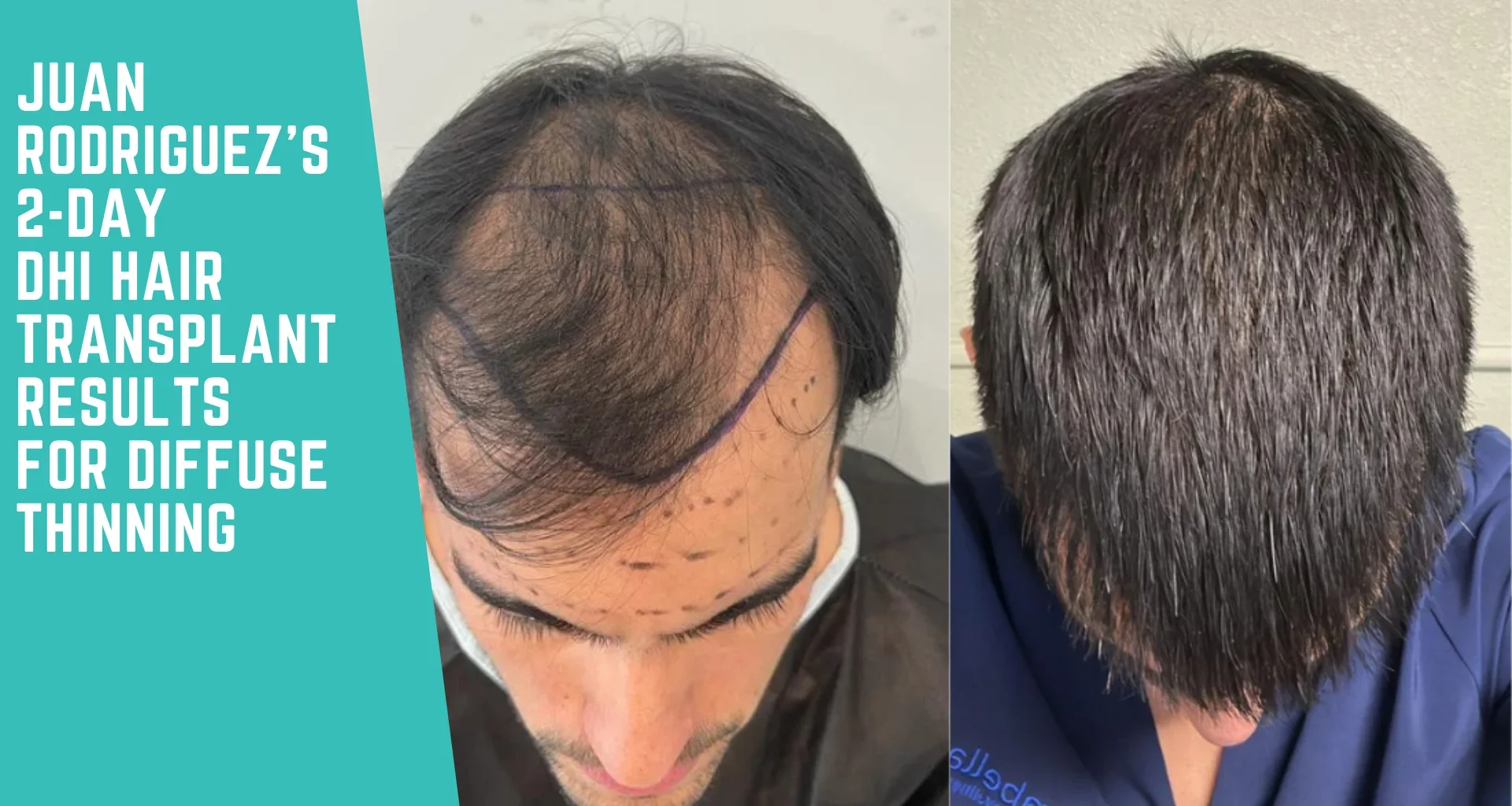
Hair loss had started at 25. Not a receding hairline in the way most people picture it. Diffuse thinning, the kind that spreads quietly across the entire scalp, frontal hairline, temples, crown, mid-scalp, all losing density at once. It was gradual. It was everywhere. And for a young doctor whose patients looked to him for confidence and authority the moment he walked into a room, it was something he thought about more than he wanted to admit.
He had not tried anything before coming to us. No medications, no treatments, no half-solutions. He had waited for the right answer. When a friend showed him the result he had got at UniquEra, Juan knew he had found it.
| Case Detail | Information |
| Patient | Juan Rodriguez |
| Age | 30 |
| Nationality | American, Florida, USA |
| Profession | Doctor |
| Hair loss concern | Diffuse thinning, frontal hairline, temples, crown, mid-scalp |
| Diagnosis | Androgenetic alopecia |
| Procedure | DHI hair transplant |
| Implantation method | DHI Choi Pen |
| Grafts | 5,500 |
| Areas covered | Hairline, temples, crown, mid-scalp |
| Procedure duration | Two-day procedure |
| Procedure date | January 20, 2025 |
| Medical team | Dr. Atakan Akay |
| Result stage | 12 months |
| Goal | Full scalp density, natural thickness, long-term coverage |
Diffuse thinning is different from the kind of hair loss that shows a clear receding line. It does not announce itself in one obvious place. It spreads gradually across the whole scalp, thinning everywhere at once, making the hair look and feel less than it was without a single dramatic change you can point to.
For Juan, that process started at 25. By 30, the frontal hairline, temples, crown, and mid-scalp were all affected. He was a doctor from a family of doctors. He understood what was happening medically. That knowledge did not make it easier to see in the mirror every morning.
In medicine, your appearance is part of how patients receive you. Trust, calm, authority. These are communicated before you say a single word. Juan was building a career that depended on exactly that kind of presence. And diffuse thinning was quietly working against it.
Juan found UniquEra through a referral. A friend had already been through the process and showed him the result. For someone trained to evaluate evidence, that was more convincing than any clinic website or before-and-after gallery could be.
He contacted UniquEra on December 20, 2024, and booked the same day. No hesitation, no long deliberation. The consultation gave him exactly what he needed. A clear, honest plan based on his donor area, his hair loss pattern, and what was realistically achievable across the full scalp.
He had not tried any other treatment before this. He had waited for something real. This was it. For patients in a similar position, understanding what diffuse thinning actually looks like and how it differs from other hair loss is a useful starting point.
Juan’s case required a comprehensive plan. Diffuse thinning across the hairline, temples, crown, and mid-scalp meant the team had to address the full scalp in a single treatment strategy. 5,500 grafts. A two-day procedure led by Dr. Atakan Akay.
The challenge with diffuse thinning is that hair is still present throughout the recipient area. The goal is not to build from scratch. It is to add density between the hair that already exists without damaging what remains.
DHI Choi Pen was chosen for exactly this reason. Each graft is placed directly into the scalp in a single controlled motion, with precise management of angle, depth, and direction. No pre-cut channels. No risk to surrounding follicles. The existing hair is protected throughout, and the new grafts are placed to grow naturally alongside it.
Juan had a strong donor area, which gave the team the grafts needed to address all four zones properly. The result was planned not just for how it would look at twelve months, but for how it would hold over time.
Hair transplant growth takes time, and the fuller result is usually seen closer to 12 months. But his progress at 6 months already shows clear improvement in density, coverage, and hairline shape.
| Timeline | Progress |
| 10 Days | Early healing stage after the two-day DHI procedure |
| Month 3 | New growth beginning across the treated areas |
| Month 6 | Density visibly improving, with stronger coverage across the scalp |
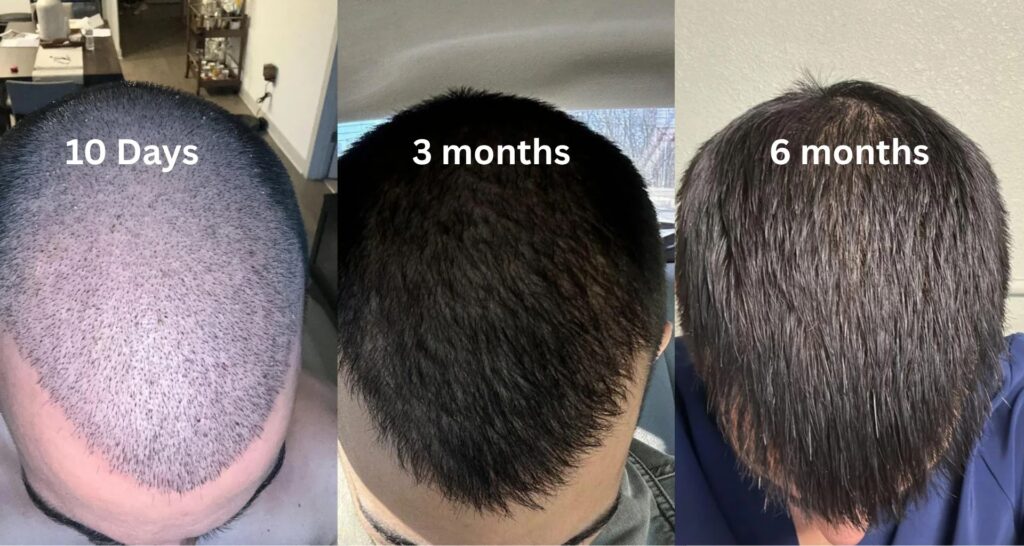
At 6 months, Juan’s hair already showed clear improvement in density, coverage, and hairline shape. The full-scalp plan was becoming visible, especially across the areas affected by diffuse thinning.
These are the documented progress photos available for this page. They show the change through the 6-month stage and explain why a two-day DHI plan was chosen for Juan’s diffuse thinning.
Juan shares what the process and result meant to him in his own words.
For Juan, the result was never just about photos. He wanted to step into marriage, fatherhood, and his career as a doctor with more confidence in how he looked and felt.
If you are experiencing diffuse thinning and recognise something of your own situation in Juan’s story, a consultation is the right place to start. Our team can review your photos and build an honest plan around your hair, your goals, and your timeline. Book your consultation with UniquEra today.
Yes. DHI Choi Pen can be suitable for diffuse thinning because it allows grafts to be placed between existing hair with careful control over angle, depth, and direction. This helps add density while working around the patient’s remaining hair.
It depends on the level of thinning, donor quality, hair type, and the areas being treated. Juan’s case required 5,500 grafts across four zones over two days. Every treatment plan is built after assessing the scalp and donor area.
It can be, but it depends on the hair loss pattern and how stable it is. For younger patients, planning must consider future hair loss, not just the current result. In Juan’s case, his donor area was strong, and the plan was built for long-term density.