
A derma roller for hair loss is one of the first things people try when they notice their hair thinning.
It is affordable. Non-surgical. And on social media, it looks like it works for everyone.
But does it actually work? And if it does, when does it stop being enough?
Many patients spend months using a derma roller without ever knowing whether their follicles are still active enough to respond. Some see real improvement. Others roll for a year and lose more ground while the window for effective treatment quietly closes.
Here is what the research actually says, who genuinely benefits, what the best derma roller size for hair loss is, and how to know when you need to move past a roller entirely.
The biggest factor is not the roller itself. It is whether the follicles in the thinning area are still active. A professional assessment can determine whether microneedling is likely to help or whether a different approach is more appropriate for your situation.
Book a free hair assessment with UniquEra Clinic.
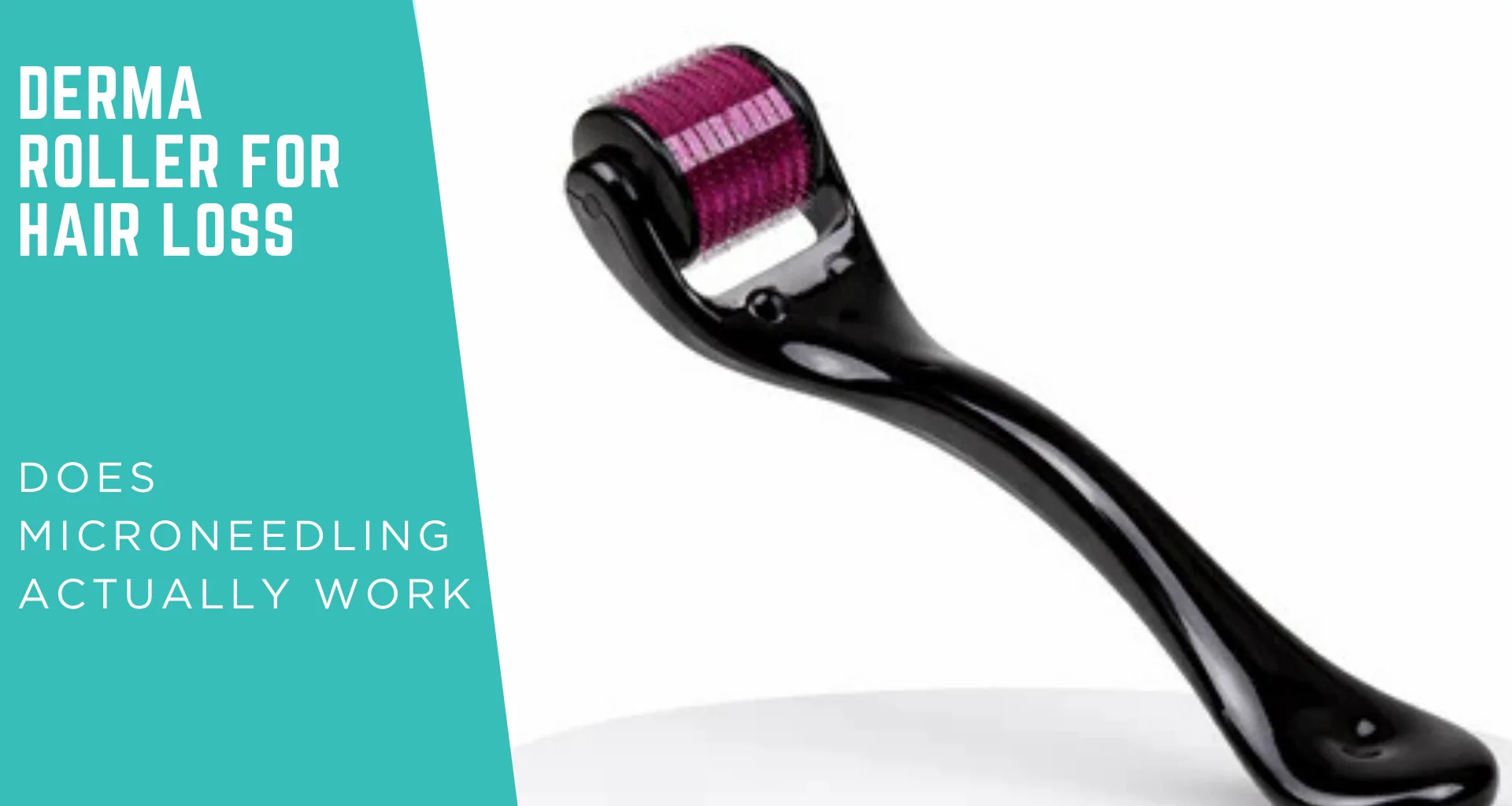
A derma roller for hair loss is a handheld device with a rolling head covered in fine needles.
When rolled across the scalp, those needles create tiny punctures called micro-injuries. These trigger the body’s healing response in the follicle layer underneath.
That response is the whole point.
| Purpose | Skin Rolling | Scalp Microneedling |
| Goal | Collagen for skin texture. | Follicle stimulation. |
| Target layer | Surface skin. | Follicle root layer. |
| Needle depth | 0.2-0.5mm. | 0.5-1.5mm. |
| Used for | Scars, texture, aging. | Hair thinning, growth. |
Derma roller scalp treatment and scalp microneedling refer to the same concept. Rollers, stamps, and pens all work on the same principle. The device varies. The mechanism does not.
Yes, with clear conditions.
Microneedling for hair loss shows real results in clinical research, but only when follicles are still present and active.
• Systematic reviews confirm increased hair count and shaft diameter in patients with androgenetic alopecia.
• A 2025 meta-analysis published in the Archives of Dermatological Research found that microneedling combined with topical treatments produced significantly better results than topical treatments used alone.
• A study published in the Journal of Cutaneous and Aesthetic Surgery found that patients using microneedling alongside minoxidil had greater hair count improvement than those using minoxidil alone.
• Synergy with topical treatments is one of the most consistent findings across studies.
Microneedling works on weakened follicles that are still producing hair, even very fine hair. It does not work on follicles that have completely stopped. If an area is smooth and bald, there is nothing left to stimulate.
This is the part most articles skip.
When micro-injuries form, the scalp activates a healing response. Several things happen:
• Blood flow increases to the treated area, bringing oxygen and nutrients to the follicles
• Growth factors are released that support the hair cycle, including platelet-derived growth factor and vascular endothelial growth factor
• Microneedling may trigger healing responses within the scalp that support follicle activity.
• Micro-channels open at the surface, improving how deeply topical treatments absorb.
The result is a better environment for weakened follicles to recover. Microneedling hair growth works by supporting what is already there. It does not create new follicles. The follicles must be present to respond.
| Myth | Reality |
| A derma roller can regrow hair in completely bald areas | Microneedling only works on existing follicles, not absent ones. |
| Longer needles give better results | Research suggests deeper needles do not automatically produce better growth. |
| Rolling every day speeds up progress | Overuse disrupts the healing cycle and can damage the scalp. |
| Results appear within two to three weeks | Clinical studies track outcomes over 12 to 24 weeks. |
| Any roller works the same | Needle quality and size both matter significantly. |
| Needle Size | Best For | Notes |
| 0.25 mm | Product absorption only | Too shallow for follicle stimulation. |
| 0.5 mm | Beginners | Safe starting point. |
| 1.0 mm | Hair loss treatment | Most studied size. |
| 1.5 mm | Advanced use | Use with professional guidance. |
Research suggests that deeper needles do not automatically produce better results. Needle size should be chosen based on hair loss stage and scalp sensitivity, not on the assumption that more depth means more growth.
• Once per week is the maximum for hair loss use.
• More frequent rolling disrupts the healing response.
• Overuse can lead to scalp scarring over time.
This is the question most people searching this topic actually want answered.
Results from microneedling do not appear overnight. The healing response takes time to produce visible change. Here is a realistic timeline based on clinical research:
| Timeframe | What Typically Happens |
| Week 1-2 | Scalp heals from micro-injuries. Some redness or sensitivity is normal.. |
| Week 3-4 | Healing response active at follicle level. No visible change yet. |
| Month 2-3 | Some patients notice reduced shedding. Early follicle response beginning. |
| Month 3-4 | Early thickening may become visible in suitable candidates. |
| Month 4-6 | Best visible improvement in patients with active follicles. |
| Month 6+ | Continued improvement possible with consistent use and topicals. |
Most clinical studies tracking microneedling for hair loss measure outcomes at 12 to 24 weeks. Patients who stop after one or two months often quit before any meaningful response has had time to develop.
Consistency matters. So does starting early enough that follicles are still there to respond.
A derma roller for receding hairline use works in one situation only.
| Situation | Microneedling Useful? |
| Early recession, fine hair still visible | Yes |
| Temples thinning but not fully bald | Yes |
| Hairline recently started moving back | Possibly |
| Completely smooth and bald for years | No |
| No fine hair visible in the area | No |
Microneedling for receding hairline is an early intervention tool. As a hair loss treatment for receding hairline in its beginning stages, it may slow progression and support remaining follicles.
Once the hairline has receded significantly and follicles are no longer present, microneedling alone will not restore it. A receding hairline transplant is what addresses that stage.
A derma roller for thinning hair works best for people who still have active follicles in the affected area.
Hair becoming finer and less dense across the whole scalp. Most follicles are still present. This is one of the strongest use cases for scalp microneedling as a diffuse thinning treatment.
Part widening, scalp visible through hair. Follicles weakening but not gone. A good window for intervention before progression advances further.
Producing fine, short hair rather than terminal hair. Still active. Microneedling may support these follicles back toward healthier function.
For anyone searching for hair solutions for thinning hair before committing to surgery, microneedling is a reasonable first step. It only works while follicles are still there to respond.
Yes. Scalp microneedling is relevant for female hair loss, and in some ways it is a particularly strong option for women.
Female pattern hair loss usually presents as diffuse thinning across the top of the scalp rather than a defined receding hairline. This means the follicles are typically spread across a wider area and many are still active but weakened, exactly the situation where microneedling has the most to offer.
• Women with early to moderate diffuse thinning.
• Women experiencing post-partum shedding where follicles remain active.
• Women with stress-related hair loss where the follicle cycle has been disrupted.
• Women with female pattern hair loss in the early stages.
• Hormonal causes of hair loss should always be investigated before starting any treatment.
• Conditions like PCOS, thyroid imbalance, and iron deficiency can drive hair loss that scalp rolling will not address.
• A blood panel and scalp assessment should come before a device purchase.
• Women considering microneedling as a hair treatment for thinning hair should confirm the cause of their hair loss first.
Microneedling works on the follicle, not the underlying cause. If hormonal or nutritional factors are driving the loss and are left untreated, microneedling will produce limited results regardless of consistency.
Not all thinning hair responds the same way.
Microneedling may help weakened follicles, but it cannot revive follicles that are no longer active. Understanding the stage of your hair loss is often more important than choosing a treatment.
Send your photos to UniquEra’s medical team for a personalized evaluation.
• Wash scalp and dry completely
• Sterilize roller in 70% isopropyl alcohol for 2 to 3 minutes.
• Let it dry fully before use.
• Part hair to expose the thinning area.
• Apply light, even pressure only.
• Roll in three directions: horizontal, vertical, diagonal.
• Sensation is normal. Pain is a sign of too much pressure.
• Apply topical treatment while channels are open.
• Avoid washing your scalp for several hours.
• Wait 7 days minimum before rolling again.
• Inspect needles regularly. Replace when bent or dull.
• Never share a roller.
| Mistake | Consequence |
| Rolling more than once a week | Disrupts healing, risks scalp scarring. |
| Not sterilizing the roller | Bacteria enter micro-channels. |
| Using too much pressure | Inflammation, unnecessary trauma. |
| Using bent or damaged needles | Uneven skin tearing. |
| Expecting results in two to three weeks | Clinical improvement takes months. |
| Rolling bald areas with no active follicles | No follicles to stimulate, no result. |
Microneedling supports follicles. It cannot replace them.
Many patients spend years rolling, applying oils, and switching shampoos, only to realize the follicles in the affected areas disappeared long ago. The treatments were not failing because of the products. They were failing because there was nothing left to stimulate.
Any non surgical hair loss treatment that works through stimulation hits the same wall. Once the follicles in an area have stopped functioning entirely, no topical, no roller, and no scalp treatment will bring them back.
• Scalp has become clearly visible through the hair.
• Hairline continues moving back despite treatment.
• Crown thinning worsens year on year.
• Bald areas remain completely unchanged after months of use.
• You rely on styling products, fibres, or specific angles to hide the loss.
If several of these apply, the honest answer is that stimulation alone is no longer the right tool. The follicles in those areas are likely no longer active.
One of the most common patterns we see is patients trying to force a non-surgical solution onto a surgical problem. The right approach is not about trying harder with the same tools. It is about understanding which stage the hair loss has reached and matching the treatment to that stage.
This is where hair transplant surgery becomes the relevant conversation.
| Situation | Microneedling | Hair Transplant |
| Early thinning | Yes | Not yet needed. |
| Diffuse thinning | Yes | Sometimes. |
| Receding hairline (early) | Sometimes | Often better. |
| Bald temples | No | Yes. |
| Advanced hair loss | No | Yes. |
| Inactive follicles | No effect | Restores the area. |
These are not competing options for the same problem. They address different stages of hair loss. For a deeper breakdown, see FUE vs DHI hair transplant — which is better for your hair loss.
When follicles are present but weak, microneedling has a role. When follicles are gone, only a transplant can replace them.
Many people assume they need a hair transplant when they do not. Others spend years trying treatments that can no longer help. A photo-based assessment can quickly determine whether your follicles are still active and what options are actually worth pursuing.
Request your assessment today.
When microneedling is no longer enough, three main techniques are used at experienced hair restoration clinics.
Follicles are extracted and implanted directly using a Choi pen. No pre-made channels needed in the recipient area.
Best suited for:
• Hairline work requiring precise placement.
• Dense packing in targeted zones.
• Cases where the recipient area should not be fully shaved.
DHI hair transplant Turkey is a common choice for patients coming to hair transplant Istanbul clinics with defined hairline goals.
Sapphire-tipped blades create very fine recipient channels before implantation. Less tissue trauma. More precise placement.
Often used for:
• Larger coverage areas.
• Crown restoration.
• Hairline reconstruction across a wider zone.
Sapphire FUE hair transplant Turkey is one of the most widely performed approaches at experienced Istanbul clinics.
Hand-operated punch tool for extraction. Highly precise in experienced hands.
Can be valuable when:
• Donor management is a priority.
• Extraction precision is needed for specific follicle structures.
• Graft quality must be maintained carefully through the extraction process.
At UniquEra, the Medical Directors, with over a decade of hands-on hair transplant experience supervising each case personally, recommend a technique only after assessing donor area condition, hair texture, thinning pattern, and long-term trajectory. Patients should not arrive having already decided on a technique. The assessment drives the recommendation.
No. But they play a real supporting role.
| Treatment | What It Does | What It Cannot Do |
| Scalp microneedling | Stimulates weakened follicles. | Replace lost follicles. |
| Growth factor therapy | Supports follicle health and cycle. | Restore bald areas. |
| Stem cell hair transplant Turkey | Cellular regeneration support. | Create new follicles from nothing. |
| Hair transplant surgery | Moves live follicles to bald areas. | Work without donor grafts. |
Treatments marketed as stem cell hair transplant Turkey procedures can reduce shedding and support thinning hair in early stages. Some produce real improvements in the right candidates.
What they cannot do is restore a completely bald area. Any clinic claiming otherwise is not being honest.
The quality of your assessment matters more than the treatment itself.
| Step | Why It Matters |
| Proper scalp diagnosis | Determines what is actually causing the loss. |
| Honest candidacy evaluation | Not every patient is ready for or suited to surgery. |
| Donor area assessment | Determines what is realistically achievable. |
| Long-term planning | Hair loss is progressive. One session rarely covers the full picture. |
| Male vs female approach | Female hair loss patterns require a different diagnostic and surgical approach. |
• Technique recommended before seeing your scalp.
• No discussion of candidacy limits.
• Outcome guarantees.
• No plan for hair loss continuing after surgery.
An expert hair transplant In Turkey team will tell some patients they are not the right candidate yet. That is a clinic protecting your long-term result, not losing a sale.
At UniquEra, a hair transplant consultation Turkiye begins with a full picture of your hair loss. Stage, follicle health, donor capacity, and pattern progression. A treatment plan follows the assessment, never the other way around.
A derma roller can support hair growth in the right candidate.
It cannot create new follicles. It cannot reverse every form of hair loss. And it cannot replace a proper diagnosis.
The biggest mistake people make is choosing a treatment before understanding the condition of their follicles. Microneedling helps the right person. It does nothing for someone whose follicles are no longer active. And it delays the right decision for someone who has already passed the point where stimulation is enough.
Whether you are dealing with early thinning, a receding hairline, or more advanced loss, the first step is finding out what your follicles are still capable of producing.
At a certain stage, the question stops being which product should I use and becomes which follicles can realistically still be saved.
UniquEra’s Medical Directors have supervised hair restoration procedures for over a decade. Every consultation starts with an honest evaluation of where your hair loss stands and what will realistically help.
Book your consultation with UniquEra Clinic today.
Yes, when follicles are still active. Studies show increased hair count and diameter, especially combined with topicals. It has no effect on follicles that have completely stopped functioning.
1.0mm is the most studied size for hair loss. Research suggests deeper needles do not automatically produce better growth. Start at 0.5mm if you are new to scalp rolling.
Only in early recession where follicles are still present. For significant hairline loss where follicles are gone, a receding hairline transplant is the appropriate next step.
Yes. No incisions, no anesthesia, no recovery period. It uses micro-injuries to trigger the scalp’s own healing response.
Yes. Diffuse thinning is one of the strongest use cases because follicles are still spread across the scalp. It works best as a diffuse thinning treatment before significant follicle loss has occurred.
Yes. Women with diffuse thinning and active follicles are good candidates. Hormonal causes should be ruled out first, as they can limit how well any scalp treatment works.
Most clinical studies track outcomes over 12 to 24 weeks. Early thickening may appear around month 3 to 4 in suitable candidates. Stopping before that window closes is one of the most common reasons people think it did not work.
When follicles in the hairline area are no longer producing hair, or when microneedling and topicals have not held the line after 6 to 12 months of consistent use.
They solve different problems. DHI hair transplant places new follicles where hair has been lost. Microneedling supports follicles that are still present. Stage of hair loss determines which applies.
Sapphire FUE hair transplant Turkey is surgical. It moves follicles from donor to recipient areas using sapphire-tipped blades. Microneedling is non-surgical and stimulates existing follicles. Completely different categories.
No. Stem cell hair transplant Turkey treatments use processed cellular material to support follicle health at a regenerative level. Microneedling creates surface micro-injuries to trigger a healing response.
If non-surgical approaches have not held your hair loss after 6 to 12 months, or if affected areas are no longer producing hair, a hair transplant consultation Turkiye gives you an accurate picture of what is possible and what your follicles are still capable of.