
Topical finasteride usually leads to much less of the medicine reaching the bloodstream than oral finasteride, but that does not make it risk-free. Oral finasteride has been studied for much longer, while certain topical versions have shown similar short-term hair-count improvement with lower exposure to the rest of the body.
After a hair transplant, finasteride often comes up because the transplant does not stop the native hair around it from continuing to thin. Someone can rebuild a hairline or add crown density and still lose some original hair over the following years.
So the useful question is not simply which form is “better.” It is what each one does, what we know about side effects, and whether medication has a place in your wider hair-loss plan.
If you are planning surgery and are unsure how much of your existing hair may continue thinning, book a consultation call with UniquEra Clinic. We can assess your donor area, hairline, crown and likely future pattern so you understand what a transplant can realistically achieve.
A hair transplant moves follicles. It does not stop pattern hair loss.
Finasteride lowers DHT, a hormone involved in male pattern hair loss. Lowering DHT can help slow further thinning in hairs that are still affected by it.
Transplanted grafts are usually taken from a donor area at the back and sides of the scalp that tends to hold up better against pattern hair loss. Native hair elsewhere may still continue thinning.
A randomised study involving 79 men having a hair transplant found that oral finasteride 1 mg, used from four weeks before surgery until 48 weeks after, improved the non-transplanted hair around the treated areas compared with placebo.
That helps explain why some doctors may discuss finasteride around a transplant. It does not mean every transplant patient needs it or should follow the same schedule.
This is particularly relevant for a hair transplant for thinning hair, where native hair may still remain between the transplanted grafts.
Your existing hair does not become protected just because transplanted follicles have been placed beside it.
If grafts are added through the front and mid-scalp, the transplanted follicles may continue growing while the original hair between them slowly becomes finer. Over time, this can mean less density behind the hairline, new gaps, or further thinning through the crown.
Some transplanted hairs also shed during early recovery before new growth begins. Nearby native hairs can sometimes shed temporarily too. That short-term shedding is different from pattern hair loss continuing over several years.
This matters for crown hair loss treatment and any broader thinning hair loss treatment plan. Surgery restores hair in selected areas. Medication, when used, deals with a different issue.
It is also why a result should not be judged only by the hairline. The donor area, surrounding native hair and how the result may age all matter. For more on that, see our guide to what makes a hair transplant result successful.
Both versions contain finasteride. The main difference is how the medicine reaches the body.
Oral finasteride is swallowed as a tablet, so the medicine circulates through the body. Topical finasteride is applied to the scalp. The aim is to reduce how much reaches the bloodstream, although some still does.
| Oral finasteride | Topical finasteride | |
| How it is used | Tablet | Applied to the scalp. |
| Amount reaching bloodstream | Higher | Lower in studied products, but not zero. |
| Research history | Longer | Newer and smaller. |
| Scalp irritation | Not from application | Can happen. |
| US approval for hair loss | 1 mg tablet is FDA approved | No FDA-approved topical version. |
The FDA says there is currently no FDA-approved topical finasteride product in the United States. Compounded topical products are available, but they have not been reviewed by the FDA in the same way for safety, effectiveness or quality.
The oral vs topical finasteride comparison is therefore about more than convenience. Exposure, evidence and the exact product can all differ.
Yes. A 24-week trial found that a 0.25% topical finasteride spray improved hair counts more than placebo in men with pattern hair loss.
That tells us topical finasteride can work. It does not tell us every topical product works the same way.
Strength, dose and how the product is made can affect how much medicine reaches the scalp and bloodstream. Different compounded products should not automatically be assumed to give the same result.
So if you are asking does topical finasteride work? or is topical finasteride effective?, there is evidence behind studied topical products. The exact product still matters.
In the main 24-week trial comparing the two, hair-count improvement was quite close, even though much less finasteride reached the bloodstream with the topical spray.
In that study, DHT in the blood fell by about 34.6% with topical finasteride and 55.6% with oral finasteride. The highest blood levels of finasteride were more than 100 times lower with the topical spray.
That is encouraging, but it does not prove every topical product works as well as oral finasteride. Oral finasteride has also been used and studied for much longer.
So when someone asks does topical finasteride work as well as oral, the fairest answer is that one major short-term study found similar hair-count improvement, while the overall evidence for oral remains larger.
This is usually the main reason people compare the two.
In the same 24-week trial, treatment-related sexual side effects were reported in 2.8% of men using topical finasteride, 3.3% using placebo and 4.8% using oral finasteride.
Those numbers need context. The placebo group actually reported slightly more sexual side effects than the topical group, so the percentages should not be used to predict one person’s risk.
Oral finasteride can be associated with lower libido, erectile problems and ejaculation changes. European regulators also updated safety information in 2025 around mood changes and suicidal thoughts for finasteride tablets.
Possible topical finasteride side effects include redness, itching, dryness, burning or stinging. Because some medicine still reaches the bloodstream, whole-body side effects are also possible.
In April 2025, the FDA said it had received 32 reports of side effects linked with compounded topical finasteride between 2019 and 2024, including sexual and mood-related symptoms. These reports cannot tell us how often those problems happen because they are not controlled trial data.
For balance, a separate European review in 2025 found no evidence linking suicidal thoughts to authorised finasteride skin sprays.
The point of topical finasteride side effects vs oral is not that one is completely safe. Topical may reduce exposure to the rest of the body, but side effects are still possible.
Not automatically.
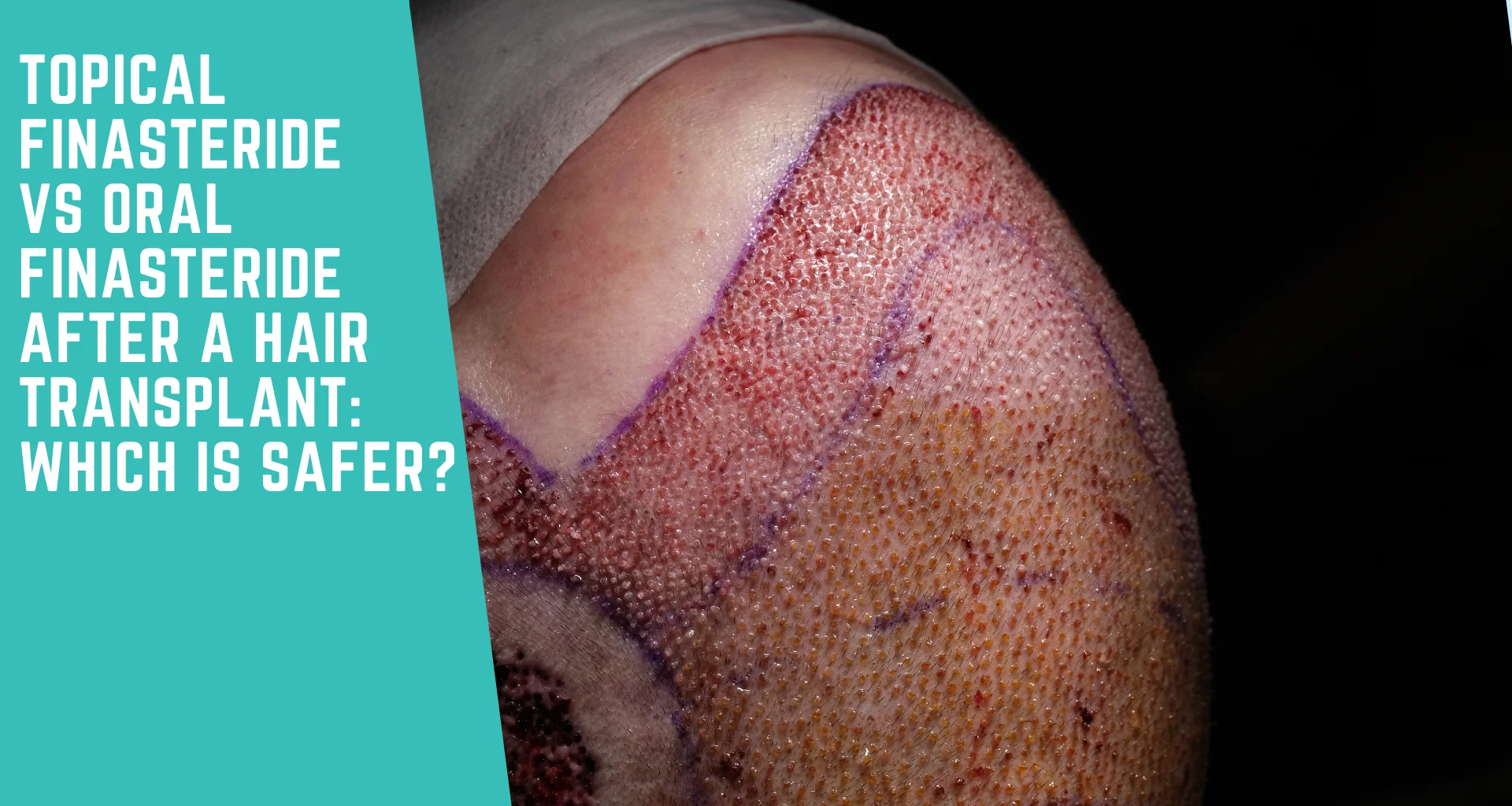
Topical finasteride may mean less medicine reaches the bloodstream, but after a transplant the scalp is also healing. A freshly transplanted area should not have extra products added simply because they are topical.
There is also a possible transfer risk if the product remains on the scalp or skin. The FDA has warned about accidental exposure to other people with compounded topical finasteride, especially around someone who is pregnant or could become pregnant.
So “which is safer?” cannot be answered from one comparison table. A better question is whether either form makes sense for that person at all.
If medication concerns are holding up your decision about surgery, separate the two questions. On a consultation call, UniquEra Clinic can assess your donor supply, existing thinning and what a transplant can realistically restore. Any medication decision can then be discussed separately with the professional managing that treatment.
Yes. Topical finasteride has been studied on its own without minoxidil.
The 24-week trial above tested topical finasteride as a standalone treatment and found better hair-count improvement than placebo.
That matters because people searching topical finasteride without minoxidil sometimes assume the evidence only comes from combination products. It does not.
This does not mean finasteride alone is right for everyone. It simply means topical finasteride has evidence as a treatment on its own.
Finasteride and minoxidil work in different ways, which is why combined topical products exist.
Finasteride lowers DHT. Minoxidil supports hair growth through a different pathway.
A combination is not automatically better for every person. It can also make it harder to know which ingredient caused irritation or another unwanted effect.
After a hair transplant, the scalp needs time to heal before topical products are added. A combined product should therefore not automatically become part of post-transplant care.
For anyone comparing topical vs oral finasteride after a hair transplant, there is no universal winner.
A doctor prescribing finasteride may consider medical history, other medicines, previous experience with finasteride, side-effect concerns and the exact topical product.
The finasteride topical vs oral question is really about two ways of delivering the same medicine, with different levels of exposure and different amounts of long-term evidence.
Your transplant consultation should answer different questions:
If you want to understand why donor strength can limit what is possible, see our guide to retrograde alopecia and hair transplant candidacy.
If surgery is suitable, our guide to how an FUE hair transplant works explains how grafts are taken from the donor area.
If your search started with best hair transplant clinic in Turkey or hair transplant Istanbul, look beyond whether a clinic promotes a particular tablet or lotion. The surgical plan should make sense based on your donor area, pattern of loss and long-term needs.
At UniquEra Clinic, the consultation starts with the patient’s hair loss, donor area, expectations and treatment plan before surgery. The final plan is checked again during the in-person consultation in Istanbul.
There is no single start or restart date that applies to everyone.
The hair-transplant study mentioned earlier used oral finasteride from four weeks before surgery until 48 weeks afterward. That was the study schedule, not a rule every patient should copy.
Topical finasteride needs extra care because it is put directly on the scalp. The transplanted area needs time to heal before extra topical products are introduced.
If you already use oral or topical finasteride, any decision to continue, pause, switch or restart should be discussed with the professional managing that medicine and shared with your transplant team.
The immediate priority after a transplant is to protect the grafts, let the scalp heal and follow the aftercare plan.
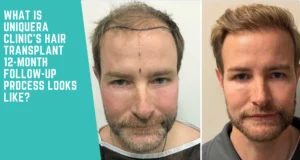
Long-term follow-up matters too. UniquEra’s patient journey includes scheduled follow-ups at 1, 3, 6 and 12 months. You can read more in our guide to UniquEra Clinic’s 12-month hair transplant follow-up process.
If you want to understand what your hair could look like long term without building the transplant plan around a medication decision, book a consultation call with UniquEra Clinic. We can review your donor area, current thinning, hairline and crown, and explain what surgery can realistically achieve.
A studied topical product resulted in much less finasteride reaching the bloodstream than oral finasteride. That may reduce whole-body exposure, but it does not make topical finasteride risk-free.
In one major 24-week trial, hair-count improvement was similar between the topical and oral groups. Oral finasteride still has a much longer research history.
Yes. Some medicine reaches the bloodstream, so sexual side effects remain possible. The main trial found low rates in both the topical and placebo groups.
Yes. Topical finasteride has been studied as a standalone treatment and improved hair counts compared with placebo.
No. There is currently no FDA-approved topical finasteride product in the United States. Compounded versions are available but are not FDA-approved products.
6. Does finasteride help transplanted hair grow?
Finasteride is mainly discussed for native hair that remains vulnerable to pattern hair loss. It is not what makes transplanted grafts survive or grow.
There is no universal date. Because the scalp is healing, timing should be confirmed with the professionals managing the surgery and the medicine.
No, not automatically. Whether medication has a role is a separate decision based on the person’s hair loss, medical history and treatment plan.