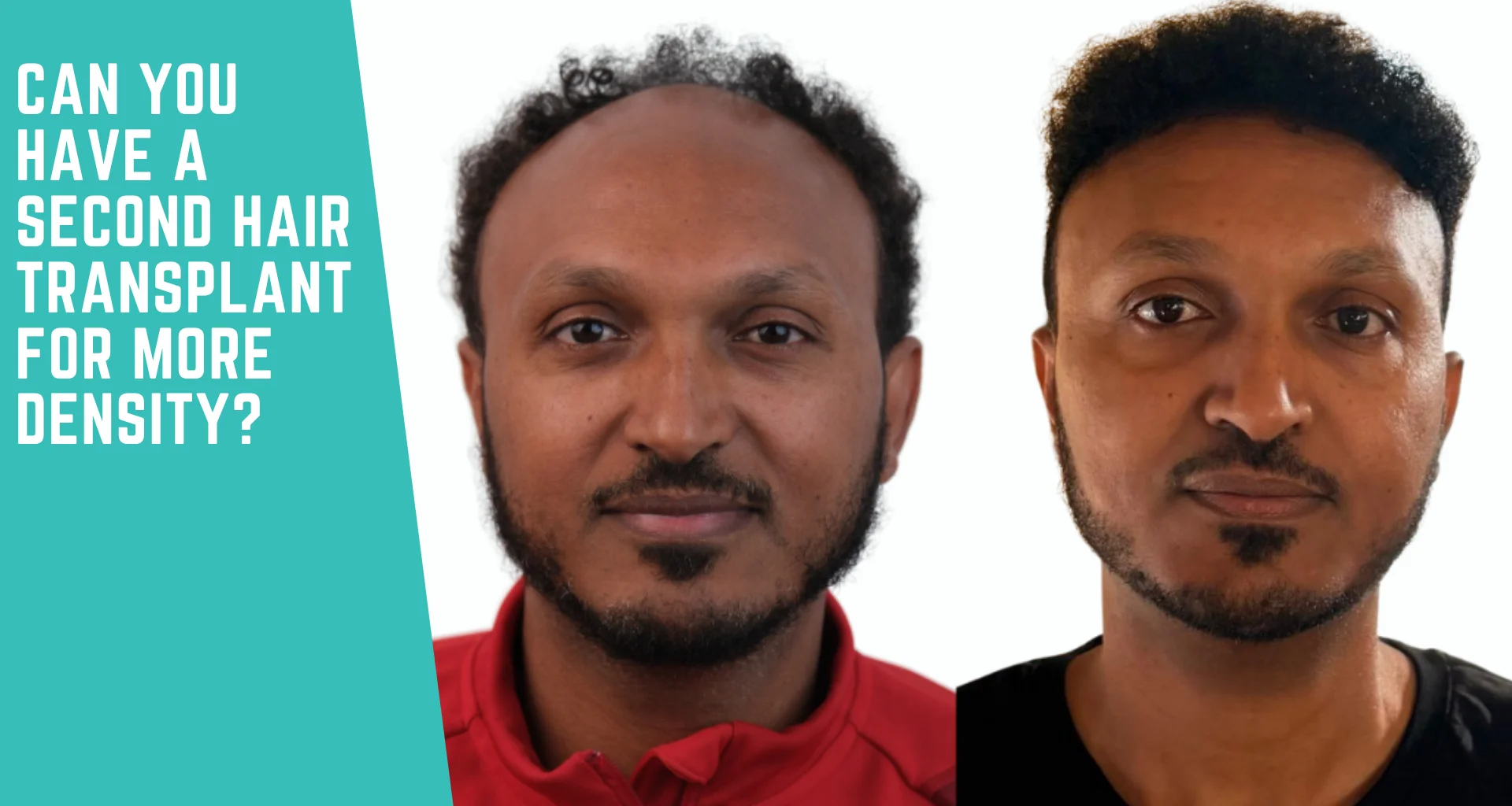

Yes. A second hair transplant can add density, but only if your first result has fully matured, enough healthy donor hair remains, and another procedure can create a meaningful visible improvement.
That is not a simple yes. And it should not be.
Wanting thicker hair after your first transplant is common. But another procedure is not automatically the answer.
Sometimes the first transplant was successful, but the patient wants more fullness. Sometimes the original plan was intentionally divided into two sessions. Sometimes native hair keeps thinning around the transplanted area. And sometimes the first procedure simply did not produce the expected coverage.
Before asking how many grafts you can get, there is a better question:
We know how it feels to still see too much scalp after doing everything right the first time. At UniquEra, every second-procedure consultation starts by reviewing what you already have, not by pitching a graft number. Find out whether another session could actually give you a visible improvement, before using more of your donor hair.
Most second hair transplants are done for more density, completion of a staged plan, continued hair loss, or correction of an earlier result.
| Reason | What the second procedure may address |
| More density | Adds grafts to an area that already has transplanted hair. |
| Staged treatment | Treats an area intentionally left for another session. |
| Continued hair loss | Restores areas where native hair has thinned since the first procedure. |
| Correction | Improves patchy coverage, weak density or an unnatural result. |
These situations should not be treated the same way.
A patient with a natural hairline who simply wants more fullness needs a very different plan from someone whose donor area was overharvested during the first procedure.
Both may search for a second hair transplant for density, but their treatment options can be completely different.
Yes. Additional grafts can sometimes be placed between hairs from the first transplant, if the area can safely accept them.
The medical team first needs to understand how the original grafts are distributed.
They should look at:
• Where the existing grafts survived.
• Hair direction and angle.
• Current native hair.
• Scalp condition.
• Hair thickness.
• The amount of visible space between follicles.
• Remaining donor supply.
The goal is not to squeeze in the highest possible graft number.
It is to create a visible improvement without unnecessarily disturbing existing follicles or putting too much stress on the recipient area.
That is why a second density procedure needs more planning than simply identifying an area that still looks thin.
High-Density Hair Transplant Results Without Looking Unnatural
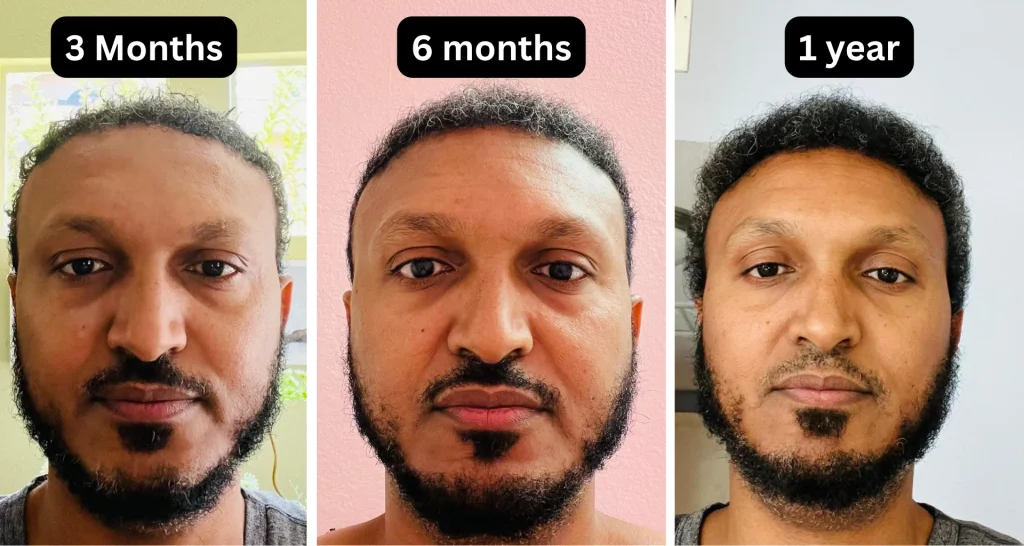
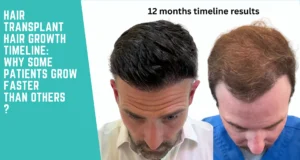
In most cases, the first transplant should be given around 12 months to mature before deciding whether another session is needed.
Hair transplant results develop gradually.
Early shedding happens first. New growth then starts over the following months. Thickness and coverage continue improving as the transplanted hair matures.
The crown can take even longer to show its final appearance.
If you are only five or six months into recovery, what looks like poor density may simply be an unfinished result.
A clinic should be willing to tell you to wait if your first transplant has not had enough time to develop.
Another procedure should not be booked simply because the result looks thin halfway through the growth cycle.
Low visual density does not always mean you need another large transplant.
Several things can make the scalp appear more visible:
• Fine hair calibre.
• Strong contrast between hair and scalp colour.
• Progressive thinning of native hair.
• Uneven growth.
• Low density from the first procedure.
• A large area being covered with limited grafts.
This is why the second consultation needs to assess more than the transplanted zone.
Sometimes adding grafts makes sense.
In other cases, the problem may be ongoing hair loss around a technically successful transplant. The treatment plan then needs to consider what is happening to the rest of the hair, not just where grafts were previously placed.
Your remaining donor supply is usually the biggest factor deciding whether another transplant is possible.
A hair transplant moves follicles from one area to another.
It does not create new donor hair.
Every graft removed during your first procedure reduces what remains available for future treatment – this is why donor area assessment happens before any second-session recommendation is made.
Before recommending another session, a clinic should assess:
1. How many grafts were removed previously, if known.
2. How evenly the donor area was extracted.
3. Whether the donor currently looks thin.
4. Whether there are signs of miniaturisation.
5. How much safe donor hair appears to remain.
6. How much future hair loss still needs to be considered.
This is why asking:
“How many more grafts can you give me?”
should not be the starting point.
The donor area sets the limit.
At UniquEra Clinic, donor assessment is part of deciding how much another procedure can reasonably achieve.
Also read: Hair Transplant Donor Area: How Clinics Assess It Before Surgery
A second procedure should start with what remains, not with another promised graft number. Check your Remaining Donor Supply before proceeding.
There is no fixed number of hair transplants that every person can safely have.
One patient may have enough donor supply for a second procedure.
Another may have already used a large part of the safe donor zone during the first operation.
Consider two people who both received 3,000 grafts.
Started with a dense donor area. Extraction was spread evenly. The donor still looks strong.
Started with weaker density. Too many grafts were removed from a smaller area. The back already looks noticeably thin.
Both had the same graft count.
Their eligibility for another procedure may be very different.
So the answer to “how many hair transplants can a person have?” is not two, three or four.
The real answer depends on the donor hair that remains.
Not sure where your own donor area stands? We can walk through what’s realistic for your case, with no pressure either way.
No. A second procedure can be planned from the beginning.
Some larger restoration cases are intentionally divided into stages.
For example, the first session may focus on the hairline and frontal area because those zones create the biggest change to the face.
The crown may then be treated later.
At UniquEra, staged treatment plans like this are common for larger cases, with the technique and areas chosen based on each patient’s baldness pattern, donor strength, and coverage needs.
That is very different from having a second transplant because the first operation failed.
A good consultation should explain which situation applies to you.
These terms describe different goals, even though patients often use them interchangeably.
| Type | Main purpose |
| Touch-up | Improve a small area, soften a section of the hairline or add limited density. |
| Second session | Add substantial density or treat an additional area. |
| Corrective transplant | Improve problems from an earlier procedure, such as patchiness or an unnatural design. |
The name itself matters less than the reason for doing it.
Before booking anything, the clinic should be able to explain exactly what they are trying to change.
Yes. DHI can be used in selected second-session cases, particularly when implantation needs to be planned carefully around existing hair.
At UniquEra, implantation channels are opened personally by our Medical Directors, with over a decade of hands-on hair transplant experience, supervising each case directly. Extraction and graft placement into those already-opened channels is handled by team members trained specifically for that step.
UniquEra uses both DHI Choi Pen and Sapphire-based methods depending on the case.
They are not the same procedure.
With DHI, grafts are implanted directly using a Choi pen.
With Sapphire-based implantation, channels are created first and grafts are then placed into those channels.
At UniquEra, technique is chosen based on the patient’s baldness pattern, graft requirement, and treatment area, not applied the same way for every case.
Neither method should automatically be presented as better for every second transplant.
First decide what the area needs.
Then select the method. UniquEra uses both DHI Choi Pen and Sapphire-based methods depending on the case.
Look for photos that show what the second procedure actually changed, not just the final hairstyle.
A useful second hair transplant before-and-after case should ideally include:
• The patient’s original hair loss.
• The result after the first transplant.
• The condition immediately before session two.
• The exact areas treated during the second procedure.
• The donor area before another extraction.
• A later result from the second procedure.
• Similar lighting, angle and hair length.
The middle stage is important.
Without it, you are comparing the patient’s starting point with the combined result of two procedures.
You cannot tell what the 2nd hair transplant results actually added.
How to Verify Hair Transplant Results Before Choosing a Clinic in Turkey
Ask about your donor area and previous transplant before you ask about price.
If you are comparing a hair transplant clinic in Turkey or researching the top hair transplant clinics in Turkey, ask:
• How much donor hair appears to remain?
• Has my first transplant fully matured?
• What exactly would the second procedure improve?
• Will you work in the same area or a new area?
• How much donor hair was probably used during my first procedure?
• What happens if my native hair keeps thinning?
• Can you show second-session cases similar to mine?
• Is another procedure actually necessary right now?
Be cautious if a clinic looks at a few photos and immediately promises thousands of additional grafts.
The graft number should come after the assessment.
Not before it.
UniquEra starts by reviewing what has already been done and what donor supply still appears available.
The first assessment can begin remotely.
Patients can share:
• Current hair photos.
• Donor-area photos.
• Previous graft count, if known.
• Date of the first procedure.
• Areas previously treated.
• Their current concern.
• What they hope to improve.
UniquEra’s process includes an initial consultation followed by an in-person assessment after arrival in Istanbul. The donor area, treatment zone, graft plan and hairline are physically reassessed before the final procedure plan is confirmed.
That matters even more in a second transplant because the first procedure has already changed both the donor and recipient areas.
If another session can produce a worthwhile improvement while respecting the remaining donor supply, it can be planned.
If the expected improvement is too small for the donor hair it would require, that needs to be part of the discussion too.
It can be, when there is enough donor hair left and a clear reason for another procedure.
A second transplant can:
• Add fullness to an existing result
• Complete a planned second stage
• Treat the crown after frontal restoration
• Address new hair loss
• Improve selected problems from an earlier transplant
What it cannot do is create unlimited donor hair.
The best second procedure is not the one that uses the most grafts.
It is the one that produces a worthwhile visible change while protecting what you may still need in the future. The best second procedure is not the one that uses the most grafts. It is the one that creates enough visible improvement to justify using more of your remaining donor hair.
Already had one transplant and am considering another? We’d rather look at your actual case than guess from a photo online. Book your consultation with UniquEra today.
Yes. Multiple procedures may be possible if enough healthy donor hair remains.
Around 12 months is a common point for reassessment. Crown growth may take longer to fully mature.
There is no set number. The limit depends mainly on remaining safe donor supply and future hair-loss planning.
It can be. Additional grafts may improve fullness when enough donor hair remains and the recipient area can safely accept them.
Existing follicles can be affected if implantation is poorly planned or too aggressive. This is why the original graft pattern should be assessed first.
Yes. The new clinic should first review your first procedure, donor condition and current graft distribution.
It can create greater visual density, but the result depends on donor supply, hair characteristics, existing density and the area being treated.