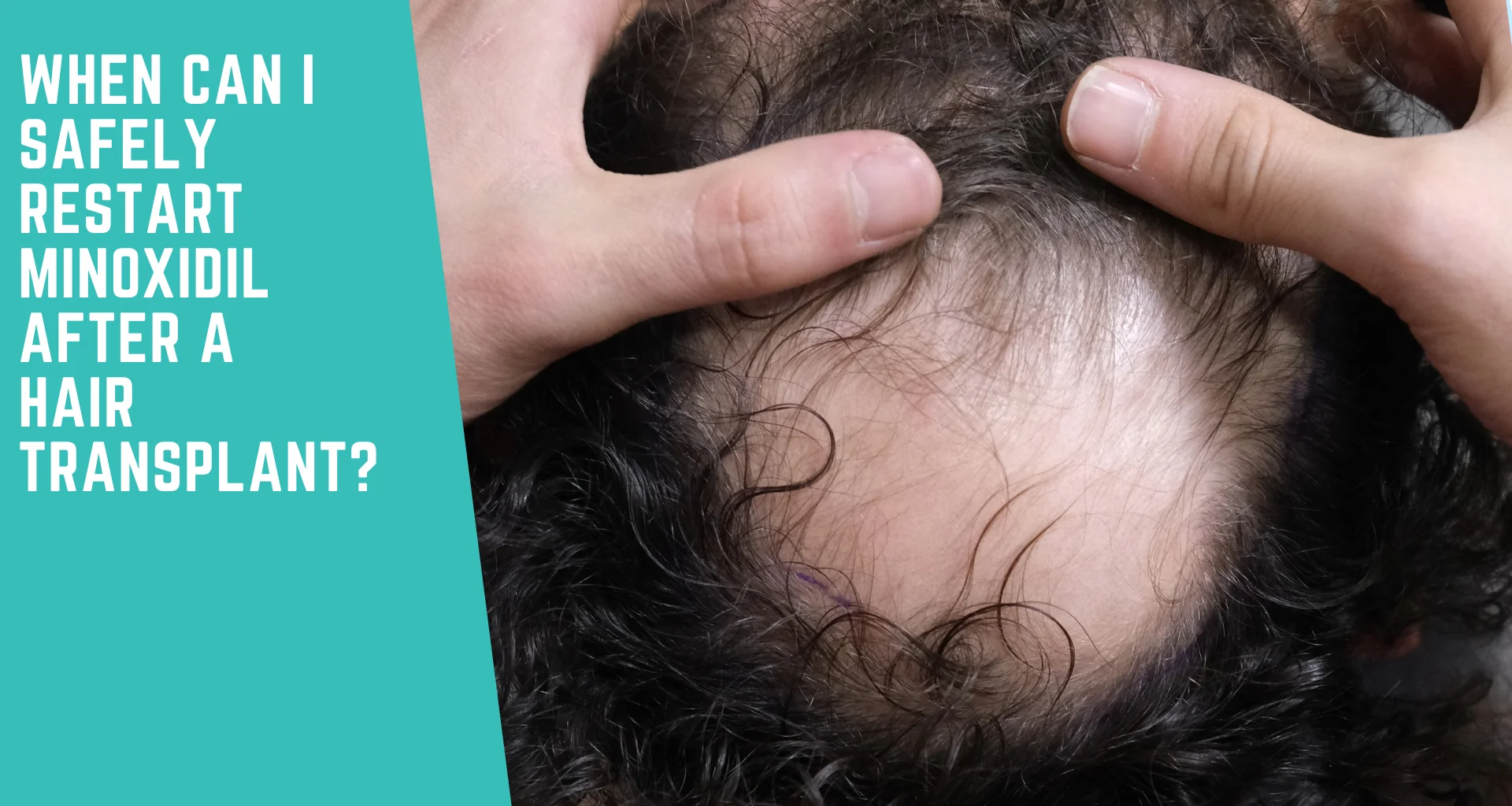

Minoxidil is not required for a hair transplant to work, and there is no restart date that every patient should copy. If someone was already using topical minoxidil before surgery, the decision to restart it should come after the early healing period and should take into account how the scalp is actually recovering.
The more important question is not simply when to restart minoxidil. It is why you were using it in the first place.
A hair transplant restores selected areas by moving follicles from the donor area. Minoxidil is a separate hair-loss treatment that may be used for existing, non-transplanted hair. Those are two different jobs.
At UniquEra Clinic, minoxidil is not treated as a routine requirement of transplant aftercare. The transplant plan is built around the donor area, existing hair, treatment zones, hairline design and likely future hair loss. The result should make sense without depending on every patient following the same medication routine afterward.
Planning a transplant and unsure what your existing hair may need afterward? Start with the transplant plan. UniquEra Clinic can review your hairline, crown, thinning areas and donor supply and explain what can realistically be restored before you make separate decisions about medication.
No. Minoxidil is not automatically required after a hair transplant, and it is not what makes transplanted grafts survive.
This is the most important point for anyone asking do you need minoxidil after hair transplant or is minoxidil required after hair transplant.
A transplant and minoxidil solve different problems. The transplant moves selected donor follicles into areas that need restoration. Minoxidil may be relevant to some native hair that is still present and still thinning.
| Question | Hair transplant | Minoxidil |
|---|---|---|
| Can it restore an area where hair has already been lost? | Yes, by moving suitable donor follicles. | No |
| Is it required for transplanted grafts to survive? | The result depends on the transplant plan, graft handling, placement and healing. | Available evidence does not show it is required. |
| Can it be relevant to native hair that is still thinning? | Surgery can add grafts around existing hair when appropriate. | It may be relevant in selected patients |
| Does it increase donor supply? | No. Donor supply has to be assessed and protected.. | No |
| Should every patient receive it? | Every surgical plan should be individual. | No |
This is why minoxidil after hair transplant should not be presented as a condition for a successful procedure.
People searching when to start minoxidil after hair transplant often expect one exact day. Published expert guidance commonly discusses restarting topical minoxidil after the early healing period, often around 7 to 14 days, but that is not a universal rule and it is not a UniquEra Clinic aftercare requirement.
The condition of the scalp matters more than copying a date from another patient.
| What the scalp looks or feels like | What it means for the decision |
|---|---|
| Fresh crusts or healing recipient sites | The area is still in the early recovery phase. |
| Persistent redness, soreness or irritation | Adding a topical product may make irritation harder to assess. |
| Itching or inflamed skin | The cause should be understood before adding another scalp product. |
| Clean, intact and settled scalp | Normal topical products may be easier to tolerate once healing has progressed. |
| Delayed or unusual healing | The transplant team should review the scalp before any routine is restarted. |
So questions such as when can I use minoxidil after hair transplant, when can you use minoxidil after hair transplant and when to use minoxidil after hair transplant need a healing-based answer, not just a calendar answer.
UniquEra’s early aftercare focuses first on protecting the implanted area and allowing the scalp to settle. That is more important than adding an optional topical treatment quickly.
This is different from someone who has never used minoxidil and decides to start only because they have had a transplant.
If minoxidil was already part of your thinning hair treatment, tell the transplant team before surgery. They should know what you use, where you apply it, how long you have used it and whether it has ever irritated your scalp.
| If you already use minoxidil | What to clarify |
|---|---|
| Before surgery | Tell the transplant team about the product, strength, application area and who advised it. |
| During early recovery | Do not assume the old routine should continue immediately over a healing scalp. |
| When considering a restart | Check that the scalp has healed and follow the advice of the professional managing that treatment. |
| If irritation appears | Stop applying it to the irritated area and seek appropriate medical advice. |
Minoxidil post hair transplant should therefore be treated as a separate medication question, not as a standard step every transplant patient must follow.
Already receiving different advice about your transplant and medication routine? Bring both into your consultation. At UniquEra Clinic, we separate what relates to the transplant itself from what needs to go back to the professional managing your medication.
The easiest way to avoid confusion is to separate what minoxidil may influence from the things only proper transplant planning can solve.
| Minoxidil may be relevant to | Minoxidil cannot replace |
|---|---|
| Existing native hair that is still thinning | A proper donor-area assessment. |
| The hair-growth cycle in some patients | Careful graft extraction and handling. |
| Some forms of ongoing pattern hair loss | A natural hairline design. |
| A treatment routine that existed before surgery | Correct angle, direction and distribution of transplanted grafts. |
| Selected cases of temporary postoperative shedding | Long-term donor preservation. |
Available clinical evidence does not show that minoxidil is required for transplanted grafts to survive. Some studies have suggested that it may affect early shedding or how quickly visible growth appears in selected patients, but that is not the same as proving a better final transplant result.
The transplant still has to stand on its own.
A hair transplant for thinning crown often involves both transplanted grafts and native hair that is still present.
That creates two separate questions:
| Question | What needs to be decided |
|---|---|
| How much of the crown should be restored surgically? | This depends on crown size, existing density, donor supply and whether the hairline or mid-scalp also needs grafts. |
| What happens to the native crown hair that remains? | This is a separate long-term hair-loss management question. |
At UniquEra Clinic, the donor area comes first. If trying to fill every visible gap in the crown would use too much donor hair, that matters more than chasing maximum short-term coverage.
A crown plan should also make sense if surrounding native hair continues to change. That is why the surgical plan and any separate medication plan should not be confused with each other.
No. A Sapphire FUE hair transplant does not automatically create a need for minoxidil.
| Term | What it refers to |
|---|---|
| FUE | Extraction of individual follicular units from the donor area. |
| Sapphire approach | Creation of recipient channels with a sapphire blade before graft placement. |
| DHI | Implantation of grafts using a Choi implanter pen. |
The technique affects how the transplant is carried out. It does not mean every patient should follow the same medication routine afterward.
Whether a patient has Sapphire FUE, DHI or another appropriate treatment plan, the early priorities remain protecting the implanted area, allowing the scalp to heal and following the aftercare plan for that procedure.
For the first part of recovery, the emphasis should stay on the transplant itself.
| Recovery priority | Why it matters |
|---|---|
| Protect the implanted area | Fresh grafts should not be rubbed, scratched or put under unnecessary pressure. |
| Follow the washing plan | Washing changes as the grafts become more secure. |
| Allow crusts and redness to settle | Normal healing needs time and should not be rushed by adding unnecessary products. |
| Monitor the donor area | The back and sides are part of the final result too. |
| Stay in contact with the clinic | Recovery advice is more useful when the team can see how the scalp is progressing. |
UniquEra Clinic follows patients beyond the procedure day, with planned follow-up points through the first year. This matters because recovery is not one event. The transplanted area, donor area and native hair all change at different stages.
This is the part that matters more than whether minoxidil appears on an aftercare list.
| Part of the transplant | Why it matters | UniquEra focus |
|---|---|---|
| Donor assessment | Sets the realistic limit of what can be transplanted. | Plan from available donor supply, not from a target graft number. |
| Hairline design | Controls the most visible part of the result. | Design around facial proportions, age and future hair loss. |
| Graft selection and sorting | Different follicular units create different visual effects. | Singles are used where softness is needed, while multi-hair grafts can support density behind. |
| Angle and direction | Determines how transplanted hair sits and flows. | Placement is planned to follow a natural growth pattern. |
| Donor preservation | Protects future options if hair loss continues. | A good first result should not create a donor problem later |
| Follow-up | Growth develops over months, not days. | Structured monitoring continues after the patient returns home. |
This is also why UniquEra Clinic does not build its transplant positioning around routine medication use. The procedure should be technically and strategically sound first.
UniquEra’s planning process is designed around more than the area that looks thin today.
| Stage | What is considered |
|---|---|
| Remote assessment | Hairline, top, crown, donor area, history and patient goals are reviewed before travel. |
| In-person assessment in Istanbul | The donor area and treatment zones are checked directly before the final plan is confirmed. |
| Procedure planning | Hairline design, graft distribution, technique and donor preservation are considered together. |
| Long-term follow-up | Progress is reviewed as growth develops and native hair continues to change. |
Every case is overseen by Medical Directors with over a decade of hands-on hair transplant experience. The purpose of that experience is not to give every patient the same plan. It is to know when more grafts are useful, when fewer are safer and when surgery should not be rushed.
If you are comparing a hair transplant clinic in Istanbul, this is a more useful question than whether the clinic automatically adds minoxidil to the aftercare list:
Will the transplant still make sense if my native hair continues to change?
Likewise, when researching the best Turkish hair transplant option for your case, look at donor planning, hairline design, technique, who oversees the treatment and how the clinic follows you after you return home.
Minoxidil is not required for a hair transplant to work. Some patients may already use it for native hair, and published guidance discusses restarting topical minoxidil after the early healing period. But this should not become a universal post-transplant rule.
At UniquEra Clinic, the priority is to build a transplant that makes sense on its own: appropriate donor use, natural design, careful placement, realistic coverage and a plan for how the patient’s hair may change over time.
If you want to understand what your own hair loss can realistically support, book a consultation with UniquEra Clinic. We can review your donor area, hairline, crown and existing thinning, explain what a transplant could achieve and show you what the recovery and long-term follow-up would look like for your case.
Stopping minoxidil does not mean transplanted grafts suddenly disappear. However, native hair that was benefiting from minoxidil may gradually lose that treatment benefit after it is stopped.
A healing donor area does not automatically need minoxidil. Topical products should not be added to irritated, painful or actively healing skin unless a medical professional has advised you to use them there.
Some people notice changes in shedding when starting or restarting minoxidil because it can affect the hair-growth cycle. Heavy, prolonged or unusual shedding should be discussed with the professional managing the treatment.
Neither form is universally better after transplantation. Different formulations can be tolerated differently, so the condition of the scalp and the reason for using minoxidil matter more than choosing a format based on another patient’s routine.
A red, inflamed, irritated or painful scalp should be allowed to settle and reviewed if necessary before an irritating topical product is added.
No. Oral minoxidil affects the whole body and has different safety considerations. It should not be treated as a simple replacement for topical minoxidil or started because the scalp is still healing.
That depends on why you use minoxidil and what native hair remains in the crown. If it was already part of your treatment, ask the professional managing it whether the application area should change after surgery.
Having a transplant does not automatically mean you need to start it. Whether any separate non-surgical treatment has a role depends on the native hair that remains and your individual medical situation.