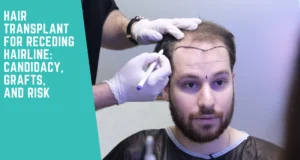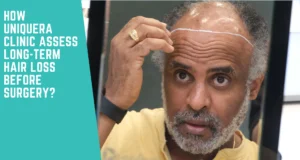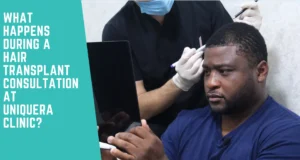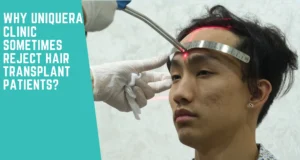

Hair transplant consultation is the first real step toward understanding your options. For most people, it comes after months of watching their hair change and wondering what can actually be done.
You might be dealing with a receding hairline. A thinning crown. Or the kind of all-over thinning, diffuse thinning hair loss, where every part of your scalp seems to have lost volume at once. Whatever the pattern, you have probably reached a point where you want a proper answer, not more guesswork.
That is exactly what a hair transplant consultation is for.
This guide walks you through every step of the process. What the medical team checks, what they are deciding, what questions you should ask, and what you will know by the time you walk out. Including what changes if you have diffuse thinning, because that consultation looks different from a standard one.
| Not Sure If You’re a Candidate? Every month you wait, your hair loss can progress and your options may change. Get your scalp assessed before you lose more ground. |
It is a structured medical assessment. A qualified team examines your scalp, reviews your hair loss history, and determines whether you are a suitable candidate for surgery.
It is not a formality. Everything that shapes your result gets decided here. Many patients start with a general hair transplant consultation before deciding whether surgery is the right option.
A proper consultation covers:
• Whether you are ready for surgery now, or whether another step makes more sense first.
• Which technique fits your scalp and hair type?
• How many grafts do you realistically need?
• Where should your hairline sit and how should it be designed?
• What will your result look like in 10 years, not just in 12 months?
If a clinic gives you a graft number before examining your scalp, that is a warning sign worth paying attention to.
Most consultations run between 45 minutes and 90 minutes.
Simpler cases take less time. Complex cases, like diffuse thinning hair loss or repair work, take longer. There is more to assess before a proper plan can be formed.
If yours is done in 15 minutes, it has not been done properly.
This is the first question the consultation answers.
Not everyone who wants a transplant is ready for one. A good clinic will tell you that directly and explain why.
The medical team checks for:
| Factor | What they look for |
| Donor area quality | Dense, healthy hair at the back and sides of the scalp. |
| Hair loss stability | Loss that has slowed or stabilised, not still progressing fast. |
| Medical health | No contraindications from medications or existing conditions. |
| Realistic expectations | Setting realistic hair transplant expectations is one of the most important parts of the consultation process. |
If you are not ready yet, that is not a closed door. It usually means there are steps to take first. A clinic that tells you this honestly is one you can trust.
The difference between a good result and a disappointing one is usually decided before the procedure begins. In the consultation. In the questions asked and answered honestly. If you have not had that conversation yet, talk to the UniquEra team today.
Yes. The evaluation is different.
Diffuse thinning hair loss spreads across the whole scalp with no clear pattern. It affects diffuse thinning in male patients and women equally. Before any surgical plan is made, the team needs to answer two things.
What is causing it? Common causes include genetics, hormonal shifts, chronic stress, nutritional deficiency, and thyroid conditions. For a detailed breakdown, see our guide on diffuse thinning vs male pattern baldness. If the cause is temporary, diffuse hair loss treatment starts with addressing that, not surgery.
Is the donor area stable? If the back of the scalp is also thinning, grafts taken from there may not hold permanently. The team maps the donor zone carefully before recommending a hair transplant for diffuse thinning.
The best treatment for diffuse thinning depends entirely on what the evaluation finds. The consultation is where that gets determined.
Before any physical examination, they gather your history. Be ready to answer honestly.
About your hair loss:
• When did you first notice thinning or loss?
• Has it progressed quickly or slowly?
• Is there a family history of hair loss, and on which side?
• Have you tried any treatments already?
About your health:
• Are you currently taking any medications?
• Do you have any diagnosed conditions, thyroid, hormonal, or autoimmune?
• Have you had any previous surgical procedures?
• Do you smoke or drink regularly?
About your goals:
• Which area concerns you most, hairline, crown, or overall density?
• What density outcome are you hoping for?
• Are you open to more than one session if needed to reach your goal?
The plan the medical team builds is only as accurate as the information you give them. Be specific.
This is the core of the consultation. Everything else depends on what the examination finds.
A specialised camera examines the scalp at high magnification. It shows the health of individual follicles, the ratio of healthy to weakened hairs, and the condition of the scalp surface. Think of it as a detailed camera that shows the medical team what the naked eye cannot see.
Measures how many follicular units exist per square centimetre across different scalp zones. Both the recipient area, where hair is thin or absent, and the donor area, where grafts will come from, are mapped. This tells the team how many grafts are available and how many are needed.
Check whether your existing hair has become finer and shorter over time. This is a sign that follicles are weakening. High miniaturisation in the donor area is a concern. It can affect how permanent the transplanted grafts will be long-term.
Assesses the density, elasticity, and hair quality at the back and sides of your scalp. The quality of this zone sets the ceiling on what is achievable. No technique can produce results beyond what the donor area can supply.
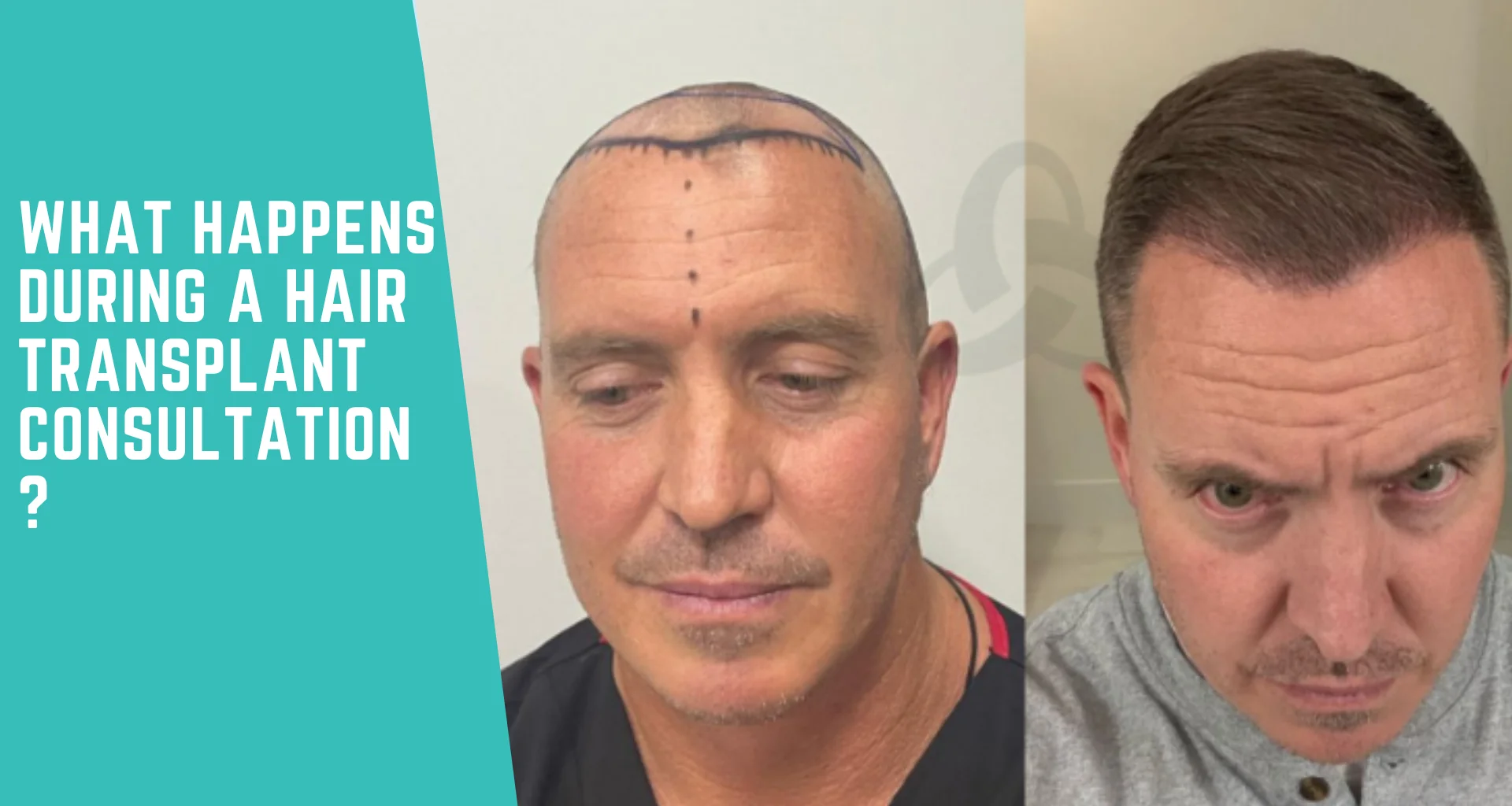
Hairline design happens at the consultation, not on the morning of the procedure.
The medical team analyses your facial structure. Forehead width, temple shape, brow position. These proportions determine where a natural hairline sits for your specific face.
Then they factor in your future hair loss pattern.
If loss is likely to continue over the next decade, and for most patients it will to some degree, a hairline placed too low now can look disconnected from your natural hair later. The design accounts for how your hair is likely to change over time.
This conversation should take time. If it is rushed, that is worth questioning directly.
The technique is a medical recommendation. It is not a preference you choose from a list.
The three main options available at a hair transplant clinic in Turkey are Sapphire FUE hair transplant Turkey, DHI hair transplant Turkey, and manual hair transplant Turkey. Here is how they compare:
| Technique | How it works | Best suited for |
| Sapphire FUE | Individual follicle extraction, channels opened with sapphire blades. | Most cases. Clean healing, minimal scarring. |
| DHI (Choi Pen) | Direct implantation, no pre-made channels needed. | Hairline precision, density work, no-shave procedures. |
| Manual FUE | Traditional extraction with a manual punch tool. | Cases needing finer follicle selection control. |
For diffuse thinning patients, DHI hair transplant Turkey is often preferred. It places grafts directly between existing hairs without disturbing them. That matters when the recipient area still has native hair worth preserving.
The medical team will explain their recommendation and the reasoning behind it. If a clinic recommends the same technique to every patient without examining your scalp first, that is worth questioning.
| A Good Consultation Can Save You From a Bad ProcedureMany disappointing hair transplants begin with poor planning, unrealistic graft estimates, or surgery performed before the scalp is ready. A proper assessment identifies those risks before they become expensive mistakes.Talk to the UniquEra team before committing to any procedure. |
For patients travelling from the US, UK, Canada, or Australia to a hair transplant clinic in Turkey, the process runs in two stages.
Stage one. The virtual consultation.
This happens before you travel. You submit scalp photos and a short hair loss summary. The medical team reviews them and gives you an initial assessment. Whether surgery looks appropriate, a rough graft estimate, and which technique seems right, based on what they can see.
What photos to send:
• Top of scalp in natural light, no flash.
• Front hairline with hair pulled back.
• Both temples.
• Back of the head showing the donor zone.
• A brief note on when the loss started and how fast it has progressed.
The virtual consultation does not replace the in-person examination. It confirms whether your trip is worthwhile before you book it. If the photos suggest you are not yet a candidate, the team will tell you before you fly. An online hair transplant consultation helps determine whether traveling for an in-person assessment is worthwhile.
Stage two. In-clinic assessment in Istanbul.
When you arrive, the full examination follows. Trichoscopy, density mapping, donor evaluation, and hairline design discussion. The plan is finalised here. Most patients visit a hair transplant clinic in Istanbul for their final in-person assessment and treatment planning.
Most international patients have their procedure one to two days after the in-clinic assessment, depending on the complexity of their case.
The consultation is a two-way conversation. These are worth asking before you leave:
• Is my hair loss stable enough for surgery right now?
• How did you arrive at that graft number, and what data is it based on?
• Who specifically performs the extraction and who performs the implantation?
• What does my result look like in 10 years if my hair loss continues?
• What happens if I need a second session later?
• What are the realistic risks specific to my case, not a general list?
Pay attention to how the answers come. Vague answers to specific questions tell you something important about the clinic.
A properly conducted consultation gives you clear answers to five things:
1. Whether you are a candidate, yes, not yet, or no, with specific reasons.
2. Which technique is recommended, and why it fits your scalp?
3. How many grafts are needed versus how many are available in your donor area?
4. What your hairline will look like and the reasoning behind the design?
5. A realistic timeline for recovery and final results.
If you leave without clear answers to these five, ask until you have them.
Choosing the best hair transplant clinic in Turkey means choosing a team that gives you clarity before asking for commitment.
At UniquEra Clinic, the consultation is where that clarity starts. Whether you have diffuse thinning, pattern loss, or you are simply not sure what type of hair loss you have, the consultation gives you an honest picture of where you stand and a realistic plan for what comes next.
For patients looking for a luxury hair transplant Turkey experience built on medical precision, UniquEra Clinic is the right place to begin.
| The Consultation Is Where Good Results Begin. Every Month of Delay Is More Hair You Cannot get back. The consultation is free. The information can save thousands of grafts and years of regret. Book your assessment with UniquEra today. |
A hair transplant consultation is a medical assessment used to determine whether you are a candidate for surgery and what treatment plan fits your scalp.
Most consultations take between 45 and 90 minutes, depending on the complexity of the case.
Yes. UniquEra offers a free consultation with no obligation to proceed.
Yes. Most international patients begin with an online hair transplant consultation before traveling to Turkey.
Bring details of medications, medical conditions, previous treatments, and any photos showing how your hair loss has progressed.
The team will explain why and recommend the next step, whether that means waiting, monitoring, or exploring other treatments first.
Sometimes. If the cause is temporary, treating it may restore density. Genetic diffuse thinning often requires a long-term restoration plan.
Genetics, stress, poor sleep, nutrition, and hormonal factors are contributing to earlier hair loss in many younger patients.
Yes. Most patients receive an initial assessment through photos and an online consultation before booking travel.
You will know whether you are a candidate, how many grafts you may need, which technique is recommended, and what results are realistically achievable.