
One of the most common questions we receive from prospective patients is: “Does a hair transplant hurt?”
The simple answer is NO.
A modern hair transplant procedure is not painful. While some mild postoperative discomfort may occur, it’s generally minimal and relatively short-lived. During the procedure itself, you should not feel any pain at all, thanks to the use of local anesthesia.
Hair loss affects millions of people worldwide, and the latest advancements in hair transplant surgery continue to offer the most effective and permanent solutions. Modern techniques like Follicular Unit Extraction (FUE), Sapphire Hair Transplant, and Direct Hair Implantation have made the procedure more comfortable than ever before.
While everyone’s tolerance level is different, rest assured that proper medical protocols minimize discomfort at every stage. At UniquEra Clinic, we’ve helped thousands of patients through this journey, and we’ll walk you through the process so you know exactly what to expect.
In this comprehensive guide, we’ll explore every aspect of hair transplant pain, from what you can expect during the procedure to post-operative recovery. By the end, you’ll understand why hair transplant operations are widely considered one of the most tolerable cosmetic procedures available today.
Want personalized answers about your specific case? A medical consultation will address your individual concerns about pain tolerance, scalp sensitivity, and exactly what to expect based on your unique treatment plan.
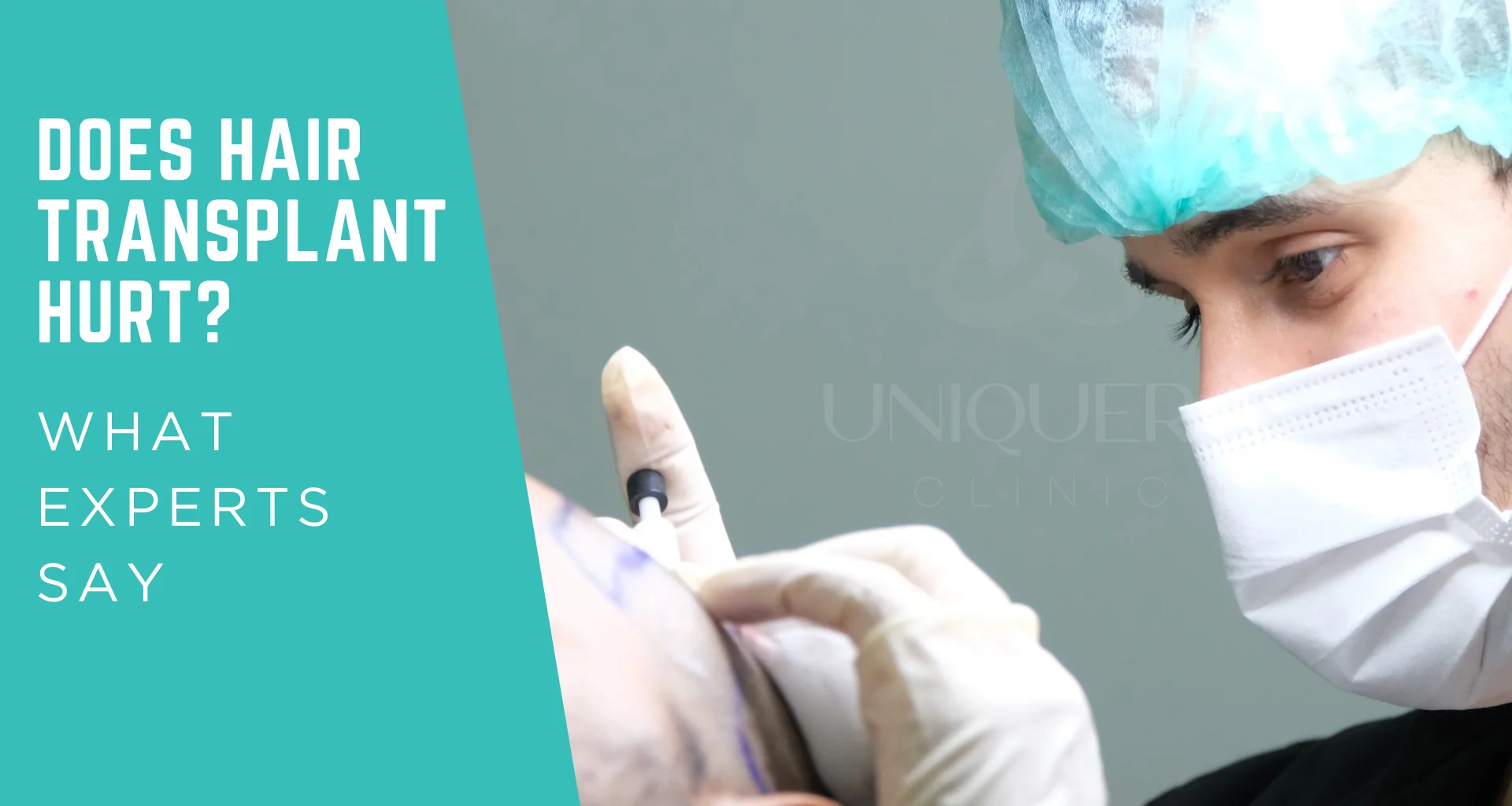
The procedure itself should not cause pain. On the day of your surgery, the process begins with the application of local anesthesia to numb the scalp. This ensures you remain comfortable throughout the entire procedure.
Before the surgery begins, your doctor will inject local anesthesia into various areas of your scalp. This may cause a brief stinging sensation, similar to receiving a routine injection at the doctor’s office. Once the anesthesia takes effect (typically within 2-4 minutes), you should not feel any pain at all.
Many patients report feeling a slight pressure or an odd sensation – like someone lightly pressing against their scalp – but not pain. The numbness typically lasts for approximately 4 hours, ensuring you remain comfortable throughout the procedure.
During follicle extraction: Pressure or gentle tugging, but no pain. Many patients find this phase so comfortable they relax, watch entertainment, or even doze off.
During graft implantation: A tapping or pressing sensation as each follicle is placed. You’re aware of the work being done, but it’s completely pain-free.
Throughout the procedure: If you feel any discomfort beyond pressure, simply let your surgical team know. Additional anesthesia can be administered immediately to keep you comfortable.
Professional hair transplant clinics use several techniques to enhance your comfort:
• Ultra-fine needles (typically 30-32 gauge) for minimal tissue trauma.
• Topical numbing cream applied before injections to reduce the initial sting.
• Ice pack application for natural numbing before anesthetic injection.
• Distraction techniques like finger tapping or vibration during injections.
• Mild sedatives for anxious patients to help you stay relaxed.
• Regular monitoring and communication to ensure continuous comfort.
Post-operative pain is minimal for most patients, especially with modern FUE techniques. Here’s what you can realistically expect:
| Timeframe | What you may feel | Pain level | Management |
| First 24 hours | Mild tightness, soreness | 1-3 out of 10 | Basic pain relief (paracetamol). Many need nothing |
| Days 2-3 | Tenderness, swelling | 1-2 out of 10 | Over-the-counter medication as needed |
| Days 4-7 | Itching, mild sensitivity | 0-1 out of 10 | Normal healing. Avoid scratching |
| After day 7 | Minimal to none | 0 out of 10 | Normal activities resumed |
Most patients find the discomfort highly tolerable and are pleasantly surprised by how manageable recovery is. The key is following your post-operative care instructions carefully.
Proper aftercare is essential for minimizing discomfort and ensuring optimal healing. Here’s exactly what to do:
• Take prescribed pain relievers or over-the-counter medication as directed.
• Avoid aspirin, ibuprofen, and blood-thinning medications for at least 3 days (these can cause excessive bleeding).
• Most patients need only 2-3 doses of pain relief in the first 24 hours.
• Sleep elevated (45-degree angle) to minimize swelling.
• Position your head to avoid pressure on transplanted areas.
• Stay hydrated and maintain a healthy diet to support healing.
• Rest for the first 24-48 hours.
• Avoid strenuous activity, gym, and heavy lifting for 1 month.
• Don’t wash your hair for the first 24 hours.
• Gentle washing for 10 days everyday following specific instructions.
• Resume normal activities after 7-10 days.
Most patients return to work within 24-48 hours, a vast improvement over older methods that required nearly a week of recovery.
The best hair transplant clinic in istanbul don’t just promise comfort – they explain their exact pain management protocol. During your consultation, ask: “Walk me through your pain control plan, step by step, from anesthesia to recovery.” A professional clinic will answer this clearly and thoroughly.
While mild discomfort is normal, certain symptoms require immediate medical attention:
• Intense pain that worsens instead of improving after day 2.
• Significant inflammation with warmth and burning sensation.
• Signs of infection: pus-like discharge, spreading redness, fever.
• Excessive bleeding that continues beyond 3 days.
• Severe swelling that feels progressive.
Early intervention protects both your healing and graft survival. Don’t hesitate to reach out if something doesn’t feel right.
Pain perception varies from person to person. Several factors influence your individual experience:
Pain tolerance and threshold: Everyone perceives pain differently. What one person finds mildly uncomfortable, another barely notices.
Anxiety levels: Stress and anticipation can amplify pain signals. Relaxed, well-informed patients consistently report easier experiences.
Scalp characteristics: Scalp tightness and elasticity affect both the procedure and recovery. Your surgeon evaluates this during consultation.
Procedure length: Longer procedures may require additional numbing. Professional clinics monitor this closely and re-apply anesthesia before you feel any discomfort.
Medical history: Certain conditions or medications can affect pain sensitivity. Discuss your complete medical history during consultation.
Here’s an important truth: you shouldn’t choose your hair transplant technique based on comfort claims.
The technique is determined after thorough medical evaluation, based on your donor area quality, scalp condition, hair characteristics, and restoration goals. Your surgeon selects the method that will give you the best long-term results.
What genuinely affects your comfort is:
• Quality and timing of anesthesia application.
• Skill and experience of the surgical team.
• Careful, unhurried surgical approach.
• Precision in handling grafts.
• Structured, clear aftercare protocols.
These factors make the difference between a tolerable procedure and a genuinely comfortable one.
At UniquEra Clinic, we understand that a hair transplant is more than just a procedure – it’s a complete medical journey. Your comfort is an integral part of that journey at every stage.
This systematic approach doesn’t guarantee zero discomfort – no honest clinic can make that promise. What it does is minimize unnecessary pain through proper medical protocols and give you confidence throughout the process.
As one of Turkey’s leading hair transplant centers, UniquEra Clinic combines world-class expertise with personalized care, ensuring your experience is as comfortable as possible while delivering exceptional results.
If concern about pain has been holding you back from addressing your hair loss, you can put those worries aside.
Modern hair transplant surgery is remarkably comfortable:
• During the procedure: No pain at all, only mild pressure and awareness.
• After the procedure: Mild, temporary discomfort easily managed with basic pain relief.
• Recovery time: Most patients return to normal activities within 24-48 hours.
• Long-term results: Permanent, natural-looking hair restoration that transforms your confidence.
The brief, manageable discomfort is far outweighed by years of restored confidence and the satisfaction of seeing your hair fully restored.
Don’t let fear of pain prevent you from taking the first step toward the hair you deserve.
Ready to move forward with confidence? Book your consultation with UniquEra Clinic today. We’ll address all your concerns about pain, walk you through our comfort protocols, and create a personalized treatment plan based on your unique needs. Experience why thousands of patients choose Turkey’s best hair transplant surgery at UniquEra Clinic.
1. Does hair transplant hurt during surgery?
No. After local anesthesia takes effect, you will not feel pain during the surgery. You may feel pressure or movement, but the procedure itself is pain-free.
2. Is hair transplant painful after surgery?
Post-operative discomfort is mild and manageable. Most patients experience minor soreness, swelling, and tightness for 1-3 days, easily controlled with over-the-counter pain relief.
3. What is the most painful part of a hair transplant?
The initial anesthetic injections cause a brief stinging sensation lasting only seconds. Once numbing takes effect, there is no pain during the procedure.
4. Is hair transplant surgery painful in Turkey?
Pain depends on the clinic’s medical protocols and expertise, not the country. Turkey’s best clinics, like UniquEra, use advanced anesthesia techniques and follow international standards for patient comfort.
5. How long does discomfort last after a hair transplant procedure?
Most discomfort reduces significantly within 48-72 hours. Mild itching or sensitivity may last about a week as part of normal healing.
6. What If Pain Arises During the Procedure?
In rare instances, patients may feel a slight discomfort (described as a bee sting) if the procedure extends over several hours and the anesthesia starts to wear off. In such cases, additional anesthesia is administered immediately, ensuring the procedure remains tolerable. The goal is for the entire experience to be as comfortable as possible.
7. Does a Hair Transplant Bleed?
Some minor bleeding may occur during and immediately after the procedure. However, this is controlled using advanced techniques and does not contribute to pain.
8. Does a Hair Transplant Leave Scars?
The FUE method leaves tiny, dot-like scars that are virtually undetectable. This is another reason why FUE is the preferred choice for those concerned about aesthetics and recovery.