
If you’re considering a hair transplant, one thing matters more than anything else. Feeling confident that you’re making a safe, well-informed medical decision.
Most people exploring hair transplant surgery are not looking for perfection or dramatic promises. They want a procedure that’s medically sound, produces natural results, and is planned with care rather than speed.
The reassuring truth is this. Hair transplant surgery is considered a safe and well-established procedure when it is properly planned, medically supervised, and supported with clear aftercare.
Where problems arise is not the surgery itself, but how decisions are made. Rushed planning, unclear medical responsibility, or weak follow-up can turn an otherwise straightforward procedure into an avoidable source of stress.
This guide explains how hair transplant safety is assessed, what to expect before and after surgery, and how to confidently choose a clinic in Turkey based on medical standards rather than marketing claims.
If you want clarity about your own situation, you can speak directly with our medical team for an objective evaluation and realistic expectations.
Yes, Hair transplant surgery itself is a low-risk procedure when performed in a proper medical setting. Most patient concerns are not related to the technique itself, but to how the procedure is planned, who performs each step, and how recovery is supported afterward.
Safety issues tend to arise when:
Turkey has many excellent clinics, along with some that operate at very high volume. Understanding this difference is what helps patients make safer decisions.
Understanding the process helps reduce anxiety on surgery day.
Before the Hair Transplant procedure- Your clinic should provide specific instructions: medications to pause, when to stop eating/drinking, and how to prepare your scalp. On surgery day, you’ll review the plan once more, mark the hairline design, and begin with local anesthesia.
During the Hair Transplant procedure Most hair transplants take 4-8 hours depending on graft count. You’ll be awake but comfortable-local anesthesia numbs the scalp. Many patients read, watch shows, or rest during extraction and placement phases. The medical team monitors you throughout.
What you’ll feel: The anesthesia injection creates brief pressure or pinching. After that, most people feel minimal discomfort-some describe light tugging or pressure, but no pain.
If you feel discomfort at any point, your team can adjust anesthesia. You won’t see the work happening, and most patients find the experience less stressful than anticipated.
Understanding what is normal allows you to recover with confidence instead of worry.
These are part of the natural recovery process and usually resolve on their own:
These situations are uncommon, but worth discussing with your medical team:
A 2023 Johns Hopkins review found that when patients follow proper aftercare and choose qualified clinics, the recovery process is typically straightforward. (Johns Hopkins University)
Clinics that focus on careful planning, realistic expectations, and ongoing patient support tend to achieve safer, more predictable long-term results.
Good aftercare is what helps good surgery become great results.
Even when the procedure goes perfectly, unclear aftercare can create unnecessary stress and potentially affect how well grafts settle.
For international patients, strong aftercare reduces anxiety and prevents small issues from becoming problems.
If you want help reviewing a clinic’s aftercare plan, you can share it with the UniquEra medical team for an objective opinion.
Most successful outcomes come down to a few key factors:
Personalized planning – Your procedure should be designed for your specific hair loss pattern, not a one-size-fits-all package.
Conservative donor management – Protecting your donor area ensures natural-looking results now and options for the future if needed.
Qualified medical oversight – ISHRS guidelines recommend that physicians perform critical steps like incisions and site creation. (ISHRS Fight the Fight)
Clear aftercare support – Knowing exactly what to do during healing and having someone to contact with questions prevents small concerns from becoming bigger ones.
These factors matter more than which technique name is used.
Hair transplant surgery works best when clinics focus on planning and attention rather than speed.
Situations that may affect the overall experience include:
Clinics that focus on careful planning, realistic expectations, and ongoing patient support tend to achieve safer, more predictable long-term results.
This is a common question, but here’s the important part: you don’t choose the method first-your doctor recommends it after evaluating your case.
The right technique depends on:
| Method | What it involves | What to ask |
| FUT Hair Transplant | Strip harvesting followed by graft separation. | How do you minimize scarring? What’s the healing timeline? |
| FUE Hair Transplant | Individual follicle extraction. | How do you protect my donor area long-term? |
| DHI Hair Transplant | Direct placement using specialized pens. | Who performs the implantation? How do you ensure graft quality? |
| Sapphire FUE Hair Transplant | FUE with sapphire blade incisions. | What makes this approach right for my case? |
None of these methods is automatically “better” or “safer.” What matters is matching the approach to your specific situation.
This keeps the focus on medical planning rather than marketing.
Once you understand that technique selection should follow evaluation, the next question becomes: how do I find a clinic that actually does this properly?
A reliable clinic will be transparent and comfortable answering detailed questions.
You should be able to confirm:
If these answers feel vague or rushed, that’s a signal to pause.
Hair transplant Turkey reviews can be helpful when you know what to look for.
Look for patterns across multiple sources rather than relying on individual reviews.
Reviews give you perspective, but nothing replaces asking direct questions during your consultation.
Here are the essential questions to ask. You don’t need to interrogate anyone-just make sure these areas get addressed during your consultation.
Want honest answers to these questions for your specific case? Schedule your medical evaluation to speak with our team and get a clear, personalized assessment before traveling.
When people research hair transplant clinic Turkey options, they often feel most confident with clinics that prioritize clear communication, realistic planning, and ongoing support. UniquEra clinic focuses on structured planning and long-term outcomes rather than volume.
This approach includes:
Patients often describe UniquEra as one of the best hair transplant clinics in Turkey for those who value medical planning, transparency, and long-term results over quick volume-based procedures. The goal isn’t speed or volume-it’s results that look natural and age well over time.
Hair transplant surgery works well for most people when done right. The key is choosing a clinic based on medical credentials rather than marketing promises, and having clear support during recovery.
If you’re considering surgery, the next step is getting a proper medical evaluation of your specific situation-not a sales pitch.
UniquEra Clinic offers remote assessments where you share photos of your hairline and donor area, and receive an honest evaluation: whether surgery makes sense for your case, what approach would work, and what results are realistic.
Request your medical evaluation – Our medical team reviews your photos and provides a detailed assessment within 24-48 hours. No cost, no pressure to proceed.
Whether you move forward with surgery or decide to wait, the most important thing is feeling informed and confident in your decision.
Yes. When performed by qualified doctors in proper medical settings, it is considered safe with low complication rates.
Most people experience mild swelling (first few days), redness that fades, scabbing that sheds naturally, and temporary shedding of transplanted hairs. These are normal parts of healing.
Choose a clinic with doctor-led planning, conservative donor use, and structured aftercare.
Look for reviews showing progress over many months (not just day one), consistent photos, balanced descriptions, specific communication details, and mentions of the actual medical team.
The safest method is the one that matches your specific situation. This is determined through medical evaluation of your donor area, hair characteristics, and goals-not chosen from a menu.
Most patients travel within several days to a week. The right timing depends on your healing progress, swelling management, and your clinic’s specific recommendations for your case.
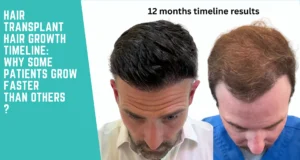
New growth usually begins around 3–4 months, with full results visible by 9–12 months.
Contact your clinic right away with photos and a description. Good clinics respond promptly to concerns-early guidance usually prevents small issues from becoming bigger ones.
Most patients can fly within 1-2 days once initial swelling subsides. Your clinic should provide specific travel guidance based on your healing progress and flight duration. Avoid pressure on the transplant area during travel.
The risk of hair transplant surgery depends more on clinic standards, donor management, and aftercare than on the procedure itself. When performed by qualified medical teams with proper protocols, risks remain low and manageable.
Yes, when the clinic follows proper medical standards and transparency.