
Stem cell hair restoration is one of those treatments people hear about and immediately want to believe in. The idea feels simple. Use your body’s own regenerative ability to help thinning hair look fuller again.
But it’s also an area filled with mixed messaging. Some clinics describe it as a non-surgical boost. Others market it as a replacement for a hair transplant. Online, you’ll see phrases like stem cell hair regrowth, stem cell hair transplant , and stem cell treatment for hair loss. You may also see ‘hair transplant using stem cells,’ which can mean something different depending on the clinic.
Most people reading this are trying to make a decision before surgery. Understanding your hair loss stage and progression is often the first step toward making the right choice.
This guide explains what stem cell hair restoration typically is, what it can realistically do, who it’s best for, how long results may last, and what to ask before you commit.
If you’re considering stem cell hair restoration, the safest first step is a suitability check based on your hair loss pattern and scalp health at UniquEra clinic.
In most real-world clinics, stem cell hair restoration refers to a minimally invasive regenerative procedure designed to support existing follicles, not a surgical transplant that creates new ones like FUE or DHI.
Most versions are non-surgical in the sense that they do not involve extracting grafts and implanting hair. Instead, they involve:
The term “before surgery” still matters because many patients are comparing it directly to surgery, planning travel, or considering combination treatments.
No. Stem cell hair regrowth and hair transplant surgery are not the same.
Stem cell hair regrowth or stem cell hair therapy usually refers to injectable regenerative treatments designed to support existing, miniaturizing follicles. These treatments aim to improve thickness, density, and hair quality where follicles are still alive.
Hair transplant using stem cells is often a marketing phrase. In practice, it usually means a standard FUE or DHI hair transplant plus a regenerative add-on such as a stem-cell-derived solution or PRP to support healing and improve overall appearance.
| Feature | Stem Cell Hair Regrowth | Hair Transplant Using Stem Cells |
| What it is | Regenerative injection therapy | Surgical transplant with regenerative add-on |
| Main purpose | Strengthen existing follicles | Create new visible coverage |
| Creates new follicles | No | No |
| Works on bald areas | No | Yes |
| Invasiveness | Low | Surgical |
| Downtime | Minimal | Higher |
| Best for | Early to moderate thinning | Advanced hair loss |
If a clinic claims it can reliably create brand-new follicles from stem cells in routine clinical practice, that should be treated as a red flag. Research is progressing, but marketing often moves faster than proof.
Not sure which option fits your hair loss pattern? Book a Free Medical Scalp Assessment.
Stem cell hair restoration is a regenerative medicine approach that uses your own biological material, commonly adipose tissue or a small skin sample, to create an injectable solution intended to:
A helpful way to think about it is simple. It may help weak follicles perform better. It does not reliably replace follicles that are already gone. This distinction depends on whether active hair follicles are still present.
Protocols vary by clinic, but the basic sequence is similar.
Common collection methods include:
The sample is processed to concentrate a solution rich in regenerative cells and signaling factors. Many clinics use a centrifuge or a device-based processing method.
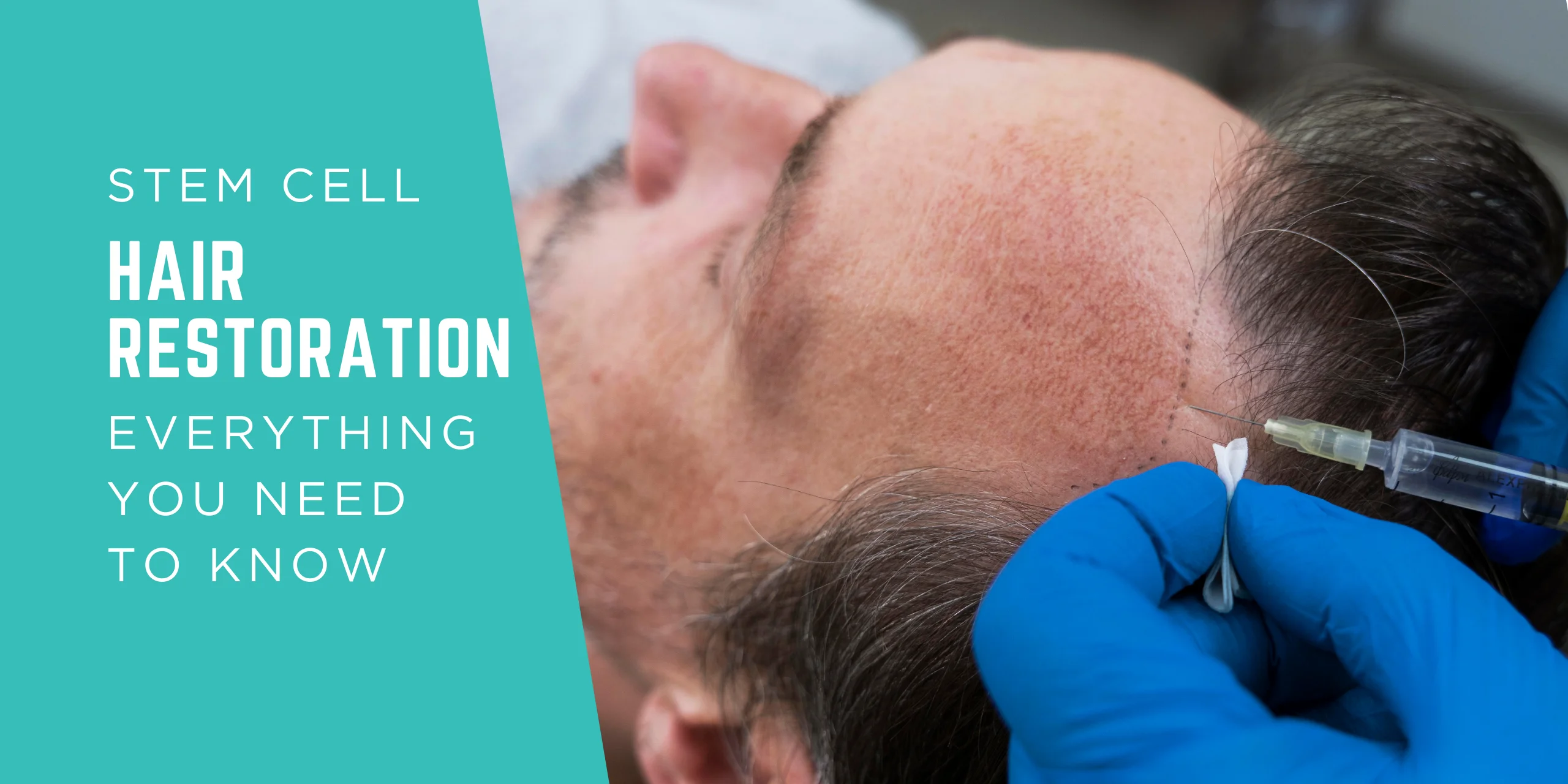
The prepared solution is injected into targeted thinning zones. The goal is to support miniaturizing follicles and improve the scalp environment in those areas.
Some clinics combine stem cell hair restoration with PRP. PRP contains platelets and growth factors that may support healing and follicle signaling.
Most people who benefit share one key trait. They still have follicles that can be supported.
A responsible clinic should evaluate diagnosis, scalp health, follicle viability, and progression risk before recommending treatment.
Stem cell hair restoration does not create overnight change.
Many patients notice early texture changes around 3 to 4 months, with gradual improvements continuing over time. Peak visible changes often appear closer to 9 months.
Results commonly last around 1 to 1.5 years, depending on genetics, scalp health, progression speed, and maintenance.
Success usually looks like:
Results vary because protocols, processing methods, and candidate selection vary.
Some people do a single session. Others are advised to do a short series.
Session planning often depends on:
For many people, the most realistic long-term plan includes one or more of the following:
Yes, it is. Stem cell hair therapy is still evolving. That does not mean it is unsafe.
Experimental means protocols are not yet standardized worldwide and results are not guaranteed. Safety depends on proper medical oversight, sterile processing, and honest patient selection.
Often mild and temporary:
Be cautious if you see:
Some patients choose a combined approach, where regenerative therapy supports scalp health and healing while surgery handles the structural coverage.
Sometimes people choose regenerative therapy instead of surgery when thinning is early and the goal is subtle thickening. For hairline creation or coverage of bald areas, surgery is usually the more direct option.
| Option | Invasiveness | Best For | Downtime | Main Change |
| PRP | Low | Early thinning, shedding support | Minimal | Hair quality |
| Stem cell hair restoration | Low to moderate | Early to moderate thinning | Minimal | Density support |
| FUE or DHI | Surgical | Bald areas, hairline creation | Higher | New coverage |
If you want clarity quickly, ask for a side-by-side plan that states what stem cells can change for your pattern, and what only surgery can change. A clinic should be comfortable answering without overpromising.
A safe way to think about stem cell hair transplant Turkey cost is to focus on what drives pricing, because “stem cell” can mean different protocols.
Packages may include:
People searching for stem cell hair transplant Turkey are usually comparing clinics, protocols, and realistic outcomes. Turkey is a common destination because there are many clinics offering hair restoration services and established medical travel pathways.
A typical flow may include:
Stem cell hair restoration is not suitable for everyone. Results depend on correct planning.
At UniquEra Clinic, regenerative treatment is not positioned as a cure or a replacement for surgery. It is used selectively, based on scalp condition, follicle activity, and long-term hair loss patterns.
A typical approach may include:
Stem cell hair restoration can be meaningful when the goal is supporting thinning hair and improving density. It is not magic, and it is not identical to surgery.
The safest decisions come from realistic expectations, proper diagnosis, and clear communication.If you want, you can book an informational assessment with experts at UniquEra hair transplant clinic turkey to understand whether you’re a reasonable candidate and what a realistic plan would look like.
Because If approached thoughtfully, stem cell hair therapy feels less like a gamble and more like a deliberate step in a long-term hair plan.
Yes, it can help some people with early to moderate thinning, but results vary. It tends to work best when follicles are still present and the plan matches the diagnosis.
No, it is usually considered a supportive treatment, and maintenance may be needed. How long it lasts depends on progression rate, scalp health, and whether follow-up sessions are done.
Many people look for changes around 3 to 4 months, with further improvement after that. Timelines vary by person and by protocol.
Most people describe it as mild to moderate discomfort, and numbing is commonly used for injections. If adipose harvesting is part of the protocol, the harvest area can feel sore for a short time.
Downtime is usually minimal, with most people returning to normal routines quickly. Clinics often advise avoiding strenuous exercise, alcohol, and blood-thinning medications for a short period.
No, not reliably for hairline creation or bald areas. Stem cell hair therapy supports existing follicles, while transplants create coverage by relocating follicles.
Yes, it is commonly combined in some protocols. You should ask what portion is PRP, what portion is the stem-cell-derived solution, and how many sessions are planned.
Yes, It is safe when the clinic is transparent, provides proper documentation, and has a clear aftercare and follow-up plan. Safety depends more on standards and oversight than on location alone.
People with long-standing slick bald areas or untreated medical causes of hair loss may be less likely to benefit. A diagnosis and scalp assessment should come before any recommendation.