
Stem cell hair transplants sound futuristic. That’s exactly why many patients feel confused.
Some clinics present it as a breakthrough cure. Others dismiss it as a marketing trick. In between, patients are left trying to figure out what is real, what is still experimental, and what actually helps with hair loss.
Most people looking into stem cell hair transplant turkey are not chasing miracles. They are trying to understand their options early, avoid mistakes, and make decisions based on facts instead of promises.
This article breaks it down clearly. No exaggeration. No fear tactics. Just what stem cell hair treatment really is, what it can and cannot do, and where it fits in modern hair restoration..
If you are unsure whether your hair follicles are still active, a free medical scalp assessment at UniquEra can help clarify whether regenerative treatment, surgery, or a combined approach is appropriate.
This is the biggest misconception.
A traditional hair transplant, such as FUE or DHI, works by moving hair follicles from a donor area (usually the back of the scalp) into areas where hair is missing.
A stem cell hair transplant does not work this way.
There is:
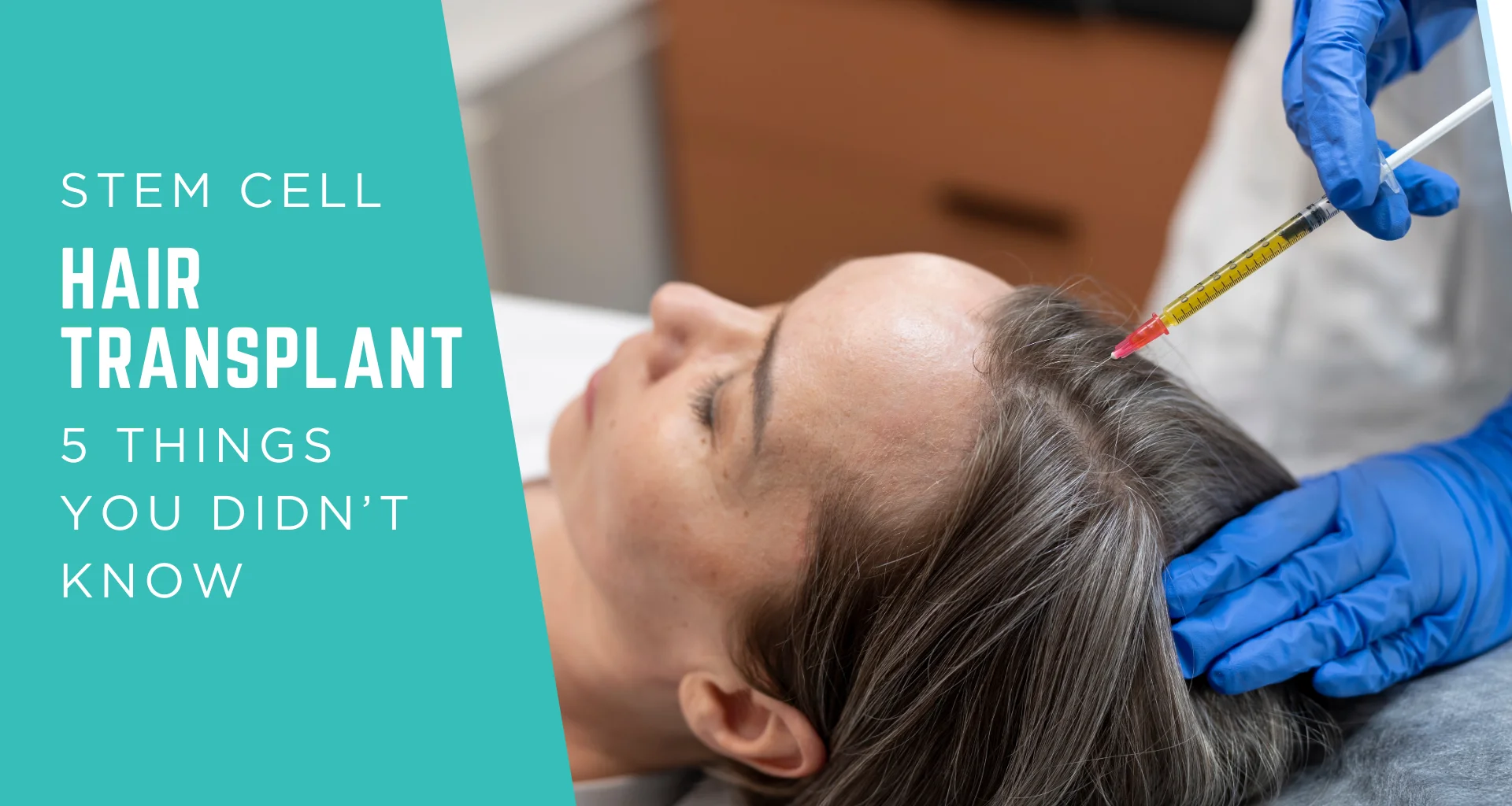
Instead, stem cell–based treatments focus on supporting existing hair follicles that are still alive but weakened.
The word “transplant” is often used loosely by clinics because patients associate it with results. Medically, stem cell hair treatment is a regenerative therapy, not a surgical transplant.
This is an important truth that many clinics avoid saying.
Stem cells are used because they release signals that:
What they do not reliably do today is create brand-new hair follicles in bald areas.
Current treatments focus on stimulation, not creation.
Research is ongoing, and results vary because:
This is why two patients can receive the same stem cell therapy and see very different outcomes.
Another detail most patients are unaware of. Not all stem cell hair treatments use scalp-derived cells.
Common sources include:
Clinics choose these sources because they are easier to collect and process. However, this also explains why results differ so widely between clinics using the same label.
This is one reason a medical explanation matters more than marketing terms.
Stem cell hair transplant results are rarely dramatic.
They work best when:
Patients who benefit most usually notice:
People with advanced baldness or long-inactive follicles should not expect visible regrowth from stem cell therapy alone.
Results typically appear over 3 to 9 months, not weeks. Multiple sessions may be suggested depending on progression.
Book a Free Medical Scalp Assessment today to confirm whether regenerative treatment can benefit your hair loss stage.
This does not mean unsafe. It means not fully standardized.
Regulatory approval and protocols vary by country. That is why regions like Turkey, Korea, and Italy are active in this space. Clinics there combine high clinical experience with evolving regenerative techniques.
The key difference is whether a clinic presents stem cell therapy as:
Transparency matters more than geography.
It depends on the goal and stage of hair loss. It may be worth considering if hair thinning is early or moderate, based on the Norwood scale stages of hair loss.
It may be worth considering if:
A traditional hair transplant is usually better when:
This is why combination approaches are becoming common.
A medical assessment at Uniqera Expert hair transplant clinic in Turkey can help clarify whether regenerative therapy, surgery, or a combined plan makes sense for your hair loss stage.
No. These treatments serve different purposes and are often used together rather than compared as alternatives.
Stem cell hair treatment strengthens existing follicles that are still alive but weakened. Hair transplant surgery replaces lost hair in areas where follicles are no longer present.
| Feature | Stem Cell Hair Treatment | Hair Transplant Surgery |
| Type | Non-surgical | Surgical |
| Main goal | Strengthen existing hair | Replace lost hair |
| Works on bald areas | No | Yes |
| Downtime | 1–2 days | 7–14 days |
| Best suited for | Early to moderate thinning | Advanced hair loss |
Patients considering hair transplant surgery often benefit from planning regenerative support early to protect surrounding hair and improve long-term results. A medical consultation with expert at UniquEra clinic can help determine whether stem cell therapy, surgery, or a combined plan is most suitable for your stage of hair loss.
| Feature | Stem Cell Hair Treatment | Hair Transplant Surgery |
| Type | Non-surgical | Surgical |
| Main goal | Strengthen existing hair | Replace lost hair |
| Works on bald areas | No | Yes |
| Downtime | 1–2 days | 7–14 days |
| Best suited for | Early to moderate thinning | Advanced hair loss |
| Results | Gradual | Immediate placement |
Patients considering hair transplant surgery often benefit from planning regenerative support early to protect surrounding hair and improve long-term results.
A hair transplant consultation can help decide whether combining treatments would improve the overall outcome.
Used correctly, stem cell therapy supports surgery rather than competing with it.
Before surgery
After surgery
At clinics like UniquEra Clinic, stem cell therapy is used as part of a long-term hair strategy, not sold as a standalone solution.
Stem cell hair restoration cost is not fixed because the treatment is not standardized.
Pricing usually depends on:
In most cases, stem cell hair treatment cost is:
At experienced clinics like UniquEra Clinic, pricing is based on medical assessment rather than fixed packages. This helps avoid unnecessary sessions.Because pricing depends on medical factors, an assessment is the safest way to avoid overtreatment.
Stem cell hair treatment is not a one-size-fits-all solution. The outcome depends largely on who it’s used for, when it’s used, and how it’s planned.
At UniquEra Clinic, stem cell therapy is not presented as a cure or a substitute for hair transplant surgery. It is used carefully, only when it makes medical sense for the patient’s scalp condition and hair loss stage.
Patients choose UniquEra because:
The goal is not to sell a procedure. The goal is to help patients choose the right approach, whether that is regenerative treatment, hair transplant surgery, or a combination of both.
A proper medical consultation helps clarify the best path forward with realistic expectations.
Stem cell hair transplant is not a miracle cure. It is also not useless.
It is a developing medical tool that works best:
The future of hair restoration lies in honest evaluation, not exaggerated promises.
If you are deciding between stem cell therapy, hair transplant surgery, or both, a proper medical evaluation is the safest first step. You can Book your free medical consultation at UniquEra clinic now.
The procedure usually takes 60 to 90 minutes. Most patients resume normal activities within one or two days.
Results are gradual. Reduced shedding may appear first, followed by thickness improvement over 3 to 9 months.
Stem cell hair treatments are not FDA-approved as a cosmetic cure. They are used under medical and regenerative protocols.
Stem cell therapy works best for early to moderate thinning, diffuse hair loss, and patients planning hair transplant surgery who want to protect existing hair.
Cost varies based on stem cell source, treatment area size, added therapies, and medical supervision.
Yes, when used on weakened but active hair follicles. It does not work on completely bald areas.
Results usually last 1 to 2 years, depending on genetics and hair loss progression.
There is no fixed success rate. In suitable candidates, it reduces shedding, improves thickness, and slows hair loss.
Yes. It is commonly combined before or after surgery to improve overall results.
No. It supports thinning hair but cannot replace surgery for bald areas.
No. PRP uses blood-based growth factors, while stem cell therapy works at a deeper regenerative level.