
Head Medical Consultant & Patient Care at UniquEra Clinic
You expected a transformation – to look in the mirror and finally feel like yourself again. Instead, you’re left facing uneven growth, visible scarring, or hair sprouting in awkward directions.
A failed hair transplant can shake more than your appearance – it can test your confidence and trust in medical care.
Turkey has become world-renowned for its hair transplant clinics, combining advanced methods with skilled specialists and drawing patients from every corner of the world. Yet, not every outcome is a success story. Some transplants fall short, leaving patients searching for answers and solutions.
The encouraging part? Even a botched hair transplant can often be repaired. With today’s microsurgical tools and regenerative therapies, misplaced grafts can be corrected, scars softened, and natural growth revived.
A transplant fails when the implanted follicles don’t grow as expected or never integrate properly with the scalp.
Each graft is a living tissue that must reattach to the scalp’s blood supply – a process known as vascularization. When this doesn’t happen, the graft dies and fails to produce hair.
Medically, this often results from issues like:
In simple terms, the follicle must “root” itself like a seed. If it doesn’t, the result becomes patchy or uneven.
Even modern techniques like FUE (Follicular Unit Extraction) or DHI (Direct Hair Implantation) can fail if the process isn’t performed under proper medical standards.
Here are the main causes:
Hair restoration is a delicate balance of skill, hygiene, and post-surgical care. Technology alone can’t guarantee results.
You may notice one or more of these warning signs:
If you recognize these symptoms, don’t panic. At UniquEra clinic, our trichology specialists perform detailed scalp evaluations to understand exactly what went wrong – and how to correct it.
Don’t rush to judgment – some temporary shedding is normal. But if months pass without improvement, it’s time for an expert check-up.
Here’s what to do next:
At UniquEra International Group, each review starts with understanding – your goals, your healing experience, and your previous results – to design a customized plan that truly restores confidence.
Successful repair begins with an accurate diagnosis.
At UniquEra, this assessment involves:
These findings help determine whether you need surgical correction, regenerative therapy, or both.
Healthy follicles are carefully re-extracted and implanted at natural angles.
At UniquEra, medical teams often combine manual FUE with Sapphire micro-incisions or PRP-enriched placement to improve graft survival and restore texture.
Visible scars are softened using micro-FUE grafting, microneedling, or PRP to trigger collagen repair and even out the skin surface.
Unnatural grafts are removed, redistributed, and reshaped to match facial contours and natural hair direction.
When further surgery isn’t ideal, PRP or growth factor therapy enhances scalp healing. For visual improvement, Scalp Micropigmentation (SMP) creates the illusion of density and conceals gaps or scars.
| Phase | Medical Process | Visible Changes |
| Days 1–7 | Grafts form new blood vessel connections (angiogenesis). | Mild redness and scabbing; avoid rubbing. |
| Weeks 2–4 | Temporary shedding (telogen effluvium). | Scabs shed naturally; scalp calms. |
| Months 3–6 | Follicles enter active regrowth (anagen). | Fine new hairs begin to appear. |
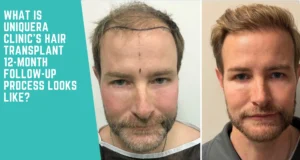
| Months 6–12 | The maturation phase begins. | Thicker strands, restored volume and texture. |
Each recovery differs, depending on circulation, graft quality, and disciplined aftercare.
The most effective repair is prevention.
Before your next surgery:
Patients treated at UniquEra Clinic benefit from ISO-certified sterilization, 12-month monitoring, and lifetime consultation support.
Choosing where to repair a failed hair transplant isn’t only about technology – it’s about trust.
At UniquEra hair transplant clinic in Turkey, every patient is treated with the same care and precision we would expect for ourselves.
Here’s what makes our approach different:
At UniquEra, we don’t just fix transplants – we restore confidence. Each surgery is a partnership, grounded in medical integrity and human empathy.
A failed hair transplant may feel like a setback, but it doesn’t have to be permanent. With modern trichological evaluation and precise microsurgery, restoration is possible – naturally, safely, and permanently.
At UniquEra International Group, we see repair not as a redo, but as renewal – rebuilding hair, balance, and confidence one graft at a time. Because true restoration isn’t instant. It’s cultivated with patience, care, and expertise.
1. Can a failed hair transplant be fixed?
Yes. Revision FUE, scar repair, and PRP or SMP can restore density and correct earlier errors.
2. What causes grafts to fail?
Grafts may die if blood supply isn’t established (poor vascularization), if they’re mishandled during surgery, or if infection occurs post-op.
3. How long should I wait before repairing?
At least 9–12 months after the first surgery, so tissue can recover fully.
4. Can scars grow hair again?
With micro-FUE or PRP stimulation, many mild scars can support new follicular growth.
5. Is Turkey safe for revision surgery?
Yes – when performed in Ministry-approved, medical facilities that follow strict sterilization and ethical protocols.