
Hair transplant results are what most people spend months researching before they book. They look at before and after photos, watch YouTube videos, read clinic pages. Then they have the procedure. And around week three, when their transplanted hair starts falling out and their scalp looks worse than it did before surgery, they panic.
Nobody told them that was coming.
That is the problem with most hair transplant content. It shows you the result at month twelve and skips everything in between. This guide does not do that. It covers the full picture: what realistic results look like, what your scalp goes through month by month, what the shedding phase and shock loss actually are, what affects whether your outcome is excellent or average, and how to know when something is genuinely wrong.
Whether you are considering surgery, about to have it, or already in recovery, this is the honest guide most clinics do not publish.
Not sure what results are realistic for your specific hair loss? A consultation at UniquEra Clinic gives you a personalised assessment and a clear, written plan before you make any decision. Book a free consultation
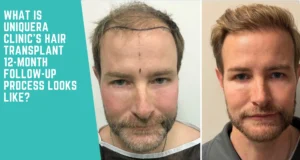
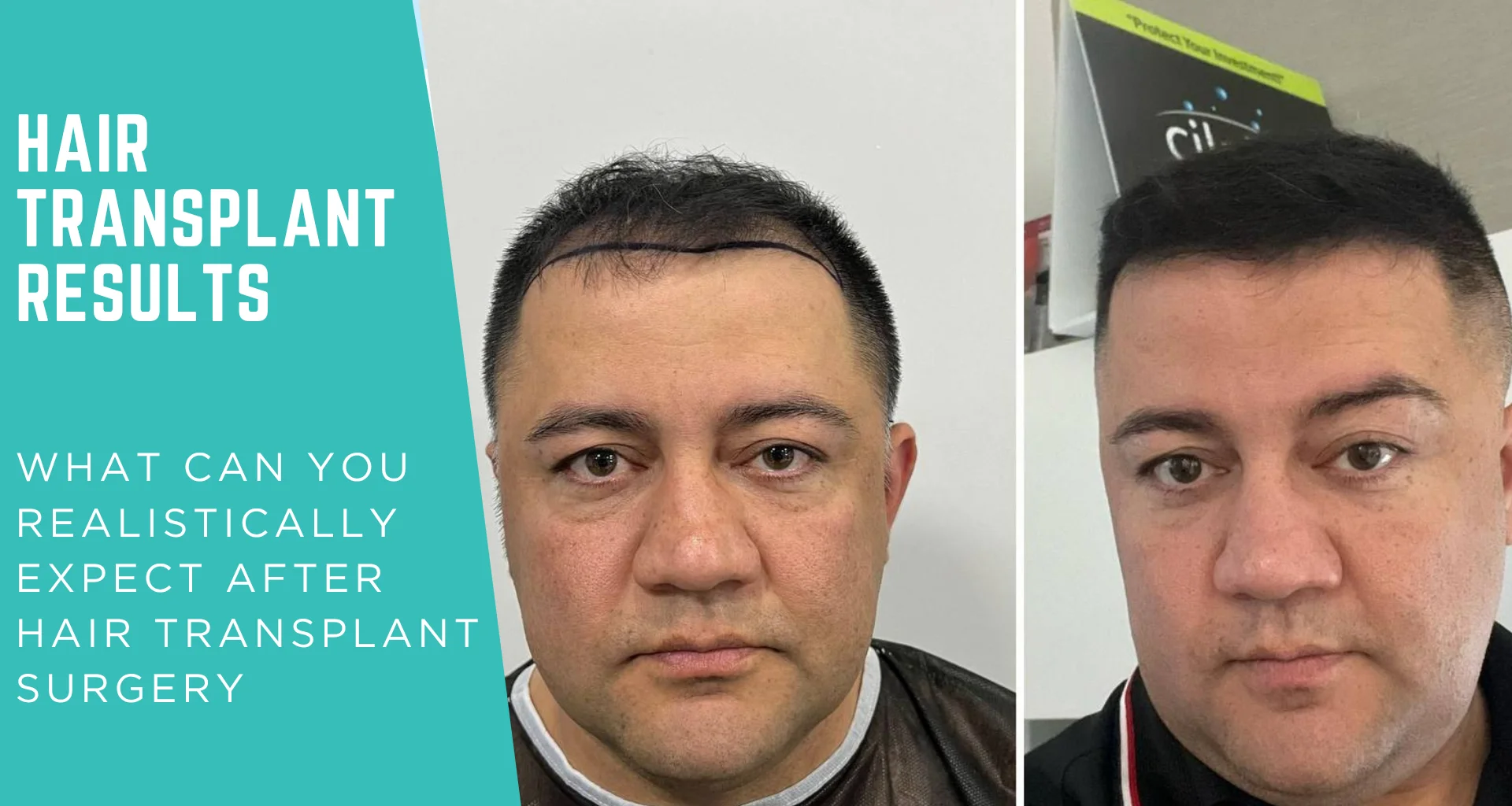
Realistic results are not what you see in most clinic advertisements. Those photos are usually taken at the best possible stage, under the most flattering lighting, with styled hair. They are real, but they are the ideal version of real.
Good results actually look like this:
• A natural-looking hairline that suits your face and age
• Density that improves overall appearance without looking artificially thick
• Hair that blends with your existing hair rather than sitting separately from it
• A result that holds up under different lighting, including bright overhead light and wet hair
• Growth that looks like your own hair, because it comes from your own follicles
This is the most important expectation to set before a receding hairline transplant procedure. Hair transplant surgery is not there to give you the hairline you had at 18. The goal is a result that looks age-appropriate, natural, and genuinely better than what you have now.
A well-designed hairline has slight irregularities. It is not a straight line. Single-hair grafts go along the front edge for a soft transition, and denser multi-hair grafts sit further back for coverage. Every implanted hair is placed at the angle your natural hair used to grow, so everything lies flat and blends correctly.
Unnatural results usually come from poor planning or poor technique. Watch for:
• A hairline that looks like a straight line drawn across the forehead
• Grafts implanted at the wrong angle, causing hair to grow forward or sideways
• A pluggy, doll-like appearance from outdated large-graft techniques
• A hairline set too low that will look odd as the patient ages
• Density concentrated in one spot with visible gaps elsewhere
Depending on the extent of hair loss and your coverage goals, one session may not cover everything. A patient with Norwood stage 5 or 6 loss may still require a crown hair transplant session later to improve density in weaker crown zones. That is not a failure. It is part of honest planning. Any clinic that tells every patient one session is enough, without first assessing the full picture, is not being straight with you.
The word natural gets used constantly in hair transplant marketing. It rarely gets explained. Natural results come down to four things: direction, density zoning, transition, and blending.
Direction means every implanted hair sits at the same angle as the hair that used to grow there. Natural hairlines point forward and slightly downward. If implanted hairs point up or sideways, the result looks off even when the density is correct.
Density zoning means the hairline is not uniformly dense front to back. The very front uses single-hair grafts spaced with slight irregularity. The mid-scalp uses two and three-hair grafts. The crown uses denser packing. This gradation is what makes a result look like it grew there rather than was placed there.
Transition means the hairline has a soft edge, not a sharp border. In nature, a hairline has some fine vellus hairs at the very edge. A skilled practitioner places single fine grafts here to copy this.
Blending means the transplanted zone connects visually with any existing hair. If there is a visible line between transplanted and native hair, something went wrong in the planning.
Under different lighting, a genuinely natural result holds up. It looks the same wet as it does dry, styled as it does unstyled.
The procedure is done under local anaesthesia. You are awake but comfortable. Most patients watch something on a screen or sleep through parts of it. The scalp is numbed before extraction and implantation begin.
The anaesthetic takes effect within minutes and usually lasts four to six hours. You may feel pressure during the procedure but not pain. After it wears off, some soreness and tightness are normal.
In the first 48 hours:
This is the section most clinics get wrong. They either give a vague overview or focus only on the positive milestones. Below is the full timeline, including the parts that feel difficult.
| Time period | What happens | What it looks like | What patients feel |
| Weeks 1-4 | Healing phase. Scabs form and fall off. Numbness and redness are normal. | Scalp looks red and dotted. Scabs clear by day 10-14. | Tender, slightly swollen. Most manage fine. |
| Weeks 2-8 | Shedding phase. Transplanted hair shafts fall out. This is normal. | Hair appears to fall out. Scalp looks thinner than post-op. | Alarming if you were not warned. The procedure did not fail. |
| Months 1-3 | Dormant phase. Roots are resting below the surface. | Looks like little or no progress. The ugly duckling stage begins. | This is the hardest stretch mentally. |
| Months 3-4 | First new growth emerges. Very fine, light-coloured hairs appear. | Hair is barely visible. Growth feels slow. | Cautious optimism. |
| Months 5-6 | Visible, accelerated growth. Roughly 50% of the final result is now visible. | Real change starts to show. People around you notice. | Relief. Finally, |
| Months 6-12 | Density, thickness and strength increase. | The result takes clear shape. Hair looks progressively more natural. | Confidence returning. |
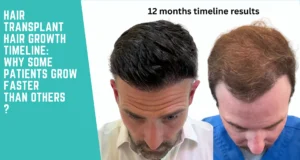
| Months 12-18 | Full maturation. Hair darkens, thickens and reaches final calibre. Crown continues to improve. | The complete result. Final density and texture are stable. | This is it. The real before and after. |
Progress is not linear and it is not visible week to week. There are long flat periods followed by sudden visible change. Month five to six is usually when patients first feel the result is real. Month twelve to eighteen is when it is complete.
The shedding phase is when transplanted hair shafts fall out after surgery. It typically begins around two to four weeks post-op and continues through weeks four to eight.
This is the part that catches most patients completely off guard. You just had surgery. Your scalp looked like it was growing hair. Then it starts falling out. It feels like the procedure failed.
It has not failed.
Here is what is actually happening. The hair shaft, which is the visible part above the scalp, falls out because the follicle entered a resting phase in response to the trauma of surgery. This is a normal biological response. The root, the living follicle below the scalp, stays in place. It is dormant, not dead. In two to three months, it starts growing new hair from that same root.
The shedding phase is called anagen effluvium. The follicle survives. The hair grows back.
Normal:
Contact your clinic if you notice:
If you are past month six and see nothing at all, get in touch with your clinic. Some patients have slower growth cycles, but genuine absence of growth at six months warrants an assessment.
Shock loss and the shedding phase are two separate things. They are frequently confused, including by clinics that should know better.
The shedding phase affects transplanted hairs. The hair shafts that were just placed fall out, and the roots regrow them. This affects almost everyone and is completely normal.
Shock loss affects native hair. Hair that was already growing around the transplant area before surgery can still weaken in patients with diffuse thinning hair loss. The surgical trauma, including the needle injections, the small incisions made for graft placement, and localised inflammation, can temporarily disrupt follicles that were not transplanted. Those hairs then shed temporarily.
Recipient area shock loss is when native hair in the area surrounding the transplant zone sheds. This is more common and usually temporary.
Donor area shock loss is when hair near the extraction sites on the back and sides sheds. This affects around 5-10% of patients and is also usually temporary.
Published clinical data indicates that over 95% of follicles affected by shock loss fully regrow. The transplanted grafts are genetically DHT-resistant, which means they are almost certain to grow permanently. The risk of permanent loss from shock loss applies mainly to native hairs that were already miniaturising before surgery.
• Younger age with high DHT activity.
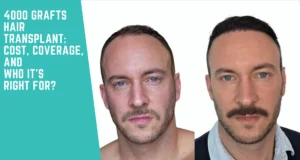
• High-density implantation of over 2,000 grafts in one session.
• Poor post-operative care.
• Smoking.
• Nutritional deficiencies including iron and zinc.
DHI Choi Pen technique reduces shock loss risk because it involves less scalp trauma. No pre-made incisions are created. The Choi pen extracts and implants in one motion, which means less disruption to surrounding tissue and a faster healing response.
FUE Sapphire uses a sapphire-tipped blade to open microchannels before graft placement. It is more precise and less traumatic than older steel blade methods, but creates slightly more surface disruption than DHI.
Starting finasteride before surgery and continuing post-operatively can reduce the shock loss period by protecting miniaturised native hairs from additional stress.
Around months two to four, many patients look worse than they did before the procedure. The transplanted hair has shed. Native hair around it may have thinned from shock loss. The scalp looks sparse. The hairline that was just placed looks incomplete.
This is the ugly duckling phase. Nobody warns you about it properly.
It is deeply uncomfortable when you are in it. Patients who were excited about their surgery start questioning whether it worked. Some contact their clinic in panic. Some go online and convince themselves the worst.
Here is what is actually happening. The ugly duckling phase occurs because new hair growing from the transplanted follicles is in the early anagen phase. It is fine, transparent, and short. The follicle is actively growing new hair from scratch, which takes time. Meanwhile, any native hairs disrupted by shock loss are also regrowing. The scalp looks sparse because everything is starting over at the same time.
The ugly duckling phase is a sign that biology is working. If you are seeing it, the follicles are alive and cycling.
• Month 2: Scalp looks similar to or slightly worse than pre-surgery.
• Month 3: Fine, almost transparent hairs may appear in some areas.
• Month 4: Gradual improvement begins in the most responsive zones.
• Month 5-6: Visible acceleration. This is when the ugly duckling phase ends.
The hardest thing during this period is not comparing yourself to other patients. Timelines vary. Some patients see real growth at four months. Others do not see meaningful change until six or seven months. Both are within normal range.
Most patients track progress badly. They take random photos in different lighting with different phone cameras from different angles, then compare them and either panic or feel falsely reassured.
Two patients can have the same graft count and end up with noticeably different results. Understanding why this happens helps you set honest expectations and choose the right clinic.
Hair can only be transplanted from zones with healthy, DHT-resistant follicles, typically the back and sides of the scalp. If the donor area has high density, thick hair, and strong follicles, the outcome has a high ceiling. If the donor area is sparse or limited, every graft counts more and the maximum achievable coverage is lower.
Experienced practitioners extract conservatively. Over-harvesting the donor area permanently thins it and limits future sessions.
A patient with thick, coarse hair covers significantly more surface area per graft than a patient with fine, thin hair. One graft from a thick-haired patient may visually cover twice the area of one graft from a fine-haired patient.
Curl adds to this. Curly or wavy hair fans outward and creates more visual coverage per strand than straight hair, which lies flat. Contrast between hair colour and scalp also matters. Dark hair on a light scalp shows more visible scalp between hairs, so the same density looks thinner.
Patient A has dark, thick, wavy hair on a medium skin tone. Patient B has fine, straight, light hair on a pale scalp. Both receive 2,500 grafts. Patient A looks considerably denser because each graft covers more area, the curl adds volume, and the contrast is lower. Neither result is wrong. They are the honest biological outcome of each patient’s hair characteristics.
Graft count alone is a misleading metric when comparing results. The real question is how well the available grafts are used for your specific hair type.
Transplanted follicles are living tissue. From the moment a graft is extracted, it is outside its blood supply and under biological stress. Four things cause graft death: lack of oxygen, dehydration, temperature damage, and rough mechanical handling.
Reputable clinics achieve 90 to 95% survival rates. Elite teams with refined protocols reach 95 to 98%. Poor practitioners fall to 75 to 85%, meaning one in four transplanted grafts fails to survive.
What separates those outcomes:
Younger patients present a specific challenge. A 22-year-old with early hair loss may be a poor candidate because the full pattern of their loss has not yet declared itself. Transplanting a hairline now may leave them with transplanted hair in front and progressive baldness behind it as they age.
The International Society of Hair Restoration Surgery recommends that younger patients start medical treatment first and monitor for pattern stability before surgery is considered. At any age, ongoing hair loss in non-transplanted areas continues after surgery and may require medical treatment.
Patients who follow aftercare protocols closely tend to have 10 to 15% better long-term outcomes than those who do not. The first two weeks are the most critical. Grafts are establishing their blood supply. Rough handling, sun exposure, pressure on the scalp, sweating from exercise, and early washing with harsh products can all dislodge or damage grafts that have not yet anchored.
What compliance looks like in practice:
• No touching, scratching, or rubbing the graft area for the first 10-14 days.
• Sleeping elevated for the first week to reduce swelling.
• Using only prescribed gentle shampoo for the first wash.
• Avoiding direct sun exposure on the scalp for the first month.
• No swimming, saunas, or intense exercise for three to four weeks.
• Taking prescribed medications as directed.
The technique used in your surgery affects healing time, trauma to surrounding tissue, graft survival, and ultimately how the result looks and how quickly it develops.
FUE Sapphire uses a sapphire-tipped blade to open microchannels in the recipient area before grafts are placed. The sapphire blade creates cleaner, smoother incisions than older steel blades, which means less tissue damage, faster healing, and lower infection risk. FUE Sapphire suits larger baldness areas where a higher graft count is needed and broader coverage is the goal in a sapphire FUE hair transplant procedure.
DHI with the Choi Pen uses a specialised implant pen commonly used in DHI hair transplant Turkey procedures that extracts and implants the graft in a single action, without pre-made incisions. Because no channels are opened first, there is less surface trauma. The graft spends less time outside the body, which reduces stress. DHI allows precise control over the angle, depth, and direction of each implanted hair, making it the better option for areas needing high precision and natural density. It also makes two-day procedures possible, because the skin stays healthy enough to receive grafts without excessive trauma.
| FUE Sapphire | DHI Choi Pen | Notes | |
| Best for | Larger baldness, high graft count | Smaller areas, precision, density | Case-dependent |
| Channel opening | Pre-made with sapphire blade | No pre-made channels | DHI means less surface trauma |
| Graft out-of-body time | Slightly longer | Shorter | Less ischemia stress with DHI |
| Scalp trauma | Low (less than steel, slightly more than DHI) | Lowest | Both far better than older methods |
| Two-day procedure | Less suitable | Suitable | DHI skin stays healthier longer |
| Ideal candidate | Norwood 4-7, wide coverage needed | Norwood 2-4, density focus, hair present | Right technique depends on the case |
The technique is not a universal answer. A patient with Norwood 6 loss needing 4,000 grafts for broad coverage is best served by FUE Sapphire. A patient with Norwood 3 needing precision work in an area with existing hair is a better DHI candidate. The right choice depends on the case, not the clinic’s preference.
If you are not sure whether what you are seeing is normal, you do not have to guess. Book a consultation now.
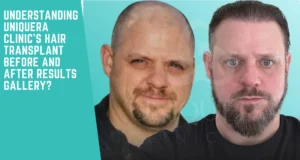
Before and after photos are the main way patients assess clinics. Most patients do not know how to read them properly.
• Only high-contrast cases are shown (very thick hair on very pale scalp).
• No crown results, only hairline photos.
• No cases matching your hair type or loss pattern.
• Photos without dates or timeframes.
• All results styled and lit identically.
A clinic that shows you cases matching your hair type, your Norwood stage, and your goals, with consistent lighting and clear timeframes, is showing you honest work.
The most common fear during the ugly duckling phase is that the procedure failed. In most cases, it has not. Slow growth is not the same as no growth.
• Infected graft sites with redness, warmth, pus, or fever.
• Grafts that appear to have been dislodged in the first week.
• Absolutely no growth of any kind by month six.
• Persistent pain or swelling beyond the first two weeks.
What actual failure looks like: patchy growth where clear zones show no hair at all at twelve months, noticeable scarring in the donor area, or hair growing at incorrect angles creating an unnatural appearance. True failure is far less common than patients fear during recovery.
At your follow-up appointments, ask:
• Is the growth timeline on track for my case?
• Are there zones where growth seems slower?
• Is there anything in my aftercare I should adjust?
• Do you recommend any additional treatment to support the result?
The transplanted hair is permanent. Follicles are taken from the DHT-resistant zone at the back and sides of the scalp. Because these follicles are genetically resistant to the hormone that causes pattern hair loss, they continue to grow in their new location for the rest of the patient’s life.
This is the fundamental reason hair transplant surgery works at all.
The native hair around the transplant, hair that was already growing in the recipient area before surgery, is not transplanted and keeps its original genetic sensitivity to DHT. If pattern hair loss continues in those areas over time, that native hair will gradually thin regardless of how successful the transplant was.
This is why ongoing medical treatment matters after surgery. Finasteride and minoxidil protect the native hair surrounding the transplanted zones. Without them, a patient who does nothing after surgery may find that by years three to five, the transplanted hair remains strong but the native hair around it has continued to thin.
Planning for future hair loss at the time of surgery also matters. A hairline placed too low or too aggressively for a young patient can look problematic ten years later when surrounding hair has continued to recede.
Patients who follow post-operative protocols closely have better long-term outcomes. In a procedure where graft survival determines the result, that margin is real.
• Sleep with your head elevated at 45 degrees to reduce swelling
• Do not touch, scratch, or rub the graft area
• Take all prescribed medications including antibiotics and anti-inflammatories
• Avoid alcohol, smoking, and strenuous activity
• First wash using the clinic’s prescribed gentle method, usually on day two or three
• Continue gentle washing. Scabs should fall off naturally, not be picked
• Avoid direct sun on the scalp
• No swimming, sauna, or gym
• Hair fibres or hats can generally be worn after day seven if needed for coverage
• Resume normal hair washing with a sulphate-free shampoo
• Start or continue finasteride and minoxidil if prescribed
• PRP session may be recommended by your clinic to support follicle activity
• Avoid harsh chemical treatments on the hair
• Normal activity resumes fully
• Continue medical treatment
• Attend scheduled follow-ups
At UniquEra Clinic, check-ins are scheduled at one month, three months, six months, and twelve months. WhatsApp support is available throughout the full recovery period.
Turkey is one of the most visited destinations globally for hair transplant surgery, especially for patients searching for the best hair transplant clinic in Turkey. Tens of thousands of patients travel to Istanbul each year from Europe, the US, the Middle East, and beyond.
The reason is not just cost. Turkey has decades of concentrated experience in hair restoration. Many clinics run dozens of cases per week, which means teams accumulate surgical volume far faster than those in markets where hair transplant surgery is occasional. That volume, combined with strong medical training and quality control, produces experienced teams.
That said, the market is not uniform. There are excellent clinics and there are poor ones. The popularity of Turkey has attracted some clinics that compete on price and graft count rather than quality. A promised graft count means little if extraction damages half the grafts, if technique is wrong for the patient’s case, or if there is no structured aftercare.
• Medical Directors with documented, verifiable experience supervising all cases
• Technique chosen based on patient assessment, not clinic preference
• Transparent graft planning with honest expectations, not maximised numbers
• A detailed diagnostic process before any surgical recommendation
• Structured aftercare including check-ins at 1, 3, 6, and 12 months
• Before and after cases matching your hair type, not just the clinic’s best results
• No pressure during consultation and no discounts used as closing tactics
• Price-per-graft packages without individual assessment
• Guaranteed graft counts before any consultation
• No in-person or detailed online assessment before the day of surgery
• Clinics where you never speak to the medical team before arrival
• Aftercare limited to a take-home kit with no follow-up support
UniquEra Clinic is based in Istanbul and specialises in hair restoration using FUE Sapphire and DHI Choi Pen techniques. Every case is supervised by our Medical Directors with over a decade of hands-on hair transplant experience.
Our approach is built around one principle: the technique must fit the patient, not the other way around. For patients with larger baldness areas requiring high graft numbers, we use FUE Sapphire for broader coverage. For patients needing precision and density with less trauma, we use DHI with the Choi Pen. Some patients benefit from a combination of both, planned across two sessions.
A private online consultation assesses your scalp condition, expectations, and hair loss pattern. You then receive a detailed PDF report with your diagnosis, a personalised treatment plan, and an honest explanation of what is achievable for your specific case. No graft count is given before this assessment.
VIP transfer from the airport. English-speaking clinic staff throughout. On the day of surgery, a blood test is done, followed by an in-clinic consultation with the medical team before any procedure begins.
Extraction and implantation are performed by the Senior Medical Directors with trained specialist staff. The team that assessed your case is the team present for the procedure.
A structured nine-month aftercare roadmap covers the first three months of recovery, the next three months of reinforcement, and the final three months of maintenance. Check-ins are scheduled at one, three, six, and twelve months. WhatsApp support continues throughout so you are never left to figure out recovery alone.
Around 90% of our patients come through referrals. When the result matches what the patient was told to expect, and the support does not end at discharge, patients send people they know.
Hair transplant results are predictable when the procedure is planned well, the right technique is used for the right case, and the patient follows post-operative care properly. Most people see early growth around months three to four. Around 50% of the result is visible by month six. The full, mature result arrives between months twelve and eighteen.
The shedding phase is normal. Shock loss is usually temporary. The ugly duckling phase is a biological signal that things are working, not failing. The result looks different for every patient because donor quality, hair calibre, curl, and contrast all shape what is achievable.
What does not change is this: a good result starts with an honest consultation. Not one that tells you what you want to hear, but one that maps your specific hair loss, your donor area, your hair characteristics, and your realistic ceiling, then builds a plan around all of it.
If you are considering hair transplant surgery and want to know what results are genuinely possible for your case, book a free consultation at UniquEra Clinic. You will get a clear diagnosis, a written plan, and honest expectations before you make any decision. Start with a free consultation
Realistic results mean a natural-looking hairline with improved density that suits your age and face. The goal is not maximum thickness. It is a result that looks like your own hair grew back, holds up under normal lighting, and blends with existing hair.
First fine growth typically appears at months three to four during the normal hair transplant recovery timeline. Visible, meaningful change is usually seen at months five to six. The full result takes twelve to eighteen months.
It is when transplanted hair shafts fall out two to six weeks after surgery. The roots stay in place and regrow new hair. It is a normal biological response to surgical stress, not a sign of failure.
Shedding affects the transplanted hairs. The shafts fall out but the roots regrow them. Shock loss affects native hairs already in the scalp near the surgical area. Both are usually temporary but they are separate processes with different causes.
Shock loss is when native hair surrounding the transplant zone falls out temporarily due to surgical trauma. Over 95% of follicles affected by shock loss regrow fully. DHI technique and finasteride can reduce its severity and duration.
It is the period between months two and four when the scalp looks sparse because transplanted hair has shed and new growth has not yet appeared. It is a sign the follicles are actively regrowing, not failing.
First growth appears at months three to four. Around 50% is visible by month six. Natural-looking results develop between months nine and twelve. Full maturation, including final darkening and thickening, is complete by months twelve to eighteen.
The scalp physically heals within two to three weeks. Full biological recovery, including complete hair growth, takes twelve to eighteen months.
Yes, when technique and planning are correct. Natural results depend on proper hairline design, correct implantation angle, appropriate density zoning, and blending with existing hair.
Normal slow growth includes fine transparent hairs at months three to four and gradual thickening through months six to twelve. If there is absolutely no growth of any kind by month six, contact your clinic. True failure is much rarer than most patients fear during recovery.
Transplanted hair is permanent because it comes from DHT-resistant donor zones. Native hair surrounding the transplant can still thin over time. Medical treatment after surgery protects native hair and the long-term appearance of the result.
Donor area quality, hair calibre and curl, graft survival rate, technique, patient age, ongoing hair loss, and aftercare compliance. Two patients with the same graft count can look different because of their individual hair characteristics, not the number of grafts.
Neither is universally better. FUE Sapphire suits larger areas needing broad coverage. DHI Choi Pen suits precision work with less trauma. The right technique depends on the individual case and should be chosen by the medical team after assessment.
Look for a clinic with Medical Directors who have verified, hands-on experience supervising all cases, technique chosen by patient assessment not clinic preference, structured aftercare with follow-ups at 1, 3, 6, and 12 months, and before and after results that match your specific hair type and loss pattern.
Hair calibre, curl, and contrast with scalp colour all affect visual density. Thick, curly hair with low scalp contrast covers more area per graft than fine, straight hair on a pale scalp. Graft count alone does not determine the visual result.
Depending on the extent of hair loss and your density goals, a second session may be needed. This is normal for Norwood stage 5 or above and is part of honest long-term planning. Any clinic that guarantees one session for every case without a full assessment is not planning realistically.