
DHI hair transplant is one of the most searched hair transplant methods today. It is also one of the most misunderstood.
Most patients we meet are not confused about hair loss. They are confused about what to trust. Every clinic claims to offer the “best hair transplant method,” but very few explain when that technique actually makes sense, and when it does not.If you are researching a DHI hair transplant in Turkey, you’ve probably come across mixed opinions about results, recovery, and whether it’s actually better than FUE.
We see this every day in consultations at UniquEra Clinic. Patients walk in convinced they need DHI because something they read online told them it was “the most advanced technique.” But nobody has explained how it compares to other hair transplant options for their specific case.That is where the DHI vs FUE hair transplant debate usually starts, but the right answer depends on the patient, not on which method sounds more advanced online. Nobody has told them that for their type of hair loss, DHI might not even be the right call.
This guide is written to fix that. Instead of promoting one method, we are going to show you exactly how the DHI hair transplant procedure works, where it performs best, where it falls short, and how to know if it is the right choice for you. Because the biggest mistake in hair restoration is not choosing the wrong clinic. It is choosing the wrong approach before understanding your case. If at any point you want to skip ahead and talk to our medical team about your specific situation, you can request a free consultation where we evaluate your donor area and hair loss pattern individually.
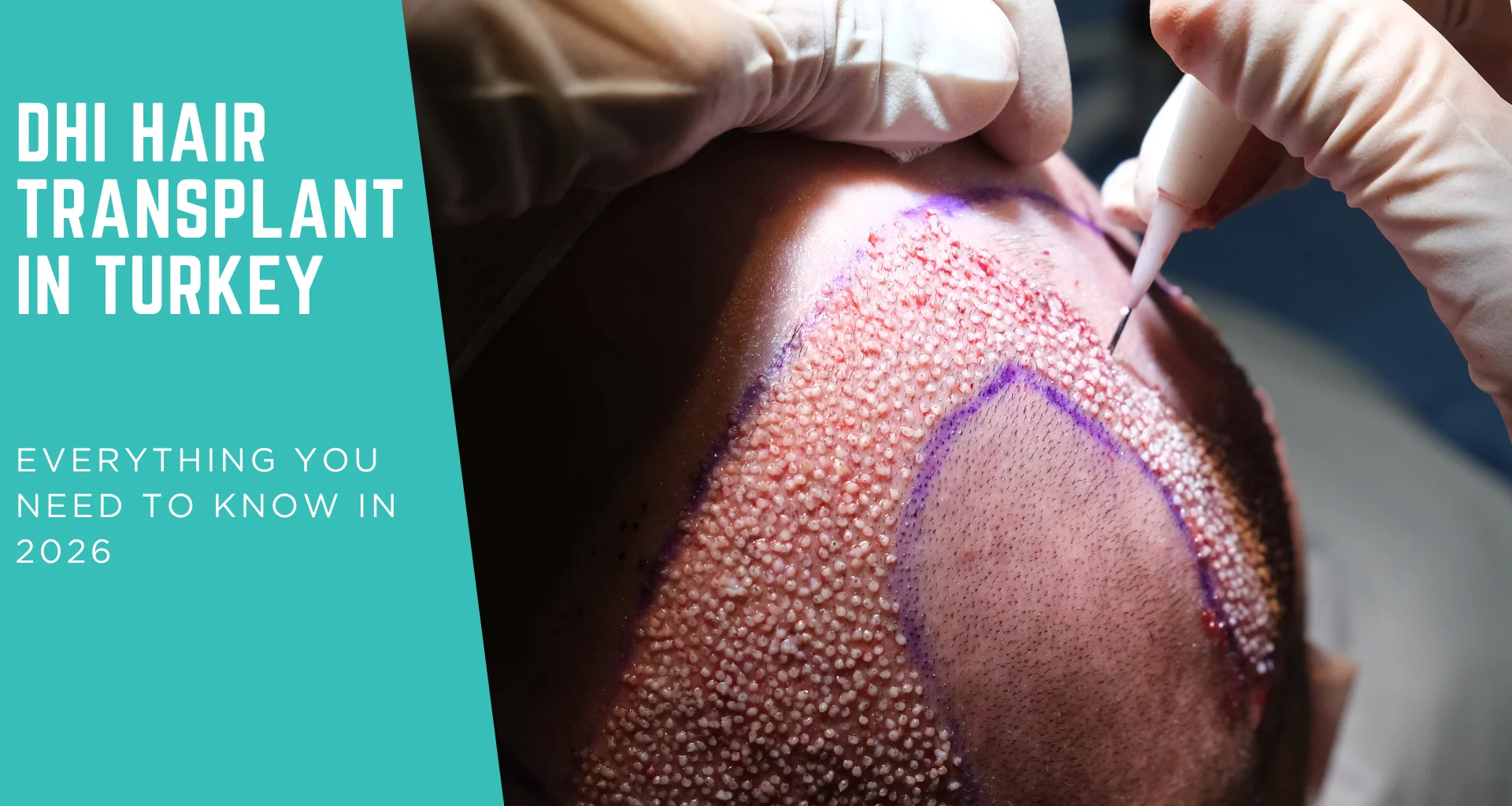
DHI stands for Direct Hair Implantation. This is why many international patients searching for direct hair implantation in Turkey are specifically looking for clinics with strong experience in Choi pen implantation. Individual follicular units are extracted from the donor area (the occipital region at the back and sides of the head) and implanted directly into the recipient area using a Choi implanter pen.
The extraction step is identical to FUE hair transplant. A micro-punch tool (0.6mm to 1.0mm diameter) removes follicular units one by one. Where DHI differs is in what happens after extraction.
With standard hair transplant methods, the surgeon creates recipient channels first (tiny incisions in the thinning area), then places grafts into those channels as a separate step. With DHI, the Choi pen opens the site and deposits the follicle at the same time. One motion, two actions.
This matters for two reasons.
The Choi pen is the tool that separates DHI from other hair transplant techniques. In practical terms, a Choi pen hair transplant allows the medical team to control angle, depth, and direction during implantation in one movement. Developed in 1992 at Kyungpook National University in South Korea, it has been refined over decades but the core design remains consistent.
| Feature | Detail |
| Shape | Cylindrical, pen-shaped surgical instrument |
| Needle type | Hollow needle tip with spring-loaded plunger mechanism |
| Needle diameter | 0.5mm to 1.0mm (most common: 0.6mm, 0.8mm, 1.0mm) |
| Implantation angle | 15 to 60 degrees (matching natural hair growth) |
| Implantation depth | 1 to 2mm depending on scalp thickness and follicle size |
| Pens per session | 3 to 6 simultaneously in team rotation |
Needle size selection matters. Single-hair grafts use smaller needles. Multi-follicular units (2 to 4 hairs) need wider ones. At UniquEra, we use multiple pen sizes during the same procedure to match different follicular unit sizes across different scalp zones.
1. A technician loads the extracted follicular unit into the pen’s hollow needle using micro-forceps.
2. The surgeon positions the pen at right angle against the recipient scalp, matching natural growth direction.
3. The needle punctures the skin, creating a micro-incision (1 to 2mm deep).
4. The plunger pushes the follicle into the recipient site.
5. The pen is withdrawn. Total time per graft: a few seconds.
While the surgeon implants with one pen, 2 to 3 technicians reload the others. This relay keeps the procedure moving and limits out-of-body time for each graft.
Pen quality matters more than most patients realize. Authentic Choi pens have smooth bore surfaces that reduce friction during loading. Generic imitations can have rough interiors, inconsistent diameters, or weak plunger springs, all of which increase mechanical trauma to the follicle. A damaged follicle has a lower chance of survival. We use authentic Choi pens with medical-grade disposable needle tips for every case.
Your day starts with a blood test (complete blood count, coagulation panel) to confirm you are safe for hair transplant surgery. Then we map your new hairline using a surgical marker while you look in a mirror. We may also perform a trichoscopy exam (magnified scalp analysis using a dermatoscope) to assess follicular unit density, miniaturization levels, and hair shaft diameter in your donor area. This data drives the entire treatment plan.
Local anesthesia (lidocaine + epinephrine) is applied to both donor and recipient areas. Epinephrine constricts blood vessels, reducing bleeding. We also offer twilight sedation as an optional add-on for patients who want a calmer experience.
Our Medical Director extracts individual follicular units from the occipital and parietal regions using a micro-punch (0.6mm to 1.0mm). Each punch isolates one follicular unit containing 1 to 4 hairs. Extraction is distributed evenly so no single zone looks thinned out. Grafts go immediately into a hypothermic preservation solution to maintain cell viability.
Technicians load each graft into a Choi pen. The surgeon implants directly, controlling angle (40 to 45 degrees), depth (1 to 2mm), and spatial orientation in one motion. The relay system between surgeon and technicians keeps ischemia time per graft well below methods that require a separate channel-opening step.
A typical session: 6 to 8 hours for 2,000 to 3,500 grafts. Higher counts may need a two-day session, which DHI allows because the reduced skin trauma means the scalp recovers well between sessions. You get aftercare instructions the same day, return to the clinic the next morning for your first wash with our team.
DHI is a specific tool for specific situations. We do not recommend it for every patient who consults with us, and you should be cautious of any clinic that does.
• Norwood 2 to 4 (early to moderate recession and thinning).
• Hairline design or temple restoration where angle and direction precision matters.
• Adding density between existing hair without damaging what is already there.
• Women with diffuse thinning who want no shaving in the recipient zone.
• Second procedures to boost density in a previously transplanted area.
Also read this – Hair Transplant Surgery: Am I a Good Candidate?
• Extensive baldness (Norwood 5 to 7) needing 4,000+ grafts. For these cases, FUE Sapphire usually gives better coverage.
• Very sparse donor density. No technique creates hair that is not there.
• Active scalp conditions (psoriasis, seborrheic dermatitis, infections) that need treatment first.
This is where most patients make the wrong decision.
DHI is often marketed as the most advanced hair transplant method. In reality, it is a precision tool meant for specific situations. It is not designed for every type of hair loss, and choosing it based on marketing instead of evaluation is one of the most common mistakes we see.
In our experience, patients who benefit most from DHI usually share these characteristics:
• Their hair loss is early to moderate, and existing hair needs to be preserved.
• They need hairline work where angle and direction control matters most.
• They want density filling between existing hair.
• They need precision over volume.
DHI is usually NOT the right choice if:
• You have large bald areas requiring maximum graft coverage in one session.
• Your donor area is limited and needs to be used as efficiently as possible for broad coverage.
• A clinic is recommending DHI for every patient regardless of case. That is a red flag, not a sign of expertise.
Many clinics promote DHI as a universal solution because it is easier to sell a single method than to evaluate each case properly. The right approach always starts with evaluating your donor area, hair loss pattern, and long-term plan. Not with choosing a technique first. So instead of asking FUE vs DHI which is better, the better question is which method makes more sense for your level of baldness, donor strength, and density goals.
If you are unsure which category you fall into, this is exactly where most people lose time and money. A proper evaluation of your donor area and hair loss stage can tell you very quickly whether DHI is the right option, or if another approach will give you a better long-term result. Our medical team does this evaluation for free, and we will tell you directly what fits your case.
| Region | DHI Cost (All-Inclusive) |
| Turkey | $2,000 – $5,000 |
| United Kingdom | $3,800 – $17,500 |
| United States | $8,000 – $15,000+ |
| Europe (avg) | $3,300 – $6,500 |
DHI costs 15 to 30% more than standard/manual FUE hair transplant in turkey. The reasons: Choi pens and disposable tips are expensive, the procedure takes longer, and it needs a larger trained team loading pens in rotation.
• Hair transplant surgery, blood tests, and consultation.
• Hairline design session.
• Hotel (2 to 3 nights), airport and clinic transfers.
• All medications and aftercare products.
• Next-day clinic wash and defined follow-up schedule.
If a clinic advertises DHI for under $1,500, ask hard questions. That price usually means unsupervised technicians, 10+ patients per day, generic pens, or minimal aftercare.
The DHI hair transplant recovery time varies slightly from patient to patient, but most people can follow a predictable healing timeline in the first days, weeks, and months after surgery.
| Timeline | What to expect |
| Days 1-3 | Mild redness, slight swelling, light soreness. Sleep elevated at 45 degrees. Managed with medication. |
| Days 4-7 | Scabs form around each graft. Follow the gentle washing routine. Recipient area looks pink, like mild sunburn. |
| Weeks 2-4 | Shock loss. Transplanted hairs fall out. This is completely normal. Follicles stay alive under the skin and enter a resting phase (telogen). |
| Months 3-4 | New growth starts. Hair comes in thin and fine. This is the awkward phase. It passes. |
| Months 6-9 | Hair thickens. Coverage becomes obvious. Most patients start feeling good about results here. |
| Months 12-18 | Final density. Transplanted hair is fully matured in thickness, color, and texture. |
At UniquEra, our 9-month aftercare roadmap includes check-ins at 1, 3, 6, and 12 months post-procedure, plus ongoing WhatsApp support between those milestones. You are not left guessing at any stage.
Real DHI hair transplant results depend on graft handling, implantation angle, donor quality, and how well the procedure fits the patient’s actual pattern of hair loss. Graft survival rates for DHI performed by experienced teams are generally above 90%.In other words, the DHI hair transplant success rate is closely tied to team experience, graft survival, and correct case selection, not just the use of a Choi pen. DHI allows close follicular unit placement, up to 45 to 60 grafts per cm², which is why it is the preferred hair transplant method for hairline work where dense, natural coverage in a small area matters most.
• It cannot create follicles that do not exist. Your result is limited by donor supply.
• It cannot stop ongoing thinning in non-transplanted areas. Supplementary treatments like PRP, LLLT, or mesotherapy can help maintain native hair.
• Results vary by biology. Hair shaft caliber, skin contrast, and healing response all influence final density.
Months 3 through 6 are the frustrating stretch. The hair is growing but looks thin and uneven. Every patient goes through this. The real result shows between 9 and 18 months.
DHI is often described as a “better” technique. The reality is more nuanced.
The results you see online are not created by the Choi pen itself. They are created by the team using it. Two clinics can use the exact same pen and produce completely different outcomes.
The difference comes down to:
• How grafts are handled during loading (rough handling damages follicles).
• How precisely angle and depth are controlled during implantation.
• How long follicles stay outside the body (ischemia time).
• How experienced the implantation team actually is with DHI specifically.
This is why DHI in inexperienced hands can produce worse results than simpler hair transplant methods done by skilled teams. The technique matters. But the team matters more.
• Redness and swelling (resolves in 5 to 10 days).
• Scabbing around grafts (resolves in 7 to 14 days).
• Shock loss at weeks 2 to 4 (normal, follicles stay alive).
• Mild donor area numbness (temporary).
• Itching during healing.
• Infection (rare with proper sterile technique).
• Over-harvesting from poor extraction planning.
• Uneven density from inexperienced placement.
• Follicle damage during Choi pen loading (skill-dependent, reduced by experienced teams).
• Cobblestoning from grafts placed too shallow or deep (rare with experienced teams).
| Factor | Why it matters |
| Cost | 60 to 80% less than the US or UK. Lower operating costs and exchange rates, not lower quality at reputable clinics. |
| Team experience | High volumes mean teams gain case experience faster. A team doing 400+ procedures per year builds skill that lower-volume teams cannot match. |
| All-inclusive model | Surgery, hotel, transfers, medications, aftercare, and follow-up bundled into one transparent price. |
| Clinic concentration | Istanbul has a high density of accredited, hair-restoration-focused clinics. Competition drives quality. That is also why DHI hair transplant in Istanbul has become such a common search among international patients comparing cost, surgeon oversight, and overall clinic standards. |
The flip side: this market also includes clinics processing 10 to 15 patients per day with undertrained technicians, competing purely on price. The best hair transplant clinics in Turkey usually separate themselves by limiting daily volume, protecting the donor area, and building results through experienced teams rather than high-volume sales tactics. These are the clinics behind the horror stories. Knowing how to tell quality from volume is the difference between a result you are proud of and one you regret.
At UniquEra, we do not start with a technique. We start with the patient.
Most clinics simplify things by promoting one method as the answer for everyone. It is easier to sell that way. But hair restoration does not work like that. The donor area, the pattern of hair loss, the thickness of each hair, the long-term progression, all of it influences the outcome.
That is why our approach is simple. We evaluate first, then decide. If the case requires precision and density work, we use DHI. If it requires broader coverage, we use Sapphire FUE. In many cases, we combine both. The technique is always chosen after understanding the patient, not before.
| What | Detail |
| Medical team | Medical Directors with over a decade of hands-on hair transplant experience, supervising each case. Technicians with a minimum of four to five years of verified, hands-on experience. |
| Daily volume | Two patients per day. Full team attention on your case. |
| Accreditations | HealthTurkiye certified |
| Patients served | 31,000+ |
| Techniques | DHI (Choi Pen), FUE Sapphire, Manual FUE |
| Aftercare | 12-months roadmap. Check-ins at 1, 3, 6, 12 months. WhatsApp support. Proprietary aftercare product line. |
| Focus | Exclusively hair restoration. No mixed-service clinic. |
Around 90% of our patients come from word-of-mouth referrals. That kind of trust is not built through advertising. It comes from consistent results and a team that has worked together for years.
If you are searching for the best DHI hair transplant in Turkey, focus less on marketing claims and more on who performs the implantation, how many patients are treated per day, and how the clinic plans donor usage. Whether you choose us or another clinic, here is what to look for:
• Accreditation: JCI, Turkish Ministry of Health, HealthTurkiye. These require documented safety protocols and staff qualifications.
• Who does the procedure: A medical director should supervise extraction and implantation. Not technicians alone.
• Team DHI experience: How many years has the team worked with Choi pens specifically? The pen has a steep learning curve.
• Daily patient volume: Two per day means focus. Ten means assembly-line work.
• Aftercare: Scheduled follow-ups at defined intervals, not just “call if you need us.”
• Pen quality: Authentic Choi pens with single-use tips vs. cheap generics.
• Specialization: Hair-restoration-only clinics have deeper expertise than multi-service operations.
DHI is a precise hair transplant method that works well for the right candidate. The Choi pen gives the medical team control over angle, depth, and direction in one motion. For hairline work, density filling, and no-shave cases, it is one of the best hair transplant options available.
But the difference between a natural, long-lasting result and a disappointing one usually comes down to one thing: making the right decision at the start. Once a hair transplant is done, correcting it becomes much harder than doing it right the first time.
If you want a clear answer based on your hair loss pattern, donor area, and long-term goals, the first step is a proper evaluation. Our medical team reviews each case individually and recommends the approach that actually fits. Not what is easiest to sell.
Typically 2,000 to 3,500 grafts, with an upper limit around 4,000. For higher counts, a two-day session or hybrid approach with FUE Sapphire is usually recommended.
The donor area needs shaving for extraction. But the recipient area can stay unshaved. The Choi pen implants between existing hairs without cutting them.
The transplanted hair is permanent. These follicles are genetically resistant to pattern baldness and keep that resistance after being moved. Native non-transplanted hair may continue thinning over time.
Yes, when performed at an accredited clinic with an experienced medical team. Check for JCI accreditation and confirm a medical director supervises the full procedure.
Most patients return to desk work in 2 to 3 days. Visible scabs last about 7 to 10 days. Avoid strenuous exercise for 3 to 4 weeks.
Minimal. The Choi pen creates micro-incisions (0.5 to 1.5mm) that heal into nearly invisible dots. No linear scar like older FUT methods.
Yes. DHI is preferred for women because the recipient area does not need shaving. It is ideal for diffuse thinning, hairline recession, and widening parts.
Authentic pens have smooth bore surfaces, consistent diameters, and reliable plungers. Generic versions often have rough interiors that increase graft damage during loading. Always ask your clinic which pens they use.
No. The procedure is done under local anesthesia. The injections are the most uncomfortable part, and many clinics use needle-free jet injectors to reduce that. Post-op soreness is mild and short-lived.
In many cases, yes. The Choi pen can place grafts precisely between existing hairs to fill gaps, improve hairlines, and boost density. Feasibility depends on remaining donor supply.
There is no single answer. DHI is best for precision work and smaller areas. FUE Sapphire is better for larger coverage. Some cases benefit from combining both. The only reliable way to know is a proper evaluation of your donor area, scalp, and hair loss pattern.