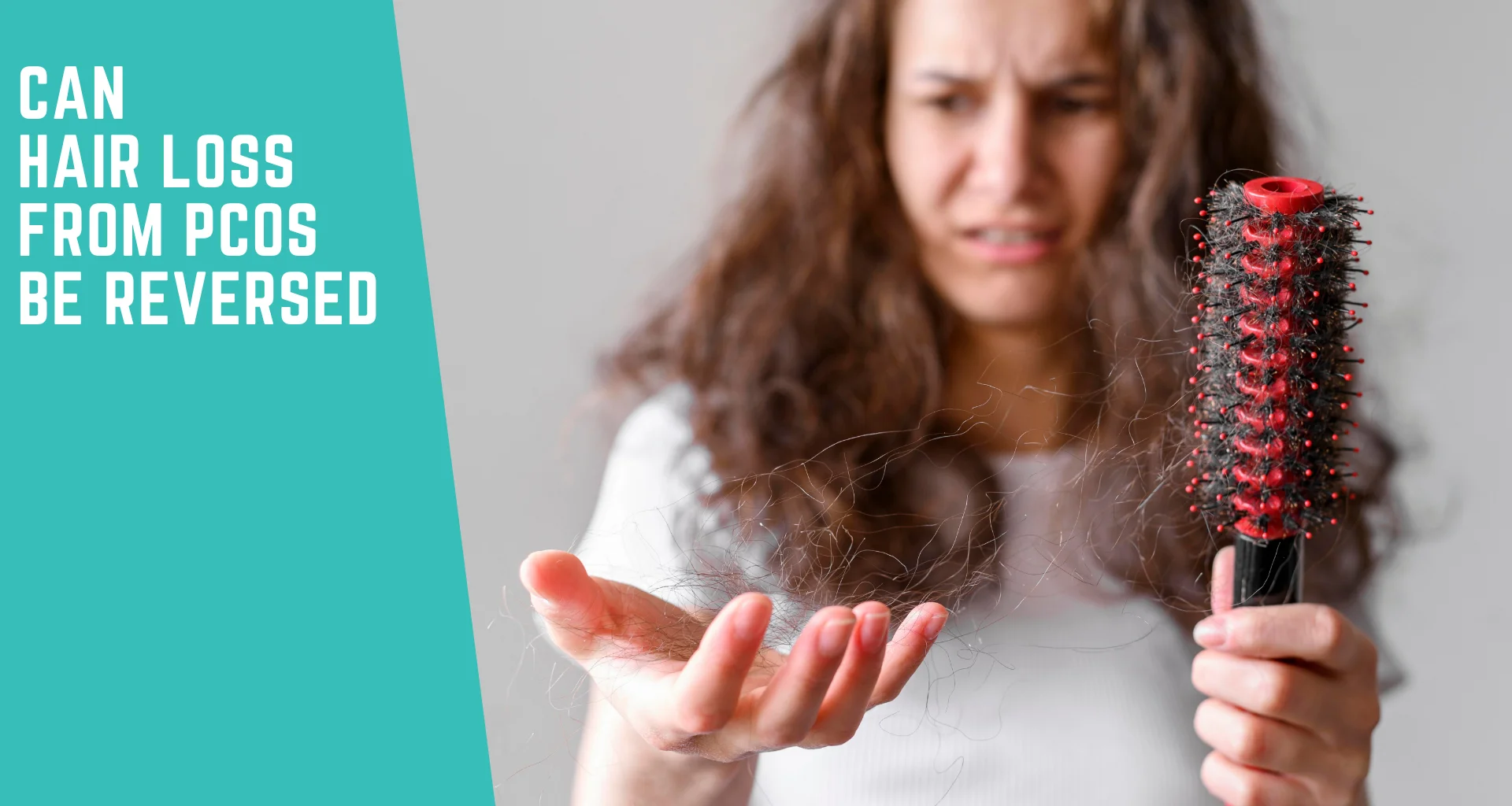

Can hair loss from PCOS be reversed? That depends on something most articles skip: the current health of your follicles.
Most women don’t Google this on the day they first notice shedding. They search for it months later, after the ponytail gets noticeably thinner. After the scalp starts showing through in photos. After the part line shifts and doesn’t shift back.
By then, the question isn’t ‘what causes this.’ It’s ‘Can my hair actually come back, or is this permanent?’
The honest answer is: sometimes yes, sometimes partially, and in some cases, the window has already narrowed. What matters most is understanding where your hair loss is right now and acting before more follicles reach the point of no return.
This article explains what actually determines recovery, what treatments work and in what order, what realistic results look like, and when hair restoration becomes a consideration.
| Not sure whether your follicles can still recover? The earlier active follicles are identified, the more treatment options remain available. Book your consultation with UniquEra Clinic and find out which stage your hair loss has reached. |
What is PCOS hair loss?
PCOS hair loss is a form of androgenetic alopecia. It happens when elevated androgen levels, a core feature of polycystic ovary syndrome, start shrinking hair follicles over time.
Unlike male-pattern baldness, which tends to produce distinct receding areas, hormonal hair loss in women is diffuse. It spreads across the crown, widens the part line, and reduces overall volume rather than creating obvious bald patches. That’s partly why it takes many women so long to name it.
The follicles don’t disappear immediately. They miniaturize, producing finer and shorter strands with each cycle until, eventually, some stop producing visible hair altogether. How far along that process has gone when treatment starts is what separates partial recovery from full recovery.
What does PCOS hair loss look like?
Female hairline thinning from PCOS doesn’t usually announce itself clearly. Most women assume it’s stress, a bad diet, or just normal shedding. These are the signs worth paying attention to:
• Widening of the part line, especially at the crown.
• Finer hair texture. Each strand feels thinner than it used to.
• More hair in the shower drain or on the brush than is normal for you.
• Scalp becoming visible through hair in photos or under bright light.
• Ponytail noticeably smaller in circumference, even at the same length.
• Hair that breaks more easily or doesn’t hold volume.
The hormonal connection is often missed because PCOS doesn’t always come with obvious symptoms. Some women have irregular periods or acne alongside the hair changes. Others notice only the hair. If the pattern matches the list above and you have a PCOS diagnosis, the two are almost certainly connected.
Why does PCOS cause hair loss in women?
PCOS disrupts the hormone balance between estrogen and androgens. In women with PCOS, the ovaries produce excess androgens, including testosterone. Testosterone converts to dihydrotestosterone, or DHT, through an enzyme called 5-alpha reductase.
DHT is the problem. It binds to receptors in hair follicles and shortens the growth phase — read our full guide on the science behind DHT hair loss to understand how this process works. So each hair grows for a shorter period before falling out. Over multiple cycles, the follicle physically shrinks. The hair it produces becomes thinner, shorter, and more fragile. Eventually, some follicles stop producing hair at all.
Insulin resistance makes this worse. Around 70% of women with PCOS have some degree of insulin resistance. When insulin is elevated, it signals the ovaries to produce even more androgens, increasing the DHT load on the scalp. It also reduces sex hormone-binding globulin (SHBG), which normally keeps androgens inactive. Less SHBG means more free DHT reaching your follicles.
This is why treating only the scalp rarely solves the problem. The source is hormonal, and that’s where management has to start.
Yes, in many cases. But the degree of recovery depends on how far follicle miniaturization has progressed before treatment begins.
Follicles that are still active, even if weakened, can often be reactivated. Follicles that have been dormant for years are harder to recover. Follicles that have fully scarred over are unlikely to respond to any treatment.
This is the table that most articles don’t include:
| Hair Condition | Recovery Outlook |
| Increased shedding, no visible thinning | High. Address hormones and shedding can slow quickly. |
| Early thinning, follicles still active | Good. Most women see meaningful regrowth with treatment. |
| Moderate thinning, some miniaturization | Moderate. Partial recovery is likely. Full restoration, less so. |
| Long-term dormant follicles | Lower. Some may still respond; many will not. |
| Scarred or completely inactive follicles | Unlikely to recover through medical treatment alone. |
The single biggest factor is time. The earlier treatment starts, the better the odds. This isn’t a reason to panic if you’re catching it late. It is a reason not to wait.
Can hair lost from PCOS grow back naturally?
Sometimes, yes. Not always.
If PCOS-related hair loss is caught early, and the underlying hormonal imbalance is addressed through lifestyle changes, medical management, or both, some follicles can reactivate without any targeted hair treatment at all.
Women who regulate insulin resistance, lower elevated androgen levels, and reduce scalp inflammation sometimes notice the shedding slowing on its own, followed by gradual regrowth over several months.
But this only works when follicles are still alive. Hair that’s been lost from long-standing miniaturization doesn’t simply grow back once hormones improve. The follicle has to have some remaining capacity.
The honest answer is this: manage PCOS well and give it 6 to 12 months. If density hasn’t improved and shedding hasn’t meaningfully slowed, that’s a signal that the follicles need additional support, whether through targeted treatments, medical options, or a hair restoration consultation.
No single treatment works in isolation. The best outcomes come from addressing the hormonal root cause first, then supporting the scalp and follicles directly.
Hormonal management
This is the foundation. Without it, everything else is treating the symptom rather than the cause.
For women with PCOS, hormonal management typically means getting androgen levels under control. Anti-androgen medications block DHT from reaching hair follicles. Hormonal contraceptives can reduce the androgen output from the ovaries. Insulin-sensitizing approaches, including medication and dietary changes, reduce the androgen-stimulating effect of elevated insulin.
These decisions sit with your endocrinologist or gynecologist. The right approach depends on your specific hormone profile, not a general recommendation. What matters here is that hormonal stabilization has to come first. Hair treatments work better and last longer when the hormonal pressure on follicles is reduced.
Effective hormonal hair loss treatment focuses on reducing the hormonal signals that continue to damage susceptible follicles.
Lifestyle isn’t a soft alternative to real treatment. For PCOS-related hair loss, it’s part of the mechanism.
• Reducing refined carbohydrates and added sugars lowers insulin, which reduces androgen production.
• Regular exercise improves insulin sensitivity directly.
• Stress management matters. Chronic stress raises cortisol, which worsens hormonal imbalance.
• Consistent sleep supports the hormonal regulation that happens during rest.
None of these alone will reverse significant hair loss. Combined with medical management, they reduce the androgen burden that’s driving follicle damage.
Nutritional support
Deficiencies don’t cause PCOS hair loss directly, but they make recovery harder. The three most relevant ones are:
• Iron and ferritin. Low ferritin is common in women and slows hair regrowth even when hormone levels improve.
• Vitamin D deficiency is associated with hair thinning and impaired follicle function.
• Protein. Hair is primarily protein. Inadequate intake limits the raw material for regrowth.
A blood panel from your GP or specialist will show whether any of these are affecting recovery. Supplementing without knowing your levels isn’t necessary and can cause problems of its own.
Hair-focused treatments
Once hormonal management is underway, targeted treatments help support the follicles directly.
• Topical treatments applied to the scalp can extend the growth phase and improve blood flow to follicles. Minoxidil is the only FDA-approved topical for female pattern hair loss and is used widely in this context..
• PRP therapy (platelet-rich plasma) uses growth factors from your own blood to stimulate follicle activity. It works best on follicles that are still partially active.
• Growth factor therapies and regenerative treatments are increasingly used as adjuncts, particularly in clinics with a focus on female hair restoration.
PCOS hair loss treatment usually combines hormonal management, lifestyle changes, nutritional support, and hair-focused therapies rather than relying on a single solution.
Note: UniquEra Clinic does not prescribe or recommend specific medications. The options above are shared as general context. A medical consultation will determine which, if any, are appropriate for your situation.
Recovery from PCOS-related hair loss is slow. This surprises most people because the shedding can feel sudden, even when it has built up gradually. Setting realistic expectations prevents people from stopping treatment too early.
| Timeframe | What Most Patients Notice |
| 1 to 3 months | Reduced daily shedding. Hair still looks the same, but less falls out. |
| 3 to 6 months | Slightly improved texture. Finer regrowth appears along the part line. |
| 6 to 12 months | Visible density improvement in areas where follicles were still active. |
| 12 months and beyond | More settled results. Ongoing hormonal management continues to matter. |
What PCOS hair loss before and after results don’t look like: dramatic overnight change. Progress is measured in reduced shedding first, then texture, then density. If you’re six months in and shedding has slowed, that’s a meaningful result even if the mirror hasn’t changed much yet.
Every PCOS hair loss before and after journey is different because recovery depends on how many follicles remain active when treatment begins.
Areas of long-standing, severe thinning are the slowest to respond, and some may not respond at all through medical treatment. That’s the honest limit of what hormonal management and topical treatments can do.
| Hair restoration works best when addressed early.If you’ve noticed ongoing thinning or a widening part line, an assessment can help identify where your follicles stand and what options are still open. Contact UniquEra Clinic to understand your next steps. |
When is a hair transplant an option for women with PCOS?
A hair transplant for women does not treat PCOS. It restores areas where follicles have already stopped producing hair and are unlikely to recover through medical means alone.
This distinction matters. Women who pursue a transplant without stable hormone control are at risk of continued loss in unrestored areas, which can create an uneven result over time.
The right conditions for a hair transplant in a woman with PCOS are:
• Hormonal levels are stable and under management.
• Active shedding has slowed or stopped for a meaningful period, typically six months or more.
• There are specific areas of permanent-looking loss, rather than diffuse thinning across the whole scalp.
• The donor area, usually at the back and sides of the scalp, is healthy and dense enough to supply grafts.
• The patient has realistic expectations about what restoration can and cannot achieve.
Not every woman with PCOS who experiences hair loss is a candidate for a transplant. Some cases are better served by continued medical management. Others are in a stage where restoration is genuinely the right next step. A thorough clinical evaluation is the only way to know which applies.
Many women seeking female hair restoration in Turkey do so after years of medical treatment that improved their PCOS but didn’t restore density in areas of long-term loss. Turkey has built genuine expertise in female-specific hair restoration, and that applies directly to women with PCOS-related hair loss. Many patients researching female hair transplant Turkey options are looking for clinics experienced in diffuse female hair loss rather than male-pattern baldness.
Women’s hair transplant cases in Turkey differ from male cases in several important ways. Female hair loss tends to be diffuse, which means candidacy assessment is more complex. Technique selection matters more. And preserving the existing hair while restoring thinning areas requires a different level of planning.
Clinics experienced in female hair transplant in Turkey work typically offer:
• No-shave or minimal-shave techniques that preserve length during recovery.
• DHI hair transplant methods are suited to diffuse thinning, where graft placement precision is critical.
• Pre-operative hormonal assessment as part of the evaluation process.
• Honest candidacy assessment. Some women who inquire about female hair transplant in Turkey are better served by continued medical management first.
Hair transplant in Turkey for women typically costs significantly less than equivalent procedures in the US or UK, with all-inclusive packages common. Cost is not the only factor. The clinical evaluation before the procedure matters as much as the procedure itself.
Female hair restoration Turkey consultations should include a thorough review of your hormonal history, PCOS management, current loss pattern, and donor area health. A clinic that skips that process and moves straight to grafts and pricing is one to approach carefully.
For women with PCOS, the clinical evaluation before any procedure is more important than the procedure itself. Here’s what a serious clinic will assess:
• Female hair loss pattern. Diffuse thinning hair transplant requires different planning than zone-specific loss.
• Hormonal stability. A responsible clinic asks about your PCOS management before discussing surgery.
• Donor area health. In women with extensive diffuse thinning, the donor area can also be affected, which changes the picture entirely.
• Realistic candidacy assessment. Not every woman is a good candidate. Honest evaluation means sometimes being told to wait.
• Long-term planning. PCOS is a chronic condition. A restoration plan has to account for future progression.
At UniquEra Clinic, every female hair loss case is assessed individually by Medical Directors with over a decade of hands-on hair transplant experience, supervising each case personally. The conversation starts with understanding your hair loss history, hormonal background, and current stage, not a graft count. That’s the difference between a restoration that holds and one that creates more questions than answers.
| Looking for answers about PCOS hair loss?Know What Stage Your Hair Loss Is In Before Deciding Your Next Step.Some women recover with medical treatment alone. Others benefit from hair restoration once hormone levels have stabilised. The right approach depends on your follicles today.Book your consultation with UniquEra Clinic and receive a personalised assessment before deciding on treatment. |
Yes. Many women see meaningful recovery with early treatment. Results vary based on how long the hormonal imbalance went unaddressed and the current health of the follicles.
Partial reversal is common. Complete restoration depends on how much follicle miniaturization occurred before treatment started. Earlier intervention gives better odds.
Most women notice reduced shedding within 3 months. Visible density improvement typically takes 6 to 12 months of consistent treatment. Hair grows slowly, and progress is gradual.
Managing the hormonal imbalance usually slows or stops further progression. It does not always trigger full regrowth, particularly in areas of long-standing thinning where follicles have already miniaturized.
There is no single best treatment. A combination of hormonal management, nutritional correction, and targeted scalp therapy gives the best outcomes. The right combination depends on your specific hormonal profile and stage of loss.
PCOS hair loss is often categorized as cosmetic, which can delay proper assessment. It is a genuine hormonal symptom that responds well to early intervention. If you feel dismissed, a second opinion from a specialist in female hair loss is worth seeking.
Yes, when hormonal levels are stable, active shedding has stopped. A thorough evaluation is needed first. Not every woman with PCOS hair loss is the right candidate at the right time.
Turkey has developed strong female hair restoration protocols, including no-shave and DHI techniques suited to the diffuse thinning patterns common in PCOS-related hair loss. Choosing a clinic with genuine experience in female cases is what determines the outcome.
Ongoing androgen exposure continues to shrink follicles over time. The longer it goes unaddressed, the harder full recovery becomes. Some follicles eventually stop responding to any treatment, medical or surgical.
Look for female-case experience, donor-area assessment, hormonal history review, realistic candidacy guidance, and long-term planning rather than choosing based only on price or graft count.