
Nasar Khan spends his professional life researching NK cells and adult stem cells. But for more than ten years, there was something personal he couldn’t stop thinking about.
“His hair.”
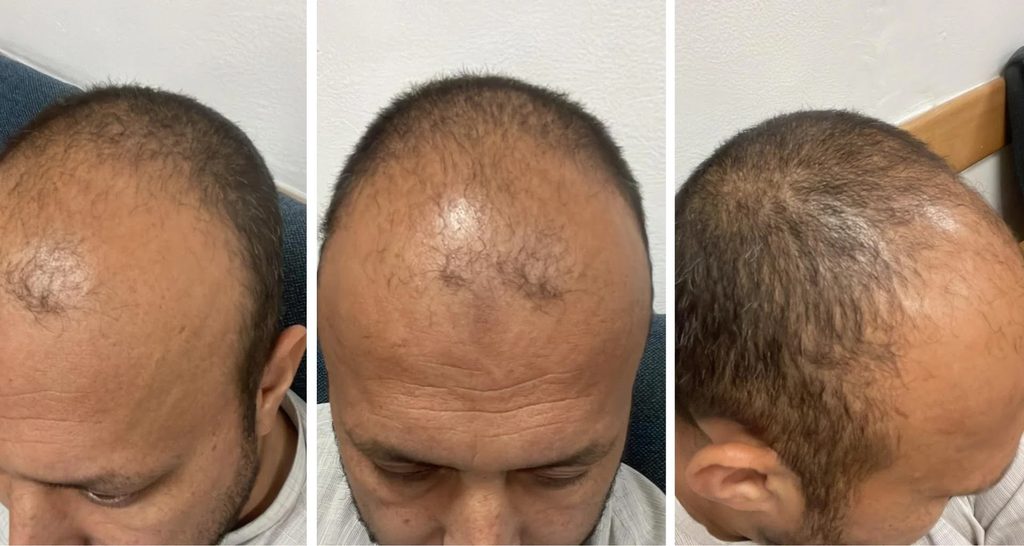
At 34, Nasar had been dealing with progressive hair loss across his hairline, temples, mid-scalp, and crown. The thinning had gradually affected his confidence, leaving him increasingly conscious of his appearance.
Then his business partner and friend, David Greene, showed him his own hair transplant result from UniquEra Clinic.
Nasar had seen the change himself. He didn’t need convincing through advertisements or online reviews. He contacted UniquEra Clinic on June 10, 2025, and booked his procedure just two days later.
| Case Detail | Information |
| Patient | Nasar Khan |
| Age | 34 |
| Country | Pakistan |
| City | Islamabad |
| Profession | Medical Researcher |
| Hair Loss Duration | More than 10 years |
| Diagnosis | Androgenetic alopecia with diffuse thinning |
| Areas Affected | Hairline, temples, mid-scalp, crown |
| Previous Treatments | None |
| Procedure | DHI Hair Transplant |
| Grafts | 6,000 |
| Duration | Two days |
| Procedure Date | June 18, 2025 |
| Medical Team | Çagri Çelik |
| Result Stage | 15 months |
| Goal | Hairline restoration, improved density, and balanced coverage |
Nasar’s hair loss wasn’t limited to a receding hairline. He had been experiencing androgenetic alopecia with diffuse thinning for more than a decade.
His frontal hairline had changed, his temples had receded, and density had reduced through the mid-scalp and crown.
For someone working in medical research, understanding the science behind a condition doesn’t necessarily make living with it easier.
Nasar found himself overthinking his appearance almost every day.
He hadn’t tried medications or other hair restoration treatments. What eventually moved him to take action was seeing a result on someone he already knew and trusted.
David Greene wasn’t simply someone recommending a clinic. He was Nasar’s friend and friend, and Nasar had already seen the results of his treatment.
That firsthand experience gave Nasar confidence in the team.
During his consultation, the focus was on assessing his donor area and planning how to distribute grafts across several areas of thinning.
His donor area was assessed as normal, and the team planned a two-day DHI procedure to address the scale of his hair loss.
Although Nasar was excited, he also felt nervous about the procedure and looked forward to seeing his new hair.
He was already familiar with Istanbul through frequent work trips, and he particularly appreciated the medical team’s hospitality during his visit.
Nasar’s case required more than restoring a single area. The treatment needed to address his frontal hairline while improving density through the mid-scalp and crown.
The team planned 6,000 DHI grafts across two days, with the graft distribution focused on rebuilding the frontal hairline and improving coverage across the affected areas.
DHI hair transplant allows grafts to be placed with control over depth, angle, and direction. This was important when working across multiple zones with existing hair.
The two-day approach allowed the team to carry out the extensive treatment plan without attempting the entire procedure in one session.
The goal was a balanced result, with an improved hairline, density, and coverage that suited Nasar’s existing hair.
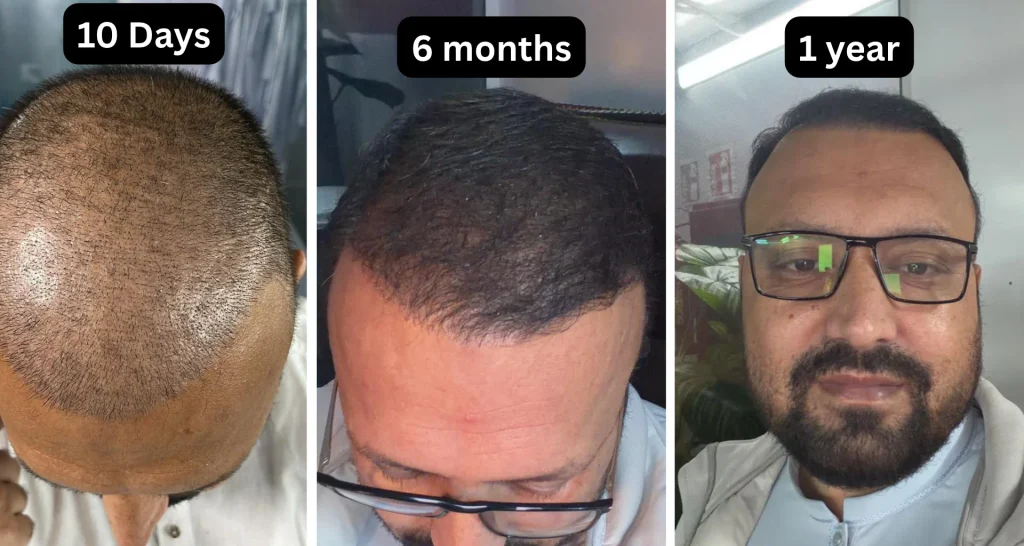
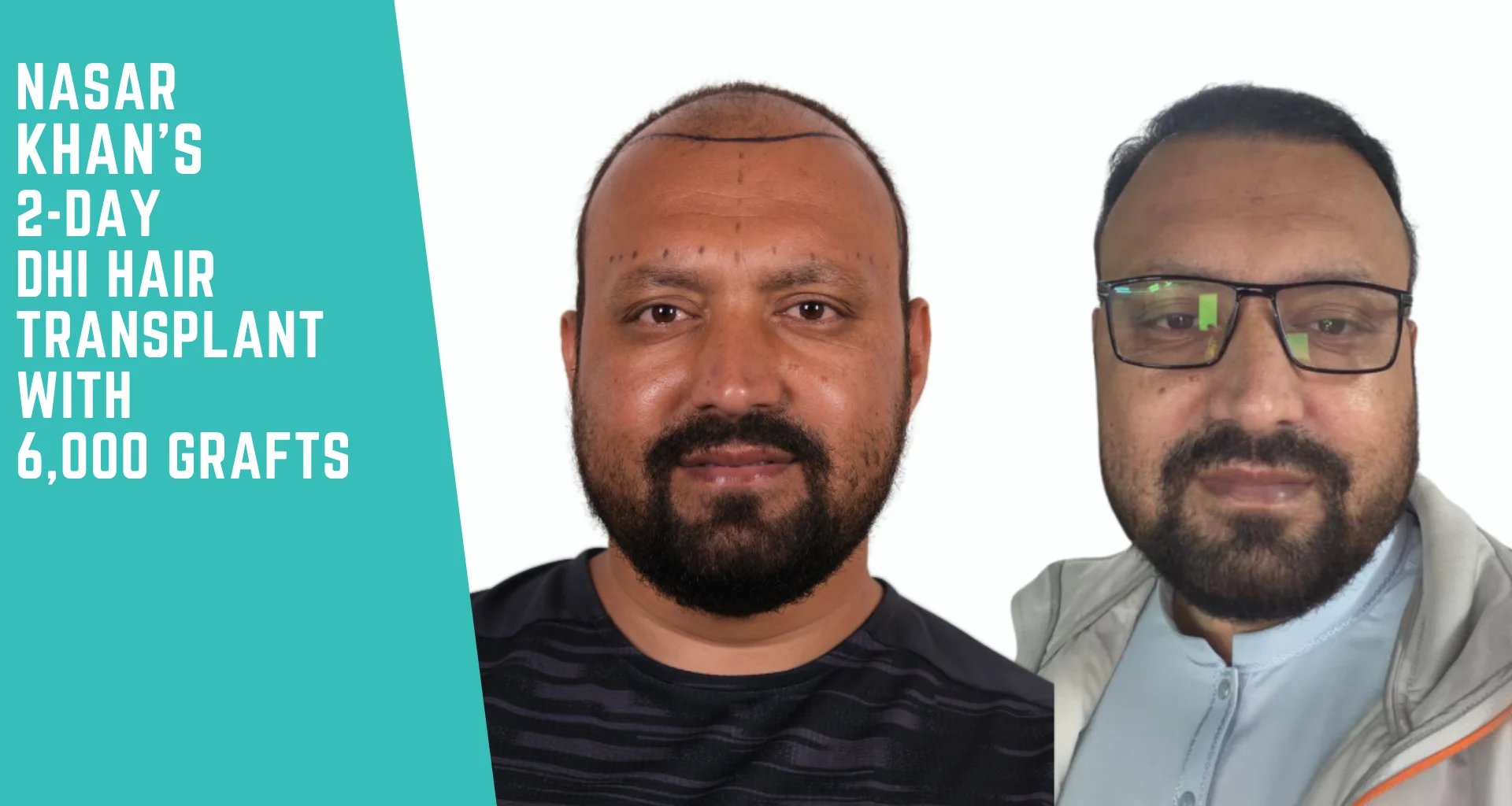
Nasar’s case was reviewed at the 15-month stage, with improvements reported in hairline shape, density, symmetry, and coverage.
| Timeline | Progress |
| Before | Diffuse thinning across the hairline, temples, mid-scalp, and crown. |
| June 2025 | 6,000 DHI grafts transplanted over two days. |
| Month 15 | Improved density, hairline shape, symmetry, and coverage. |
At fifteen months, Nasar’s reported result showed improvement across the areas targeted during treatment. His frontal hairline had been rebuilt, while the mid-scalp and crown showed improved coverage.
The changes went beyond the treatment areas.
After spending years feeling self-conscious about his appearance, Nasar described feeling like a new person.
For Nasar, the decision started with trust. He had seen the result on someone close to him and wanted to know whether a similar approach could work for his own hair loss.
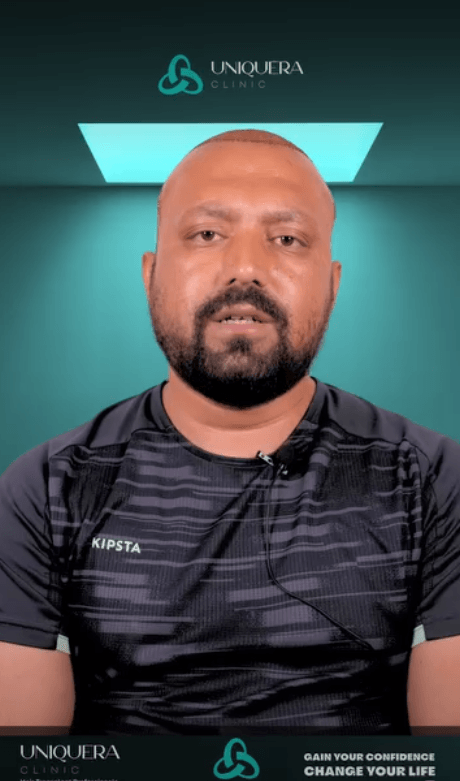
Fifteen months after his procedure, his case showed how a carefully planned graft distribution could address multiple areas of thinning.
His reported feeling of being brand new says something that graft numbers alone cannot explain.
If your hair loss affects the hairline, mid-scalp, and crown, the first step is understanding what your donor area can support. Book a private consultation with UniquEra Clinic to discuss your treatment options and a realistic graft plan.
Yes, in suitable cases. DHI allows grafts to be placed between existing hair, but treatment depends on donor quality, hair loss pattern, and available grafts.
Nasar required 6,000 grafts across multiple areas. His treatment was divided over two days to manage the extensive graft placement.
No. Graft requirements depend on the extent of thinning, donor density, hair characteristics, and treatment goals.