
Modern hair transplant techniques have come a long way. With FUE Sapphire and DHI, visible scarring in the donor area is far less common than it once was. Precise extraction, controlled channel sizing, and careful donor zone management mean that most patients today complete their procedure and recovery without any scar becoming a concern.
But hair transplant procedures are still surgical. Some degree of healing always takes place, and in a smaller number of cases, whether from an older technique, a previous procedure at a different clinic, or individual healing factors, a scar becomes more visible than expected.
If that is where you are, the first thing worth knowing is that it is addressable. Hair transplant scar revision is a well-established area of hair restoration medicine. The methods are proven, the outcomes are realistic, and for most scar types there is a clear path forward.
This guide explains what scar revision actually involves, which methods exist, what they are best suited for, and what realistic improvement looks like depending on your specific situation.
If you have a visible scar from a previous procedure and want to understand what can realistically be done, an honest medical assessment is the right starting point. The UniquEra medical team reviews each case individually before any recommendation is made.
Every hair transplant involves removing follicular units from a donor area and placing them into a recipient area. Both steps break the skin. Scarring is a natural part of how skin heals after any incision or extraction and cannot be entirely prevented. What varies is how visible that scarring becomes.
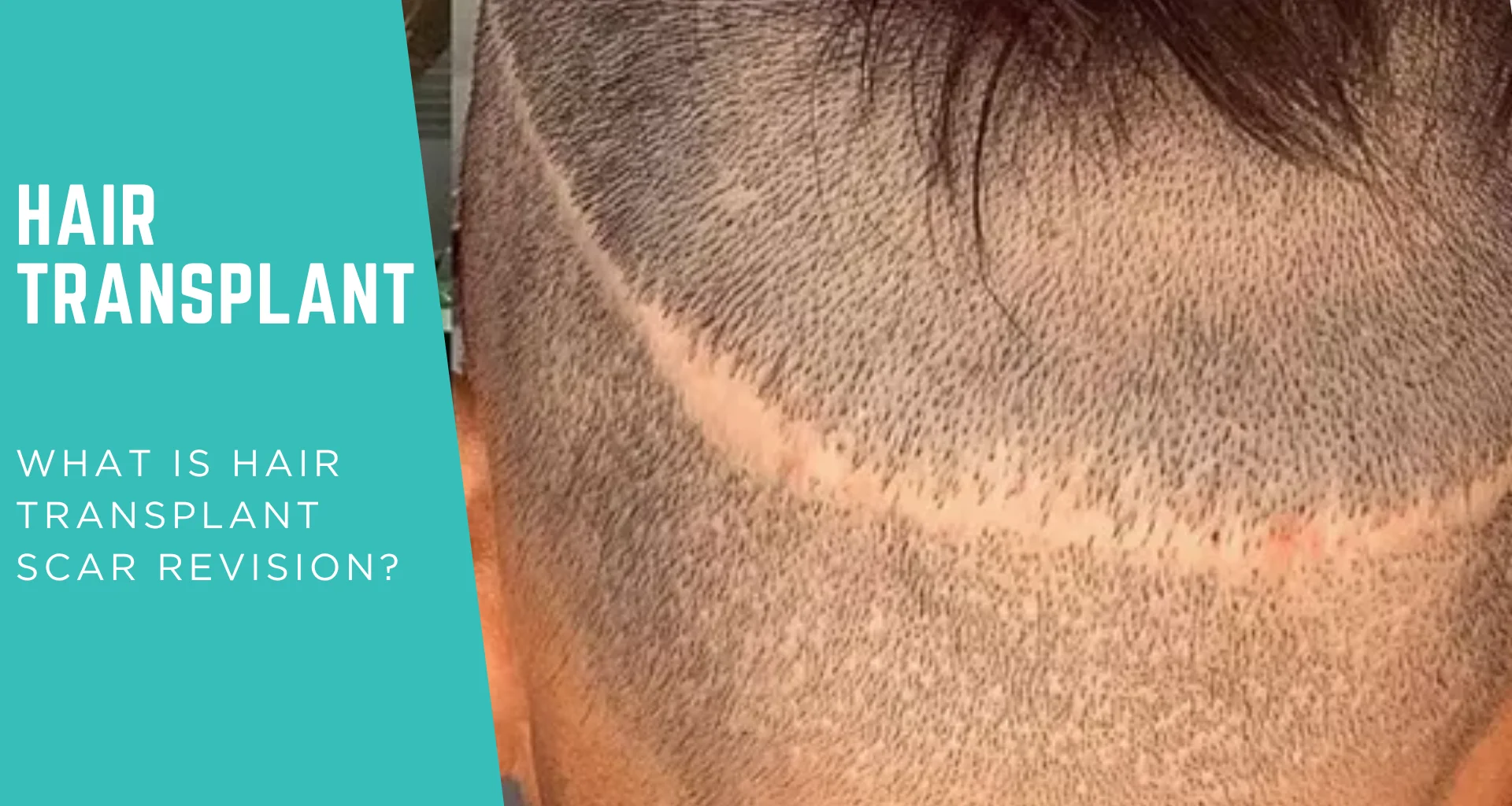
In the donor area, the two main techniques create very different scar patterns. FUT (Follicular Unit Transplantation) removes a strip of scalp, leaving a single linear scar that runs horizontally across the back of the head. FUE (Follicular Unit Extraction) removes individual follicular units one by one, leaving small circular dot scars distributed across the donor zone.
In the recipient area, modern techniques such as Sapphire FUE and DHI create microchannels small enough that visible scarring is rarely a concern when turkey hair transplant surgery is performed by an experienced medical team at a properly equipped clinic.
Scar visibility depends on:
• The technique used and the skill of the medical team performing it
• How densely grafts were extracted from the donor zone.
• Individual skin type and healing response.
• Whether post-operative care instructions were followed.
• Whether the procedure was performed at an experienced, accredited clinic.
Not all hair transplant scars are the same. Understanding the scar type determines what revision is possible.
| Scar Type | Appearance | Cause | Revision Candidate? |
| FUT linear scar | Single horizontal line, back of head | Strip excision | Yes, multiple options |
| FUE dot scars | Small circular marks across donor zone | Individual punch extraction | Yes, if dense or depigmented |
| Legacy plug scars | Raised, cobblestone texture at hairline | Old punch graft method pre-2000 | Yes, requires careful planning |
| Over-harvested donor zone | Visible thinning, moth-eaten appearance | Too many grafts removed | Partially, limited by donor supply |
Legacy plug scarring and over-harvested donor zones are typically the most complex cases. They often result from procedures where the focus was on graft volume rather than long-term donor preservation.
What is hair transplant scar revision?
Hair transplant scar revision is the collective term for medical procedures that improve the appearance of scarring left by a previous hair transplant. It is not a single treatment. It is a category of options, selected based on scar type, available donor supply, skin characteristics, and what improvement is realistically achievable.
Who is a candidate for scar revision:
What scar revision is not:
Several methods exist and they are often combined for better results.
Follicular units are extracted from a healthy donor area and implanted directly into the scar tissue. The goal is to restore hair growth within the scar, breaking up its appearance and improving camouflage under existing hair. Graft survival in scar tissue is approximately 70%, lower than the 85 to 95% rate in healthy scalp tissue, due to reduced vascularity. Multiple sessions may be needed to achieve satisfactory density.
A refined suturing technique used specifically for FUT linear scars. The wound edges are overlapped slightly during closure so that hair follicles grow through the scar line itself. When performed correctly, it makes the linear scar significantly less visible even at short hair lengths. It is used during the original procedure or as a revision of a poorly closed FUT scar.
SMP uses specialised pigmentation to create the appearance of hair follicles within scar tissue. It does not restore actual hair growth but significantly reduces the visual contrast between scar tissue and surrounding scalp. Particularly effective for FUT linear scars and over-harvested donor zones. Results are semi-permanent and typically require touch-ups every 3 to 5 years.
Platelet-Rich Plasma (PRP) is derived from the patient’s own blood and contains growth factors that support tissue repair and follicle health. Combined with microneedling, which creates controlled micro-injuries in the scar tissue, PRP improves scar texture, scalp vascularity, and the environment for graft survival. Most often used as a preparatory or supportive treatment alongside FUE grafting rather than as a standalone revision.
These surface-level treatments target raised or hypertrophic scar tissue, reducing its texture and improving skin tone around the scar. More commonly used for recipient area irregularities and legacy plug texture than for donor zone scarring. Results vary based on skin type and scar depth.
| Method | Best For | Sessions | Downtime | Realistic Outcome |
| FUE into scar | FUT linear, dot clusters | 1 to 3 | 7 to 14 days | Hair growth within scar, improved camouflage. |
| Trichophytic closure | FUT linear scar | 1 | 10 to 14 days | Hair growing through scar line. |
| SMP | All scar types | 2 to 3 | Minimal | Reduced visual contrast. |
| PRP with microneedling | All types, prep support | 3 to 6 | 1 to 2 days | Improved texture, graft environment. |
| Laser / dermabrasion | Raised scars, plug texture | 2 to 4 | 5 to 10 days | Smoother surface, reduced texture. |
The right revision method depends on your scar type, donor availability, and skin characteristics. A proper assessment is the only reliable way to know which approach makes sense for your case.
Yes, but with important context. When follicular units are implanted into scar tissue, survival rates are approximately 70%, compared to 85 to 95% in healthy scalp tissue. Scar tissue has fewer blood vessels, which limits the nourishment available to newly implanted grafts in the critical early weeks after placement.
Factors that influence graft survival in scar tissue:
This is why combination approaches consistently produce better results than a single method alone. FUE grafting supported by PRP improves the scalp environment before and after implantation, giving grafts a better chance of establishing in tissue that would otherwise be less receptive.
How do you know if your scar needs revision?
Not every scar from a hair transplant requires intervention. Many FUE dot scars and well-closed FUT scars are not visible under normal circumstances. The question is whether the scar is affecting your daily life, your hairstyle choices, or your confidence.
Signs that a scar may be worth assessing:
What counts as normal healing:
Small dot marks from FUE that fade over 12 to 18 months, a fine linear FUT scar covered by surrounding hair, and mild redness that resolves in the first few months are all within the expected range of healing.
Timing matters. FUE scars should be assessed no earlier than 12 months post-procedure. FUT linear scars can take up to 2 to 3 years to fully mature. Revision before scars have stabilised is unlikely to produce the best outcome.
How does UniquEra Clinic approach hair transplant scar revision?
Repair cases are different from primary procedures. Before any method is recommended, the medical team conducts a detailed scalp analysis to understand exactly what is there and what can realistically be improved.
What the assessment covers:
Technique selection follows the assessment. Depending on the scar type and donor zone, the team uses FUE Sapphire, DHI with Choi Pen, or Manual FUE. Manual FUE is particularly well suited to revision cases because hand-controlled extraction allows finer feedback when working around existing scar tissue.
What sets UniquEra apart in revision work:
That last point matters more in revision than in any other type of case. Understanding the full history of a previous procedure is as important as the revision itself.
Choosing the right clinic for revision work requires more diligence than choosing for a primary procedure. The stakes are higher and the assessment process matters more.
What to look for:
Questions to ask any clinic before agreeing to revision:
Red flags:
Hair transplant scar revision is a well-established area of hair restoration medicine with a range of proven methods, realistic outcomes, and a clear process for assessing what is possible in your specific case.
Most scar types are addressable. FUT linear scars, FUE dot clusters, legacy plug texture, and over-harvested donor zones all have paths forward, whether through grafting, trichophytic closure, SMP, or a combination approach. What matters is starting with an honest assessment that tells you exactly what you are working with.
The right clinic for this work is one that understands revision cases specifically, uses the full range of available techniques, and gives you a clear picture of realistic outcomes before any procedure begins.
If you are considering hair transplant repair in Turkey and want a clear, honest assessment of your scar and what can be done, the UniquEra Clinic medical team reviews every case individually before making any recommendation.
Yes, Most hair transplant scars can be significantly improved. FUT linear scars, FUE dot clusters, and legacy plug texture all have established revision options. Complete elimination is rarely possible, but meaningful improvement is achievable in most cases.
FUT leaves a single horizontal linear scar across the donor area. FUE leaves small circular dot marks distributed across the donor zone. FUE scars are generally less visible but can become noticeable if extraction was too dense or if the patient has a darker skin tone.
It depends on the method. FUE grafting into scar tissue requires 10 to 14 days of visible recovery. SMP has minimal downtime. PRP with microneedling involves 1 to 2 days of mild redness. Full results from grafting take 10 to 12 months to assess.
Yes. FUE grafting into scar tissue achieves approximately 70% graft survival. Trichophytic closure allows hair to grow directly through a FUT linear scar line. Combination approaches improve outcomes in both cases.
Trichophytic closure is a suturing technique where FUT wound edges are slightly overlapped during closure, allowing hair follicles to grow through the scar line. It makes the linear scar significantly less visible, particularly at short hair lengths.
A typical FUT scar requires between 300 and 800 grafts to achieve meaningful camouflage. The exact number depends on scar length, width, and the density achievable from the remaining donor area.
FUE grafting into existing scar tissue does not create significant new scarring. Trichophytic re-excision replaces one scar with a finer, better-closed one. The goal of every revision method is to reduce overall visible scarring, not add to it.
SMP is semi-permanent. The pigment fades gradually and typically requires a touch-up every 3 to 5 years to maintain the result. It does not restore actual hair growth but significantly reduces the visual contrast of scar tissue.
Yes, provided the clinic has specific experience with revision cases and conducts a thorough assessment before recommending treatment. Turkey has experienced medical teams who handle hair transplant repair regularly, but the same due diligence applies as with any procedure.
Scar revision procedures are performed under local anaesthesia. Patients typically report mild discomfort during the anaesthetic injection and very little during the procedure itself. Recovery discomfort is generally manageable with standard pain relief.