
Head Medical Consultant & Patient Care at UniquEra Clinic

There’s a particular kind of morning that changes everything. You’re getting ready for work, and the bathroom light catches your scalp at just the wrong angle. Suddenly, you’re not seeing hair anymore-you’re counting the spaces between strands. The crown that used to be thick now shows skin. The hairline you took for granted has migrated backward, year by year, until one day you realize: this isn’t “a little thinning” anymore. This is extensive hair loss.
You’ve already tried the solutions everyone recommends. The topical treatments that promise miracles but deliver disappointment. The supplements that drain your wallet monthly. The strategic hairstyling that works until a gust of wind exposes your secret. You’ve reached the point where minor fixes won’t cut it. You need real restoration-the kind that addresses your entire scalp, not just one problem area.
That’s when the research begins. And that’s when you discover that 5000 graft hair transplant procedures exist for cases exactly like yours.
But here’s the question that keeps you scrolling through forums at 2 AM: Is 5000 grafts actually enough? It sounds massive, maybe even intimidating. But the real questions are: Will it actually restore what you’ve lost? And can your scalp even provide that many grafts safely without creating new problems?
At UniquEra Clinic in Istanbul, we understand what brings patients to consider high-volume transplants. We’ve performed thousands of 5000 grafts hair transplant surgeries in Turkey and we’ve learned something critical: success isn’t just about the number-it’s about matching that number to your specific donor capacity, hair characteristics, loss pattern, and realistic aesthetic goals.
In this guide, you’ll learn:
Think of a graft as a tiny natural grouping of hairs-usually containing 1 to 4 hairs that grow together. When surgeons transplant 5000 grafts hair transplant, you’re actually receiving 10,000 to 15,000 individual hairs moved to your balding areas.
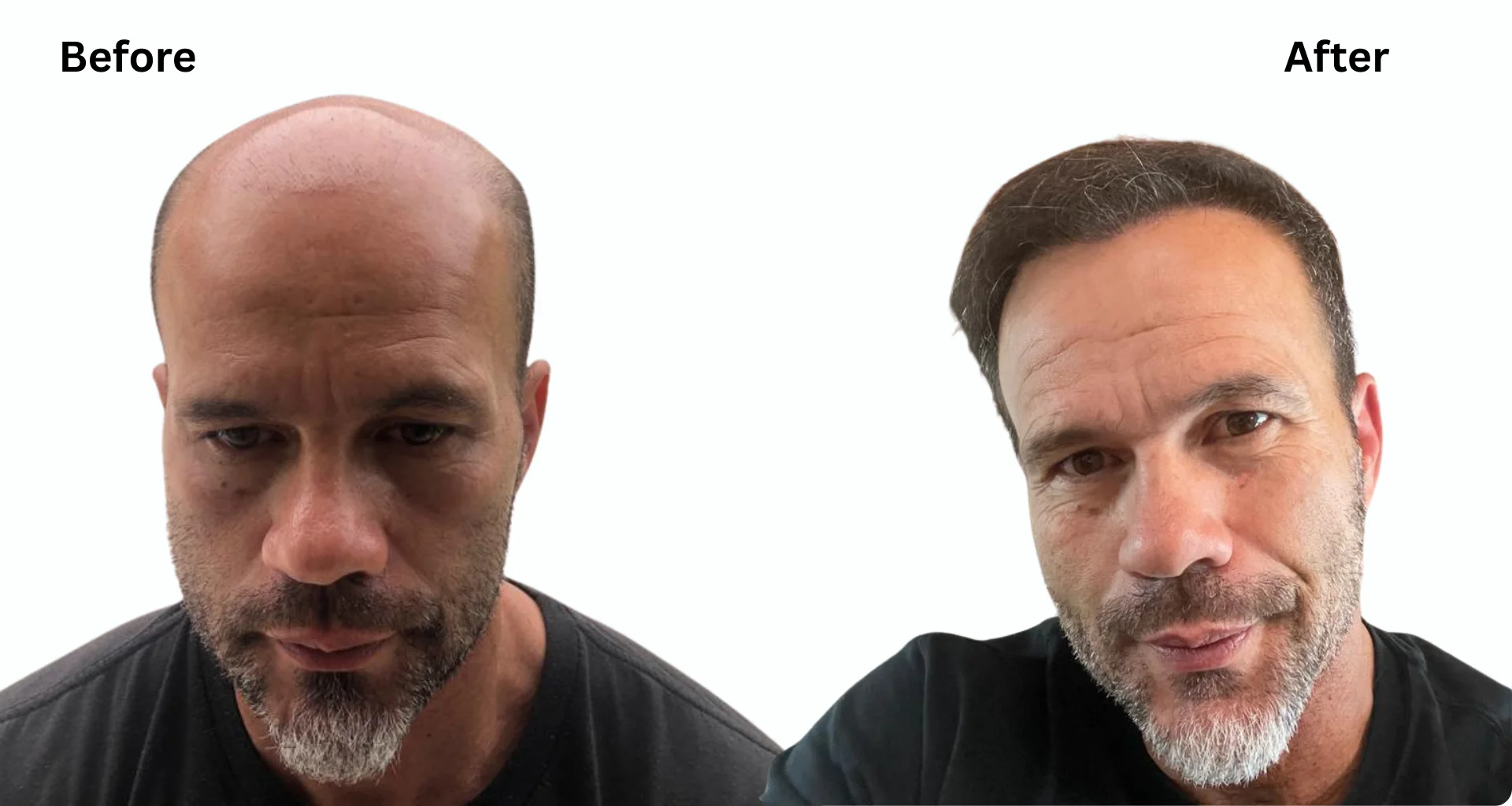
In practical terms: 5000 grafts can restore your entire hairline, fill your frontal and mid-scalp areas, and improve your crown-all in one comprehensive procedure. It’s designed for men with significant hair loss across multiple zones, not just a receding hairline.
The important reality: Most men have 6,000 to 7,000 grafts available across their lifetime. Using 5000 means you’re committing most of your donor supply in one go. This isn’t necessarily wrong, but it requires careful evaluation of whether this serves your long-term goals or if a more conservative approach makes better sense.
Coverage expectations: At proper density (30-40 grafts per cm²), 5000 grafts hair transplant cover approximately 125-150 cm² of scalp-enough for comprehensive restoration including hairline, frontal region, mid-scalp, and crown for most patients.
But there’s a catch: this uses 70-85% of your lifetime donor supply. Most patients have 6,000-7,000 harvestable grafts total. Extracting 5000 in one session leaves minimal reserve for future procedures if your hair loss progresses or if you want density enhancements later.
The technical challenge: These procedures take 10-14 hours. Each minute grafts spend outside your body reduces survival probability. Surgical team fatigue becomes a real concern. And donor area management requires exceptional skill-extracting this volume without creating visible thinning demands strategic, scattered harvesting across wide zones.
Not everyone facing significant hair loss should get 5000 grafts. This high-volume approach serves specific profiles with particular characteristics. Understanding whether you’re a genuine candidate prevents disappointment and protects your donor area.
Your baldness is extensive and multi-zone. We’re talking significant visible scalp across your hairline, top, and crown simultaneously. Not just recession at the temples-genuine widespread loss that smaller procedures simply couldn’t address adequately.
Your donor area is strong and healthy. The back and sides of your head where hair gets harvested need to be thick, dense, and resilient. Testing should show you have plenty of healthy grafts available without compromising how that area looks after extraction.
Your hair loss has stabilized. Your pattern hasn’t changed much in the past 1-2 years. You’re typically over 30 years old. If you’re still rapidly losing hair, transplanting now might mean needing more procedures later as loss continues around transplanted zones.
You want comprehensive one-time restoration. Perhaps you live internationally and repeated trips aren’t practical. Maybe your professional schedule makes multiple procedures difficult. Or you simply prefer the psychological closure of addressing everything at once.
Your donor area isn’t particularly dense or strong – Taking too many grafts from a weak donor zone creates visible thinning on the back of your head, trading one cosmetic problem for another
You’re still actively losing hair – From stress, hormonal issues, or other treatable conditions. Address the underlying cause first, then consider transplantation.
You’re expecting to look exactly like you did at 18 – With super-thick hair everywhere. That’s not realistic-5000 grafts creates significant improvement, but there are biological limits.
You’ve already had previous procedures – That used substantial donor supply. There may not be enough healthy grafts remaining to safely extract 5000 more.
UniquEra’s honest reality: We decline approximately 40% of patients requesting 5000 grafts after donor assessment reveals insufficient capacity. It’s better to do 3,000 grafts safely than damage your donor area attempting to force 5000.
The foundation of successful high-volume transplants is thorough donor evaluation. UniquEra Clinic uses multi-layered diagnostics before confirming any patient for 5000 graft hair transplant procedures.
Your donor hair comes from the occipital area (back of head) and lower sides-genetically resistant regions unaffected by DHT. These follicles maintain their resistance when transplanted, continuing to grow permanently in new locations.
Total lifetime donor capacity varies:
Extracting 5000 grafts uses 65-85% of your total supply-requiring careful analysis of whether single mega-session or multiple smaller procedures better serves your long-term goals.
Digital Trichoscopy: High-magnification examination revealing exact follicular unit density per cm², hair thickness caliber, follicular unit composition, and any signs of donor weakness.
Computerized Density Mapping: Automated analysis quantifying safe extraction zones, maximum extractable grafts per zone, and total available donor supply projections.
Physical Scalp Assessment: Manual examination of scalp laxity (loose scalps tolerate extraction better), scarring from previous procedures, blood supply health, and skin quality.
Viability Calculation: We limit extraction to maximum 20-25% of follicles per zone. Our algorithm calculates whether your specific donor characteristics can support 5000 grafts without visible depletion.
Example: If testing shows your donor capacity safely supports 5000 grafts, excellent. But if testing shows you only have capacity for 3,500 grafts without risking donor damage, we recommend that number-even though it means less revenue for the clinic. Your long-term result matters more than maximizing one procedure’s size.
Extracting too many grafts from insufficient supply creates:
UniquEra’s conservation philosophy: We perform scattered extraction across entire donor zones-never concentrating in small areas. We’ve revised surgical plans for 30-40% of patients whose donor assessment revealed insufficient capacity for their initial expectations. While disappointing initially, patients ultimately appreciate honest counseling over depleted donors and lifetime regret.
One of the most important strategic decisions is whether to complete 5000 grafts in one intensive session or split across 2-3 smaller procedures over time.
Advantages:
Disadvantages:
Advantages:
Disadvantages:
We recommend MEGA-SESSION when:
We recommend MULTIPLE SESSIONS when:
Medical team at UniquEra Clinic: “Donor capacity should make the decision, not patient preference. If someone has exceptional density, their scalp can provide 5000 grafts safely in one session. But if density is moderate, attempting 5000 grafts risks permanent damage regardless of surgeon skill.”
Different techniques suit different situations for 5000 Graft Hair Transplant procedures:
How it works:
Best for:
Healing time: 7-10 days
How it differs:
Best for:
Healing time: 7-10 days with superior aesthetic healing
How it works:
Best for:
Limitations for 5000 grafts:
Healing time: 10-14 days
Strategic combination:
| Scalp Region | Typical Graft Allocation | Achieved Density | Visual Outcome |
| Hairline + Temples | 1,500-2,000 grafts | 45-50 grafts/cm² | Strong definition with natural softness |
| Frontal Zone | 1,500-2,000 grafts | 40-45 grafts/cm² | Solid coverage enabling styling options |
| Mid-Scalp | 1,000-1,500 grafts | 30-35 grafts/cm² | Good reduction of scalp visibility |
| Crown | 1,000-1,500 grafts | 25-30 grafts/cm² | Moderate blending coverage |
Total effective coverage: 125-150 cm² providing hairline-to-crown improvement.
Maximum Coverage Strategy: Distribute grafts across all zones at moderate density (25-35 grafts/cm²). Achieves visible improvement everywhere but won’t look ultra-dense anywhere. Best when you need balanced restoration across the entire scalp.
Concentrated Density Strategy: Focus grafts in hairline and frontal two-thirds at higher density (40-50 grafts/cm²). Leave the crown lightly treated. Creates dramatic frontal impact. Best when frontal appearance matters most and you accept lighter crown coverage.
Curly or coarse hair creates visual fullness with fewer grafts than fine straight hair requires. Dark hair on pale skin shows scalp more readily than blonde on fair skin. Your follicular characteristics dramatically affect how many grafts achieve desired visual density.
Afro-textured hair requires specialized consideration: curved follicle shapes, naturally lower density, higher follicles per unit, larger extraction sites needed, increased keloid risk. These factors affect both eligibility and expected outcomes.
The back and sides of your scalp contain limited, non-renewable resources. Overharvesting to hit target numbers creates permanent problems. Conservative extraction preserving future options usually outperforms aggressive single-session maximization.
Safe practice limits extraction to 20-25% of follicles per zone maximum. Scattered harvesting across wide areas prevents visible depletion. Digital mapping guides balanced extraction. Priority is lifetime donor health, not single-session volume maximization.
Procedure day typically spans 10-14 hours including breaks. Local anesthesia eliminates pain-you feel pressure and movement but no discomfort. The process follows distinct phases: preparation and design, donor extraction, graft preservation and sorting, recipient site creation, and systematic implantation.
UniquEra’s medical team structure includes a specialized Dhi or Fue Sapphire expert who does extraction and implantation, reducing graft out-of-body time while maintaining precision.
Hours 1-2: Preparation, final hairline design, local anesthesia administration. You feel no pain-only pressure sensations.
Hours 2-5: Strategic follicle extraction using micro-motor FUE. Scattered harvesting across the entire donor zone (15-20% per area). Continuous quality assessment. Brief breaks every 90-120 minutes.
Hours 5-7: Recipient site creation using Sapphire crystal blades. Surgeons create 5,000 precisely angled incisions matching natural hair direction and flow patterns. Lunch break included.
Hours 7-11: Meticulous graft implantation by 4-6 specialized technicians. Systematic progression: single-hair grafts at hairline for softness, 2-3-4 hair grafts building density behind. Brief breaks for patient comfort.
Hour 12: Final assessment, PRP application, post-op care instructions, medications provided.
Days 1-10: First professional wash day 2. Mild swelling peaks days 2-3, then subsides. Scabs form and gradually shed by day 7-10. Minimal discomfort.
Weeks 2-4: Shock loss phase-transplanted hairs fall out (completely normal). Follicles beneath the surface transition to the growth phase.
Months 3-6: First “baby hairs” emerge month 3. Noticeable density increase by month 5-6. Approximately 50-60% of the final result is visible by month 6.
Months 7-12: Dramatic improvement as follicles mature. Hair reaches full thickness. 90-95% of final transformation complete by month 12.
UniquEra provides: Scheduled check-ins at 1 week, 1 month, 3, 6, 9, and 12 months. 24/7 coordinator access. Multiple PRP sessions enhancing growth. Comprehensive support throughout your entire journey.
Cost comparison reality: While specific pricing varies, 5000 graft procedures in Turkey typically cost one-third to one-fifth what you’d pay in the United States, United Kingdom, or Europe. Even factoring in international travel expenses, you save 60-75% while accessing superior expertise and technology.
What comprehensive packages include:
The investment delivers permanent, life-changing results at a fraction of Western costs while maintaining or exceeding quality standards.
Turkey performs over 250,000 hair transplants annually-more than any other country. Here’s why it’s become the global destination:
Expertise through volume: Turkish surgeons perform 3-5 times more procedures than Western counterparts. More repetitions mean refined skills and superior problem-solving.
Technology leadership: Intense competition drives constant upgrades. Advanced techniques like Sapphire FUE are standard, not premium add-ons.
Dramatic cost advantage: Hair transplant surgery in Turkey costs approximately one-third to one-fifth what you’d pay in the US, UK, or Europe-even including travel expenses. You’re getting equal or superior quality at a fraction of the price.
Medical tourism infrastructure: Turkish clinics specialize in international patients-English-speaking coordinators, seamless logistics, airport pickup, hotel arrangements, translation services.
Strict regulation: The Turkish Ministry of Health rigorously regulates facilities. Accredited clinics maintain high standards with regular inspections.
Honest assessment over revenue: We decline 40% of 5000-graft requests when donor evaluation shows insufficient capacity. Your long-term outcome matters more than maximizing procedure size.
Conservative donor protection: We extract more carefully than most-maximum 20% per zone, never exceeding 25%. We prioritize your donor area’s lifetime health.
Advanced techniques expertise: We use advanced techniques like Sapphire Fue or DHI for better healing, superior survival rates, optimal aesthetic results.
Extensive experience: Over 3,000 high-volume procedures performed. When doing 5000 grafts, you want a team that’s done it hundreds of times successfully.
All-inclusive transparency: Complete packages with no hidden fees-includes diagnostics, surgery, accommodation, transfers, medications, PRP treatments, 12-month follow-up, 24/7 support.
Realistic expectations: We show what’s actually achievable with your specific characteristics. No overpromising, no exaggerated claims.
Long-term partnership: Structured follow-up appointments at 1 week, 1 month, 3, 6, 9, and 12 months. You’re never left wondering if things are progressing normally.
A 5000 graft hair transplant surgery genuinely transforms appearance when you’re the right candidate. But “right candidate” depends on donor area biology, not just desire for more hair.
The critical first step is honest professional assessment determining whether your donor area can safely provide 5000 grafts without creating new problems. This requires digital analysis and experienced evaluation.
If confirmed as a strong candidate, UniquEra Clinic under UniquEra International Group offers the expertise, technology, and conservative approach that prioritizes your long-term satisfaction over short-term revenue maximization.
Ready for honest evaluation? Contact UniquEra Clinic for a complimentary virtual consultation. Our medical team will review your photos, assess donor capacity through detailed analysis, explain realistic outcomes for your specific situation, and help you make an informed decision based on facts rather than marketing promises.
It depends on your extent of hair loss and what kind of density you expect. For some patients, 5000 grafts can give full coverage with moderate density across all zones. For others with larger bald areas or fine hair texture, it may not achieve full restoration.
The full procedure typically lasts 10 to 14 hours, including breaks.
Not if the procedure is performed correctly by an experienced team with proper density analysis. Scattered extraction across wide donor zones, while limiting removal to 20–25% per zone, helps maintain a natural appearance and prevents visible thinning.
Multiple sessions are often the safer choice. They allow better graft survival, easier donor area management, and more flexibility.
Mega-sessions are only recommended when a patient has exceptional donor capacity that allows safe extraction of 5000 grafts without overharvesting. The right choice should be based on clinical assessment, not just patient preference.
Note: Shock loss around weeks 2–4 is normal. Patience in early months is essential.
In Turkey, a 5000 graft all-inclusive package usually costs 1/3rd of what you’d pay in the US, UK, or Europe-typically $3,000 to $5,000.
In contrast, Western countries often charge $18,000 to $45,000. Even after travel, patients save 60–80% and receive care from more experienced teams (Turkish surgeons perform 3–5x more procedures annually).
Yes, it can.Transplanted hair is permanent, as it’s genetically resistant to DHT. However, native hair in untreated areas may continue to thin with time. That’s why good planning and potential future touch-ups should be considered in your long-term hair restoration journey.