
Yes, a hair transplant can work without finasteride. Transplanted hair survives on its own because it’s taken from areas that are naturally resistant to hair loss.
If you’re in your 20s or early 30s and just starting to notice thinning, this question hits early. You search for solutions, and suddenly finasteride is everywhere. Some clinics say it’s a must. Forums talk about side effects. Others warn your transplant won’t last without it. The more you read, the more unsure you feel.
Most people aren’t anti-medication. They just don’t want to lock themselves into something long term unless it’s truly necessary.
Here’s the honest truth. Hair transplant without finasteride can work, but only when the surgery is planned properly and future hair loss is taken seriously.
This article breaks down what finasteride actually does, whether you really need it, what happens long term if you skip it, and how clinics like UniquEra Clinic achieve natural, lasting results without promoting finasteride as part of treatment.
If you want clarity based on your own hair loss pattern, a medical consultation can help you understand whether a medication-free approach makes sense for you.
Finasteride is a prescription medication commonly used for androgenetic alopecia, also known as male or female pattern hair loss. It works by reducing levels of dihydrotestosterone (DHT), a hormone linked to follicle shrinkage in genetically sensitive hair.
By lowering DHT, finasteride can slow down ongoing hair thinning in people with pattern baldness. It does not treat all types of hair loss and has no effect on hair loss caused by scarring, trauma, autoimmune conditions, or temporary shedding.
Most importantly, finasteride does not determine whether transplanted hair survives.
Yes. You can absolutely have a hair transplant without finasteride.
Hair transplant surgery works by moving healthy follicles from the donor area, usually the back or sides of the scalp, to thinning or bald areas. These donor hairs are naturally resistant to DHT.
Because of this resistance, transplanted follicles continue to grow in their new location whether you take finasteride or not. This is true across different types of hair transplant techniques/procedures, including:
The permanence of transplanted hair comes from genetics, not medication.
No. You do not have to take finasteride after hair transplant surgery.
This is one of the most misunderstood points in hair restoration.
Finasteride does not affect transplanted follicles. It only influences the native hair that was not transplanted and may still be sensitive to DHT. This is why some clinics discuss finasteride after hair transplant, not because grafts depend on it, but because untreated hair can continue thinning over time.
At UniquEra Clinic, finasteride is not promoted or recommended as part of the hair transplant process. Surgical planning is done assuming no medication dependency, with a focus on natural aging and long-term balance.
If you choose a hair transplant no finasteride approach, here’s what typically happens:
This is not a failure of the transplant. It’s the natural behavior of pattern hair loss. Ethical planning accounts for this by avoiding aggressive hairlines and preserving donor hair for the future if needed.
Finasteride affects hair transplant results indirectly by influencing the native hair surrounding the transplanted area, not the transplanted follicles themselves.
| Aspect | With Finasteride | Without Finasteride |
| Transplanted Hair | Grows normally. | Grows normally. |
| Native Hair | May be protected from further loss. | May continue thinning naturally. |
| Future Procedures | Possibly avoided or delayed | May be needed if pattern progresses. |
| Long-Term Medication | Required for ongoing benefit. | Not required. |
Important distinction: Transplanted hair remains permanent whether you take finasteride or not. The medication’s role is limited to protecting untreated areas that are still vulnerable to DHT.
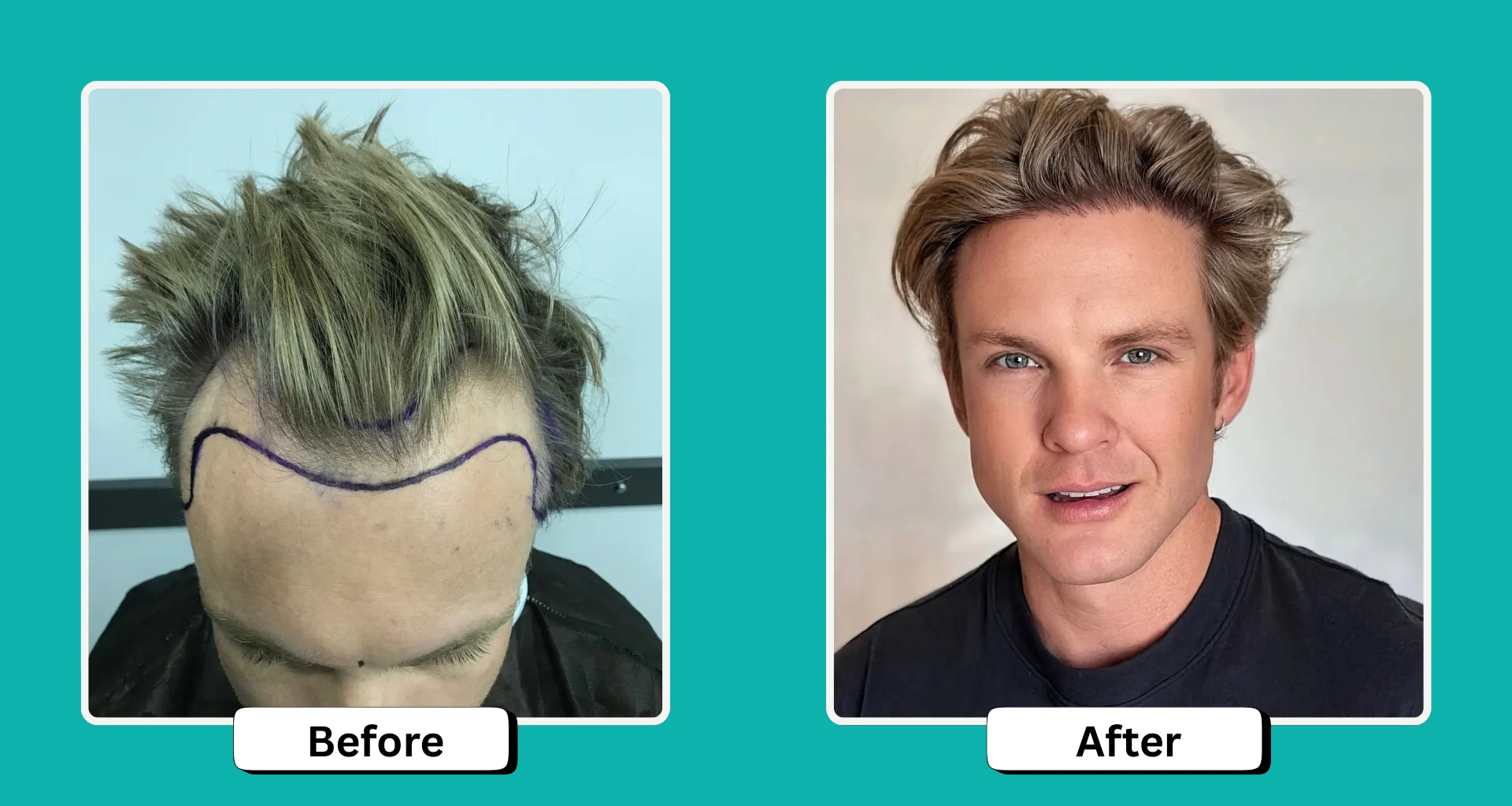
For patients whose hair loss has stabilized or who are willing to plan for future touch-up procedures if needed, hair transplant without finasteride can still deliver natural, satisfying results.
It can look unnatural only if the surgery is designed without long-term planning.
A well-planned transplant without finasteride still looks natural when:
Poor results happen when clinics design dense, youthful hairlines without considering how surrounding hair may change later.
Why Do Some Clinics Strongly Recommend Finasteride?
Some clinics rely on finasteride because it makes short-term planning easier. Slowing native hair loss reduces the need for future procedures and allows for more aggressive density upfront.
However, this approach often shifts long-term responsibility onto the patient rather than the surgical plan itself. Medication may be discussed, but it should never be presented as mandatory for transplant success.
Finasteride and hair transplant surgery solve different problems. One slows hair loss. The other restores hair that’s already gone.
| Aspect | Finasteride (Medication-Based) | Hair Transplant Surgery |
| Type | Non-surgical medication. | Surgical procedure. |
| Commitment | Daily or ongoing use. | One-time procedure. |
| Main purpose | Slows further hair thinning. | Restores lost hair. |
| Effect on bald areas | Does not regrow bald areas. | Permanently restores bald areas. |
| Best suited for | Early-stage hair loss. | Moderate to advanced hair loss. |
| Time to see results | 6–12 months. | Results mature over 12–18 months. |
| Permanence | Effects stop when medication stops. | Transplanted hair is permanent. |
| Dependency on medication | Required for ongoing benefit. | Does not depend on medication. |
Key clarity:
Medication tries to preserve what you still have. Surgery restores what you’ve already lost.
At UniquEra Clinic, surgical planning is done without assuming medication use, so results stay balanced and natural even if no drugs are taken later.
At UniquEra Clinic, the focus is on surgery, not long-term medication use.
The approach centers on:
Procedures such as DHI hair transplant, Sapphire FUE hair transplant, and FUE hair transplant are selected based on scalp condition, donor quality, and coverage needs. Results are planned to remain natural even if hair loss progresses over time.
This is why UniquEra is widely regarded as one of the best hair transplant clinic in turkey for patients who prefer a medication-free path.
With a hair transplant without finasteride, expectations should be clear:
What stays permanent
What may change
Some patients may choose a second procedure years later. Others remain satisfied with conservative coverage. Both outcomes are normal when planning is done correctly.
A hair transplant does not depend on finasteride to succeed.
Transplanted hair survives because of its genetic resistance, not because of medication. Finasteride only affects native hair and is a personal choice, not a requirement.
With the right technique, realistic planning, and an ethical clinic, hair transplant without finasteride can deliver natural, lasting results.
If you’re exploring options and want clarity without pressure, a consultation at UniquEra Clinic can help you understand what approach fits your hair loss pattern and long-term goals.
Yes. Hair transplant surgery is effective without finasteride because transplanted follicles come from DHT-resistant areas and grow permanently without medication.
Yes, if the surgery is planned conservatively. Transplanted hair will remain, but future thinning of non-transplanted hair should be anticipated during hairline and density design.
Transplanted hair continues to grow normally. Native hair outside the transplanted area may thin gradually if pattern hair loss progresses.
No. Finasteride is not required before surgery. Some clinics use it to observe stabilization, but surgery itself does not depend on it.
Transplanted hair regrows permanently without finasteride. However, medication-free regrowth does not occur in areas where follicles are already inactive.
No. Finasteride after hair transplant is optional and only affects native hair, not transplanted follicles.