Head Medical Consultant & Patient Care at UniquEra Clinic
When people start thinking about hair transplant surgery, their attention naturally goes to the front. Hairlines, density, coverage. That’s where confidence feels visible.
The donor area, by contrast, is easy to ignore. It sits out of sight. Quiet. Assumed to “take care of itself.”
Yet for many patients, concerns about the donor zone only surface months or years later, when hair is cut shorter, density changes, or future procedures are considered. By then, the most important decisions have already been made.
Donor hair is not unlimited. It does not regenerate once removed. And while modern hair transplant surgery can create excellent results at the front, outcomes age well only when the donor area has been planned with equal care.
That is why experienced hair transplant surgeons treat donor planning as a long-term decision, not a single-day calculation. Understanding how donor hair behaves after surgery is essential for setting realistic expectations and avoiding results that look acceptable early but deteriorate over time.
This article explains, in clear medical terms, what actually happens to the donor area after hair transplant surgery, what “regrowth” really means, and how reputable clinics approach donor management with the future in mind.
How the Donor Area Works in Hair Transplant Surgery?
The Safe Donor Zone
The donor area refers to the hair at the back and sides of the scalp. These follicles are typically resistant to hormone-related hair loss and tend to grow throughout life. That stability is why they are selected for transplantation.
Before any hair transplant procedure, the donor zone is assessed for:
Follicular density
Hair thickness and texture
Scalp condition
Long-term hair loss pattern
This evaluation determines how much hair can be safely removed without changing the donor area’s appearance.
What “Regrowth” Actually Means
A common misunderstanding is that donor hair grows back after extraction. Medically, this is not the case.
The exact follicles that are removed do not regenerate in the donor area
Those follicles are permanently relocated to thinning or bald regions
The donor area looks natural because remaining hairs continue growing and visually compensate
In other words, what patients perceive as “regrowth” is normal hair growth from untouched follicles, combined with careful spacing during extraction.
What Happens During a Modern Hair Transplant Procedure?
Step
What It Means
Donor assessment
Density, hair calibre, scalp condition and safe limits are measured
Extraction planning
Grafts are spread across a wide area to avoid visible thinning
Controlled removal
Individual follicular units are taken, not clusters
Healing phase
Skin heals, remaining hairs continue normal growth
The goal is not to “take as many grafts as possible,” but to remove only what can be spared while keeping the donor area looking natural.
Does Donor Hair Grow Back After Hair Transplant Surgery?
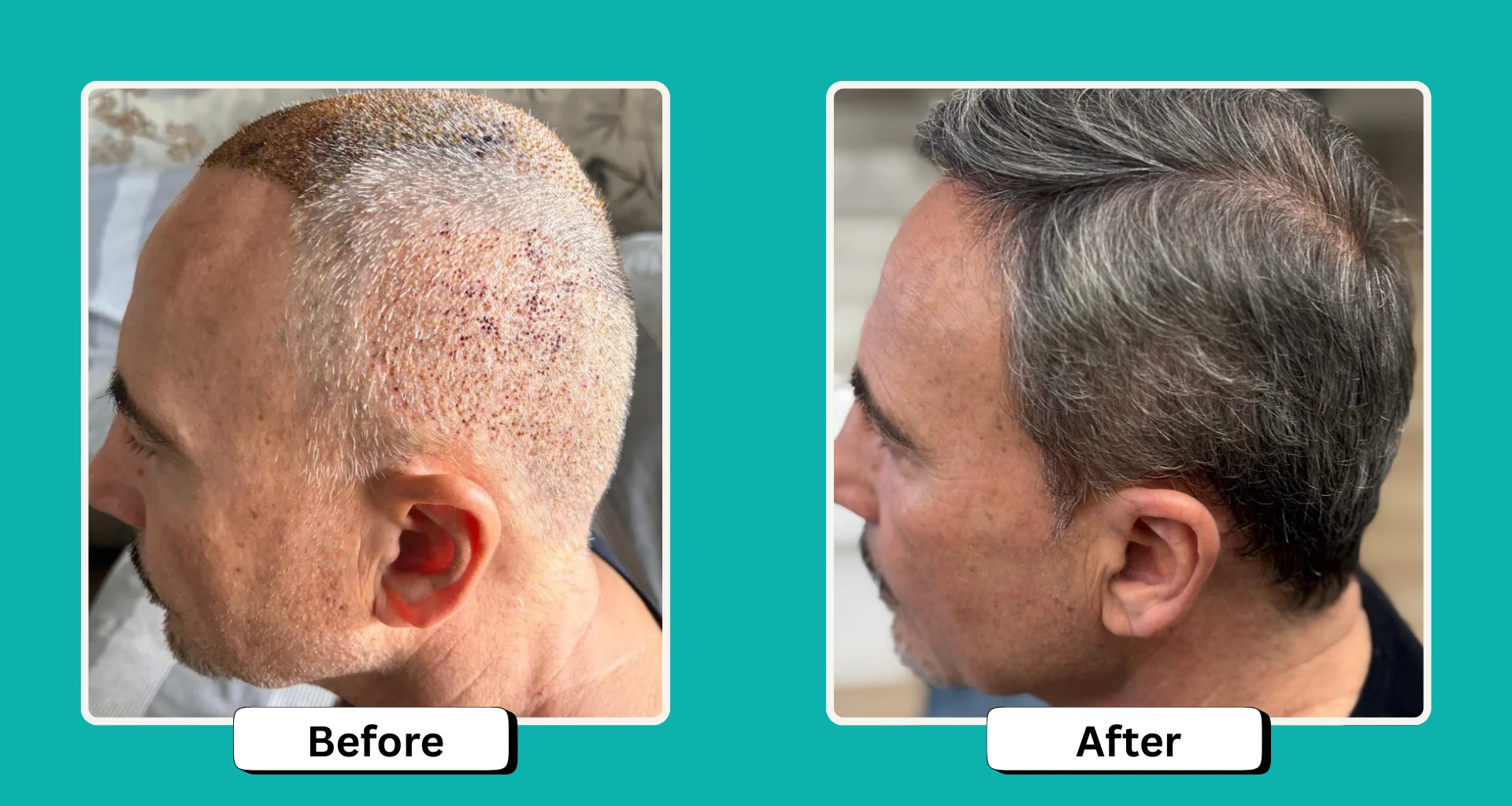
This is where confusion often starts. The follicles that are removed do not grow back in the donor area. They are permanently relocated to another part of the scalp. What patients often interpret as “regrowth” is actually something else:
The tiny extraction points heal
Surrounding donor hairs continue growing
Hair length and natural spacing camouflage the removed follicles
In medical terms, regrowth refers to healing and continued growth of remaining hair, not the regeneration of removed follicles.
When extraction is conservative and evenly distributed, the donor area usually maintains its natural appearance once healing is complete.
Hair Transplant Techniques and Donor Area Impact?
Different techniques affect how the donor area looks, heals, and ages. The technique name matters less than how it’s applied.
Technique Comparison
Technique
How Grafts Are Taken
Donor Area Appearance
Best Suited For
FUE
Individual follicles extracted in a scattered pattern
Tiny dot scars, usually unnoticeable at normal hair length
Most patients
Sapphire FUE
Same extraction method, refined recipient incisions
Similar donor outcome, often smoother healing
Density-focused cases
DHI
Same extraction, direct implantation
Donor impact depends on extraction quality
Precision hairline work
FUT
Strip of scalp removed
Linear scar hidden by longer hair
High graft demand cases
Patients who prefer very short hairstyles should discuss donor visibility carefully, even with FUE-based methods.
What Determines How Full the Donor Area Looks Long-Term?
A natural-looking donor area is not the result of one factor. It’s the result of planning.
Key Variables Surgeons Evaluate
Original donor density Higher density allows safer extraction without visual thinning.
Total grafts removed Aggressive numbers increase the risk of visible depletion.
Extraction distribution Even spacing matters more than punch size alone.
Hair characteristics Curl, thickness, and colour contrast affect coverage.
Age and future hair loss pattern Younger patients require more conservative planning.
Clinics known for delivering the best hair transplant outcomes plan with lifetime hair loss in mind, not just the current procedure.
Donor Area Healing and Post-Operative Care
After hair transplant surgery, the donor area typically goes through predictable stages of healing.
What Patients Usually Experience
Timeframe
Typical Changes
First week
Mild soreness, redness, small scabs
Weeks 2–3
Healing marks fade, comfort improves
Month 1
Hair grows back to usual length
Months 3–6
Donor area looks fully natural
Supporting Proper Healing
Good post-operative care doesn’t create new hair, but it supports clean healing and minimises visible scarring.
Key principles include:
Gentle washing as instructed
Avoiding scratching and friction
Protecting the scalp from sun exposure
Following medication guidance
Do Sapphire FUE, DHI and Modern Tools Change Donor Regrowth?
Sapphire FUE is often discussed as a premium technique. It’s important to understand what it actually changes.
Sapphire blades are typically used to create recipient sites, not to extract donor follicles. Their benefit lies in cleaner incisions and potentially smoother healing in the transplanted area.
They do not change donor biology. Once a follicle is removed, it does not regenerate in the donor zone.
What modern tools do improve is precision, consistency, and tissue handling. These factors indirectly support better healing and less visible donor impact when used correctly.
When Donor Area Outcomes Can Be Affected
In well-planned hair transplant surgery, the donor area usually heals with minimal visible change. However, certain situations can affect long-term appearance.
Overharvesting beyond safe limits Removing too many grafts, or concentrating extraction in limited zones, can lead to visible thinning once hair grows back. This is a planning issue, not a technique flaw.
Scarring related to technique choice FUE leaves small dot scars that are usually hidden at normal hair lengths. FUT leaves a linear scar that may be visible with short hairstyles. Lifestyle preferences should be discussed before surgery.
Reduced options for future procedures Because donor hair is finite, aggressive early extraction can limit flexibility if hair loss progresses later.
Reputable clinics explain these considerations early so patients understand both current results and long-term implications.
Why Donor Management Experience Matters Hair Transplant Surgery in Turkey?
Turkey has become a major destination for hair transplant surgery due to surgeon experience, modern facilities, and established medical tourism systems.
What separates high-standard clinics from volume-driven centers is not pricing or marketing, but donor preservation strategy.
How UniquEra Clinic Approaches Donor Area Planning?
Donor planning is one of the least visible aspects of hair transplant surgery, yet it has the greatest influence on how results age.
At UniquEra Clinic, donor decisions are approached from a long-term perspective. The focus is not only on what can be achieved in one procedure, but on how the donor area will look and function years later.
This approach is reflected in several core practices:
Assessment before allocation Donor density, follicle quality, scalp condition, and future hair loss patterns are evaluated before graft numbers are discussed. This prevents plans that compromise donor appearance over time.
Balanced extraction across the safe zone Grafts are removed in a dispersed pattern rather than concentrated areas, helping the remaining hair maintain uniform visual density.
One-to-one surgical focus Procedures are planned to allow direct attention from an experienced medical team. This supports careful extraction and reduces rushed decisions during surgery.
Conservative graft strategy with future planning Recommendations account for lifetime donor capacity, not just immediate cosmetic goals. Staged procedures are discussed when appropriate.
Support for existing hair health When indicated, non-surgical hair treatments are used to support remaining follicles, contributing to more stable long-term outcomes.
The objective is continuity. Results should remain proportionate and natural as hair loss evolves, without creating new concerns in the donor area.
Final Thoughts
Donor area outcomes don’t fail suddenly. They fail quietly, years later, when too much has been taken too quickly.
Modern hair transplant surgery allows excellent restoration when the donor area is respected, planned carefully, and treated as a finite resource. The most natural results come from restraint, experience, and long-term thinking.
Understanding how donor hair behaves after surgery gives patients the clarity to choose wisely and avoid decisions they may regret later.
If you’re considering a hair transplant and want a clear understanding of your donor capacity and long-term options, a detailed consultation with an experienced medical team at Uniquera clinic is the right place to start.
FAQs: Donor Area Hair After Hair Transplant Surgery
1. Does donor area hair grow back after hair transplant surgery?
No. The hair follicles that are extracted do not grow back in the same spot. What grows back is the remaining donor hair, which usually covers the area if extraction is planned correctly.
2. Will donor hair grow back again after FUE?
The extracted grafts will not regrow. After FUE, the donor area heals and the surrounding hair continues growing, which is why the area often looks normal once hair length returns.
3. Do hairs from the donor area grow back after a hair transplant?
Only the hairs that were not removed grow back. Transplanted follicles are permanently relocated to the recipient area.
4. Does the donor area look thin after a hair transplant?
In well-planned procedures, no. If too many grafts are taken or extraction is poorly distributed, the donor area can appear thin or patchy. Proper planning prevents this.
5. Will my donor area grow back normally after FUE hair transplant?
Yes, in terms of appearance. The skin heals and the remaining hair grows normally. The donor area usually blends in once hair regrows to normal length.
6. How long does it take for the donor area to heal after hair transplant surgery?
Initial healing happens within 7–14 days. Redness and small marks continue to improve over a few weeks. Full visual blending usually occurs within 2–3 months.
7. How long does it take for the donor area to blend in with the rest of the hair?
For most patients, the donor area blends in within 4–8 weeks, depending on hair length, density, and skin healing response.
8. Will the donor area grow hair again after DHI hair transplant?
The donor area heals and remaining hair grows normally, but the extracted follicles do not regenerate. DHI does not change donor regrowth biology.
9. Does sapphire FUE help donor hair grow back faster?
Sapphire tools may support cleaner healing, but they do not cause donor hair to regrow. Healing quality improves, not follicle regeneration.
10. Can the donor area become permanently damaged after a hair transplant?
Yes, if overharvesting occurs or the procedure is poorly planned. This is why surgeon experience and conservative donor management are critical.
11. Can donor hair be used again for another hair transplant in the future?
Yes, if the donor area is managed conservatively. Donor hair is a finite resource, so future procedures depend on how much was taken initially.
12. Is donor hair permanent after being transplanted?
Yes. Donor follicles retain their resistance to hair loss even after being transplanted to the hairline or crown.
13. Does donor hair grow back thicker or thinner after surgery?
The thickness does not change. What changes is visual density, which depends on how evenly grafts were extracted and how much hair remains.
14. Can medications or PRP make donor hair grow back?
No treatment can regenerate removed follicles. Medical treatments can help maintain and strengthen the remaining donor hair only.
15. Why do some people say donor hair grows back?
Because the donor area heals and remaining hair grows, creating the appearance of regrowth. Medically, the extracted follicles do not return.