Head Medical Consultant & Patient Care at UniquEra Clinic
Hair loss changes more than appearance. It affects confidence, expression, and how someone feels in everyday moments. So when people ask “Do hair transplants work?”, they are really asking whether the procedure can help them feel like themselves again. Modern techniques now achieve success rates above 90%, but results depend on donor quality, scalp health, and proper planning.
Turkey has become a global centre for reliable outcomes, especially with techniques like Sapphire FUE, which creates precise microchannels, and Direct Hair Implantation using the Choi pen, known for angle control in the hairline. These methods are widely chosen because they support natural, predictable growth.
At UniquEra Clinic, evaluations are done through trichoscopy and density mapping to understand donor capacity clearly. The medical team focuses on realistic planning and long-term stability so patients know exactly what to expect at every stage.
Hair Loss and Its Medical Impact
Hair loss, clinically called alopecia, usually develops slowly and has different causes. Genetics, hormonal changes, autoimmune reactions, and past injuries can all play a role. The most common type is androgenetic alopecia (male or female pattern thinning), which follows a predictable pattern and becomes more noticeable with time.
For many people, the emotional impact appears long before the scalp becomes fully visible. Modern Hair Transplant Procedure options help by moving healthy, permanent follicles to thinning areas so natural growth returns in the months after surgery. This approach offers lasting improvement, especially when medical treatments alone no longer provide enough support.
Do Hair Transplants Work? What Science Says?
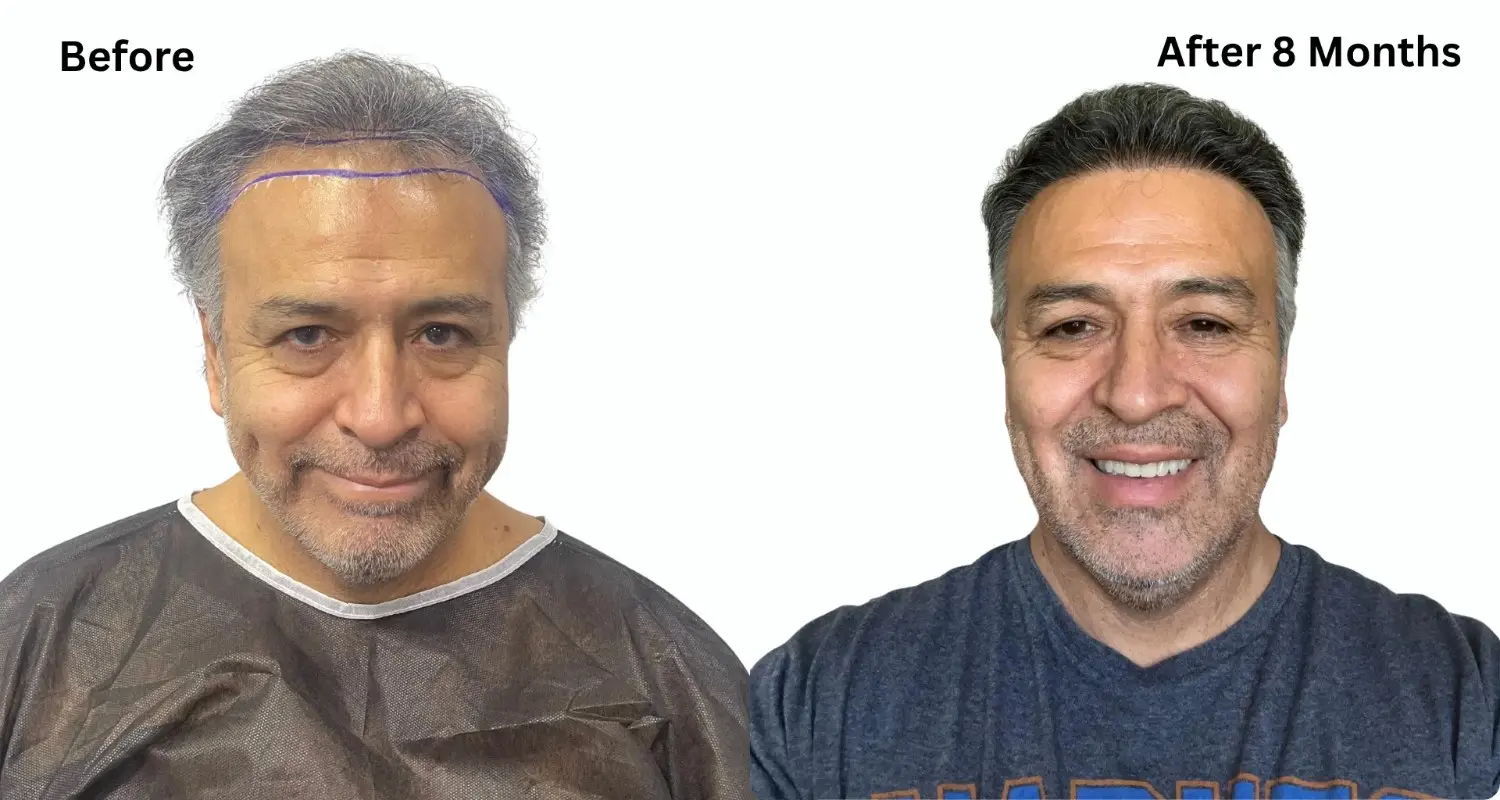
Yes, hair transplants work – over 90% of patients in Turkey’s established clinics achieve permanent, natural growth after procedures like Follicular Unit Extraction (FUE), Sapphire FUE, and Direct Hair Implantation (DHI).
Graft Survival Rate: Clinic studies and medical reviews show graft survival rates averaging 95–98% when advanced methods are used and post-operative protocols followed.
Outcome Predictability: When performed by Board-certified medical experts with optimal donor selection, hair restoration delivers results indistinguishable from natural growth.
At UniquEra Clinic, every consultation starts with trichoscopy, density mapping, and scalp analysis to determine true candidacy before recommending any method.
How Do Hair Transplants Actually Work? Medical Overview
A hair transplant does not create new hair. It redistributes healthy follicles from the donor zone (usually the back and sides of the scalp) to thinning or bald areas.
These donor follicles are genetically resistant to hormonal hair loss. Once they reconnect with the blood supply in their new location, they grow naturally for life.
Success rates in top Turkish clinics – including UniquEra Clinic – often exceed 90% because:
Follicles are handled carefully
Blood supply is preserved
Surgical angles match natural growth
Aftercare protects grafts
However, results vary when:
Unlicensed technicians perform surgical steps
Donor areas are damaged
Grafts dry out due to poor handling
Aftercare is ignored
Hairlines are designed without a medical assessment
This is why Turkey has both excellent success stories and visible failed cases.
Step-by-Step Procedure
Pre-Op Assessment
Scalp analysis, trichoscopy, blood flow mapping, donor zone evaluation
Medical history and risk factor screening
Extraction
Extraction using advanced tools isolates follicular units with minimal trauma and near-zero linear scarring.
Implantation
Individual follicles are placed at anatomically correct angles, depth, and spacing for natural density, especially important for the frontal hairline and crown.
Aftercare
Evidence-based protocols for wound care, graft hydration, anti-inflammatory management, and infection prophylaxis. Patients are instructed on gentle washing, topical support, and regrowth stimulation (PRP, if indicated).
UniquEra Clinic often blends these approaches depending on donor strength and restoration goals and chooses the technique based on anatomy and donor strength rather than trend or marketing.
Understanding Real Success Rates
Turkey’s clinics consistently report 90%–98% success in medically suitable cases. A transplant “works” when:
Grafts survive
Density blends with native hair
The hairline looks natural
Donor areas remain healthy
It is not about placing maximum grafts. It is about placing the right grafts.
Growth Timeline & Patient Experience
Stage
Biological Change
Patient Experience
0–2 weeks
Healing, vascularization
Redness, swelling, scabs
1–3 months
Temporary shedding
Looks like pre-surgery
3–6 months
New follicle activation
Fine early growth
6–9 months
Density increases
Noticeable coverage
9–12 months
Maturation
Thicker strands
12–18 months
Final stabilization
Full texture and density
UniquEra Clinic monitors every stage through structured follow-ups.
Rare but Preventable Risks: Infection, low survival, visible scarring, uneven density
How UniquEra reduces risks:
Single-use micro-instruments
Sterile, medical-grade environment
Donor zone preservation
Stepwise aftercare and healing support
PRP when needed
Medically Safe Support That Strengthens Results
Unlike many clinics, UniquEra Clinic does not recommend minoxidil due to long-term dependency concerns. Instead, they rely on biologically safer, medically aligned solutions.
PRP Therapy
Improves blood flow, accelerates healing, and enhances graft survival.
Nutritional Optimization
Guidance on improving vitamin D, ferritin, omega-3 balance, and inflammation control.
Scalp Health Care
Gentle cleansing, avoiding irritants, and maintaining a balanced scalp microbiome.
Why UniquEra Clinic Is One of Turkey’s Trusted Leaders in Hair Transplant Procedures?
UniquEra stands out as one of the best hair transplant clinics in Turkey through its balance of medical precision and genuine patient care.
Ministry-licensed, internationally accredited
Advanced diagnostics: trichoscopy, density mapping, vascular assessment
Advanced technique options: Sapphire FUE, DHI, Manual FUE
Scientific, age-matched hairline design
Lifetime donor zone preservation
Clear aftercare with guided washing and follow-ups
No exaggerated marketing or “unlimited graft” promises
Thousands of international patients trust UniquEra for ethical, safe, and natural hair restoration.
Final Thoughts: Your Path to Confidence
Hair transplants do work – and when performed with medical precision, they work beautifully. They restore confidence, natural texture, and long-term stability. But the key is choosing the right clinic, understanding your scalp, and planning for lifelong results.
At UniquEra Clinic, every treatment plan is built on medical clarity, ethical care, and natural aesthetic design. When these elements align, the answer is simple:
Yes, hair transplants work – and they work for life.
Ready to rediscover your confidence and natural hair? Book your consultation with UniquEra Clinic today and take the first medical step toward lasting results.
Frequently Asked Questions (FAQs)
1. Do hair transplants really work for life? Yes-transplanted follicles from the occipital donor area are genetically resistant to androgens, so permanent results are expected in appropriate cases.
2. Which method is best-Sapphire FUE or DHI? Both Hair transplant methods are effective when medically indicated. Sapphire FUE achieves high density; DHI excels in precise hairline recreation. UniquEra selects the technique after trichoscopy and patient review for optimal long-term results
3. How soon will I see results? Early regrowth at 3–6 months, full density and thickness by 9–12 months, permanent results established by 18 months post-op.
4. Are women good candidates?
Yes, if they have patterned thinning and stable donor areas.
5. Do hair transplants prevent future hair loss? Surgery restores lost zones, but untreated regions may still thin. Medical management is recommended as maintenance.
6. Are hair transplants safe in Turkey? Yes-with licensed clinics, sterile protocols, and trained surgeons. UniquEra meets international standards and prioritizes patient safety in Hair transplants in Turkey.