
Donor area hair transplant science is the reason a hair transplant produces permanent results when done correctly. Donor area hair transplant science is the reason a hair transplant produces permanent results when done correctly. You watched your hair disappear slowly. A little at the temples. Then the crown. Years of it changing how you look in every mirror.
So when someone says a hair transplant is permanent, a quiet voice asks the obvious question.
If your original hair did not last, why would transplanted hair be any different?
The answer is not a promise. It is science proven since 1952. The donor area hair transplant zone contains follicles that are genetically programmed to resist the very thing that destroyed your other hair. The hair used in a transplant comes from a part of your scalp that is genetically programmed to resist the very thing that destroyed your other hair.
Understanding why changes everything, especially when you understand how hair transplant works.
If you want to understand what your donor area looks like and what it means for your case, UniquEra’s medical team is available for a proper donor and scalp evaluation.
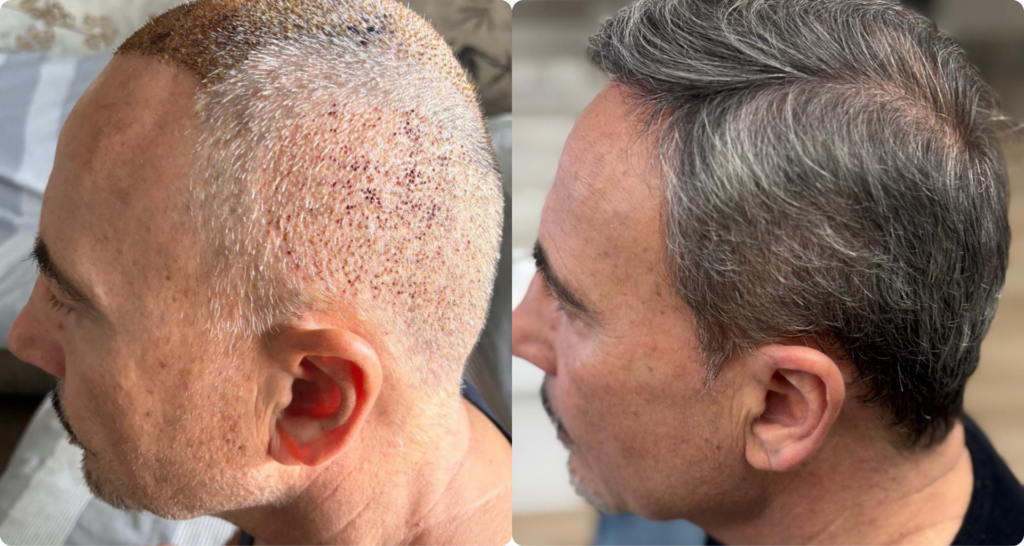
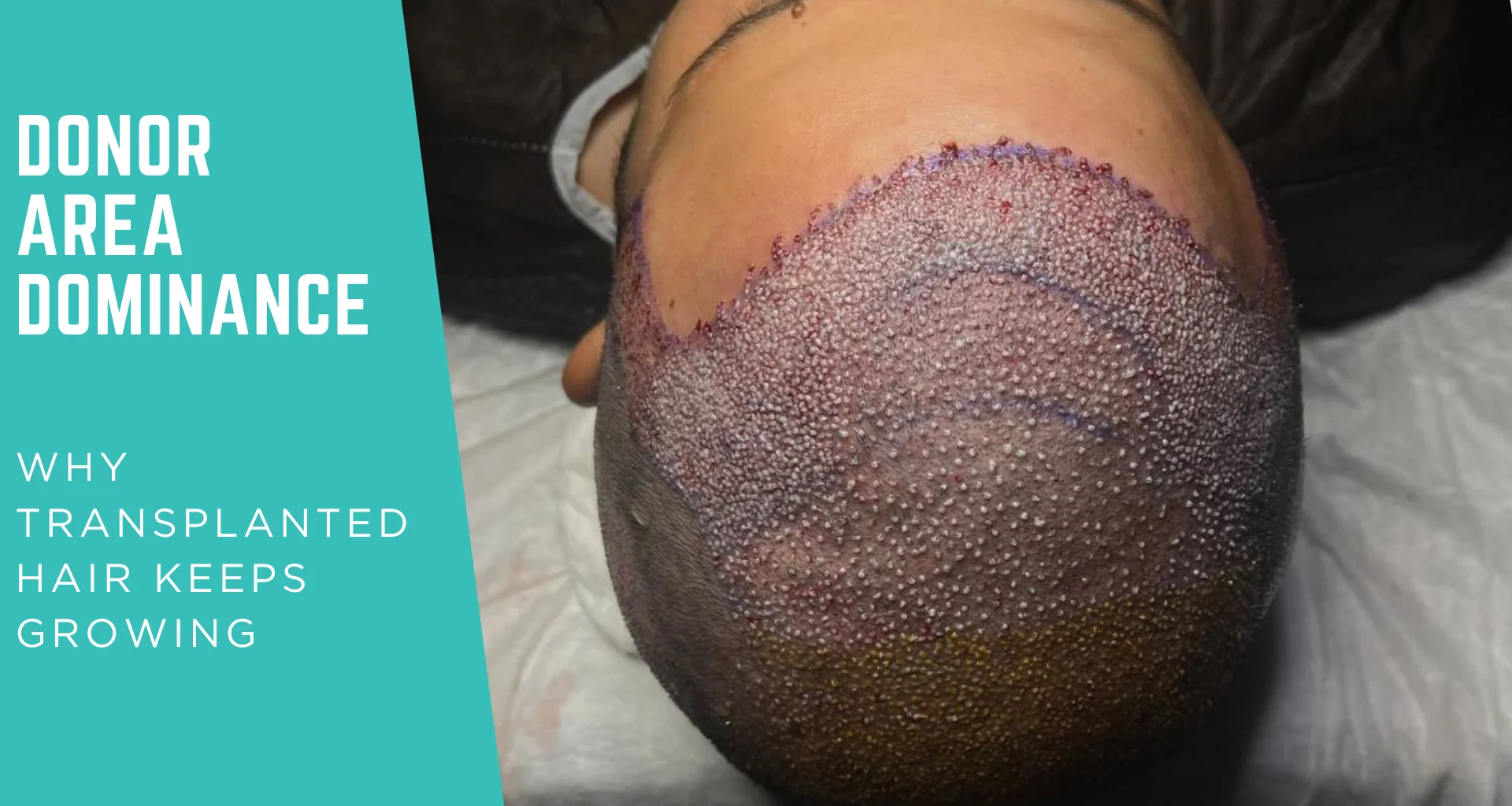
The donor area hair transplant zone sits at the back and sides of the scalp. This is where DHT-resistant follicles are harvested. These follicles do not fall out due to pattern baldness whether they stay in place or get moved.
The donor area hair transplant zone is the permanent zone .These follicles do not fall out due to pattern baldness whether they stay in place or get moved.
The follicles here do not carry the receptor sensitivity that makes crown and frontal hair vulnerable to DHT. Move them anywhere on your scalp and they carry that programming with them.
Transplanted hair does not fall out again because the follicle carries its original genetic resistance with it.
Transplanted hair is permanent because donor follicles retain their DHT resistance after relocation.
This is called donor dominance. Dr. Norman Orentreich first described it in 1952 after observing that hair moved from the back of the scalp to a bald area kept growing exactly as before. Validated in millions of procedures since.
DHT cannot trigger miniaturisation in a follicle that was never programmed to respond to it. Once transplanted follicles take root, they keep growing for life.
Donor dominance is the principle that a transplanted follicle retains the characteristics of where it came from, not where it is placed.
The follicle’s behaviour is determined by its origin, not its new location.
Three things make this work:
• Follicles in the safe donor zone do not carry the gene that causes androgenetic alopecia.
• Once transplanted, these follicles retain their original genetic code permanently.
• DHT in the recipient area cannot override the follicle’s own programming.
A hair transplant surgery moves DHT-resistant follicles from the donor area to thinning zones. . The technique determines how they are extracted and implanted.
Follicles are extracted, prepared, and implanted into thinning areas where they establish a permanent blood supply and keep growing. This is the same core approach used in DHI hair transplant Turkey, with differences only in implantation technique. This step-by-step flow is how hair transplant works in real clinical practice.
1. Extraction: Follicular units removed from the donor area. FUE hair transplant Turkey commonly uses sapphire blades for clean micro-incisions. The DHI hair transplant process uses a Choi Pen to load grafts directly into an implanter for immediate placement.
2. Graft preparation: Follicles sorted under magnification. Healthy grafts kept in solution. Every minute outside the body affects survival.
3. Implantation: Grafts placed at correct angle, depth, and direction. Determines natural appearance and long-term survival.
This is where hair transplant surgery differs between average and high-quality clinics.
Not every patient needs the same approach.
FUE hair transplant Turkey is typically used for larger areas where higher graft numbers are required.
The DHI hair transplant process is more suited for smaller areas or cases where existing hair needs to be preserved carefully.
The choice is not about which sounds more advanced. It depends on donor strength, hair loss pattern, and long-term planning.
This is where most confusion comes from when people research DHI hair transplant Turkey or compare it with FUE.
Hair transplant survival rate is the percentage of transplanted grafts that successfully establish and grow in the recipient area.
In well-performed procedures, survival rates reach 90 to 95 percent. In poorly handled ones, survival drops significantly. This is where most clinics actually differ.
| Factor | What it affects |
| Extraction technique | Graft integrity on leaving the donor area |
| Time outside the body | Viability drops the longer grafts wait |
| Storage solution | Maintains follicle health during preparation |
| Implantation precision | Correct angle, depth, and direction |
| Team stability | Consistency across thousands of movements |
Hair transplant survival rate is a more honest quality indicator than before and after photos. A stable team produces consistent rates. Rotating technicians produce variable ones.
This is why two clinics using the same technique can produce completely different outcomes in hair transplant surgery.
Yes. The donor area hair transplant supply is finite. Extracted follicles do not grow back. Most patients have a lifetime donor capacity of 5,000 to 8,000 grafts. Most patients have a lifetime donor capacity of 5,000 to 8,000 grafts.
You only have one donor area. Once those grafts are used they cannot be replaced.
Overharvesting extracts too many grafts from the same zone without adequate spacing. The result is a permanently thin, patchy donor area that cannot be corrected. The safe threshold is around 40 to 50 follicular units per centimetre squared.Understanding safe donor area hair transplant limits before surgery is the difference between a good first result and having options for future sessions.
Good donor management means dispersed extraction across the full safe zone, following a safe donor area hair transplant approach, never exceeding safe limits, planning for future sessions, and honest conversations about realistic graft capacity before booking.
Choosing the wrong approach without understanding your donor area hair transplant capacity can permanently limit future options.
Yes. Transplanted hair is permanent for androgenetic alopecia, but does transplanted hair last forever depends on how your native hair continues to change. Donor follicles retain their DHT resistance permanently in their new position.
Transplanted hair lasts permanently. The honest qualifier is that it does not protect native hair around it from continued DHT exposure.
| Timeline | What happens |
| Weeks 2 to 4 | Transplanted hair sheds. Normal. Follicles entering resting phase. |
| Month 3 | New growth begins. Thin at first. |
| Month 6 | Visible progress. Density building. |
| Month 12 | Result largely settled. |
| Year 5 to 10 | Transplanted hair continues growing. Native hair may thin if DHT is unmanaged. |
Many patients combine a transplant with DHT blocker therapy. The transplant restores permanently. Medication protects what surrounds it.
At UniquEra, the donor area is treated as the most important variable in the procedure.
UniquEra plans extraction conservatively within safe donor area hair transplant limits, maps each patient’s safe zone precisely, and has honest conversations about donor capacity before any procedure begins. and has honest conversations about donor capacity before any procedure begins.
Before any procedure, a full donor area hair transplant evaluation maps the safe zone, assesses density, and determines the realistic graft count available., assesses density, and determines the realistic graft count available. Extraction is performed by the same core team that has worked together for years. Consistent hands mean consistent technique and consistent graft survival.
If your donor area has limitations, you are told before you book. Not after you arrive.
Your donor area determines everything about what is possible. The conversation starts with a proper donor and scalp evaluation. At UniquEra Clinic medical team is available to give you a clear and honest picture of what yours can provide.
Transplanted hair keeps growing because the follicle carries its own genetic instructions. Move it and it keeps following them. DHT cannot override programming that was never sensitive to it.
That principle has been proven since 1952. It is not a marketing claim. It is biology.
What determines whether that permanence holds is the quality of extraction, graft handling, and donor planning behind every single case.
The question is not whether transplanted hair lasts. It does. The question is whether the clinic you choose has the team and process to give every graft the best chance. That starts with a proper donor and scalp evaluation. Book yours with UniquEra today.
The zone at the back and sides of the scalp where DHT-resistant follicles are harvested. These follicles retain their resistance to pattern hair loss permanently after transplantation.
Because the follicle retains its DHT resistance after relocation. Its behaviour is determined by where it came from, not where it is placed. Proven since 1952.
The principle that transplanted follicles retain their original genetic characteristics after relocation. Follicles from DHT-resistant zones keep growing permanently because their genetic code travels with them.
No. Learn the full answer to does donor area hair grow back — extracted follicles do not regrow, but surrounding hair stays intact and with conservative extraction the donor area maintains its natural appearance. Overharvesting causes permanent thinning that cannot be corrected.
Permanently for androgenetic alopecia. Most patients see their full result by month twelve. Transplanted hair continues growing at five and ten years. Native hair around it may thin further if DHT is unmanaged.
90 to 95 percent in well-performed procedures. Factors include extraction technique, graft handling time, storage quality, implantation precision, and team stability.
Most patients have a lifetime capacity of 5,000 to 8,000 grafts. The exact number depends on scalp laxity, hair density, and follicle health. Extraction must stay within safe limits.
Temporary thinning around extraction or implantation sites caused by surgical trauma. Learn more about what is shock loss after a hair transplant and why it grows back within three to six months.
Permanently extracted follicles do not return. Conservative extraction means surrounding hair remains dense enough to cover extraction points naturally. Shock loss in the donor area resolves within three to six months.
Yes, if sufficient donor grafts remain. Conservative planning during the first procedure determines how much is available for future sessions.
Yes. Transplanted hair retains the same characteristics as the donor area including colour and texture. If your donor hair goes grey with age, transplanted hair will too.
12. How Does a Hair Transplant Actually Work?
Hair transplant works by relocating DHT-resistant follicles from the donor area to thinning regions. Once implanted, these follicles establish blood supply and continue growing permanently due to donor dominance.